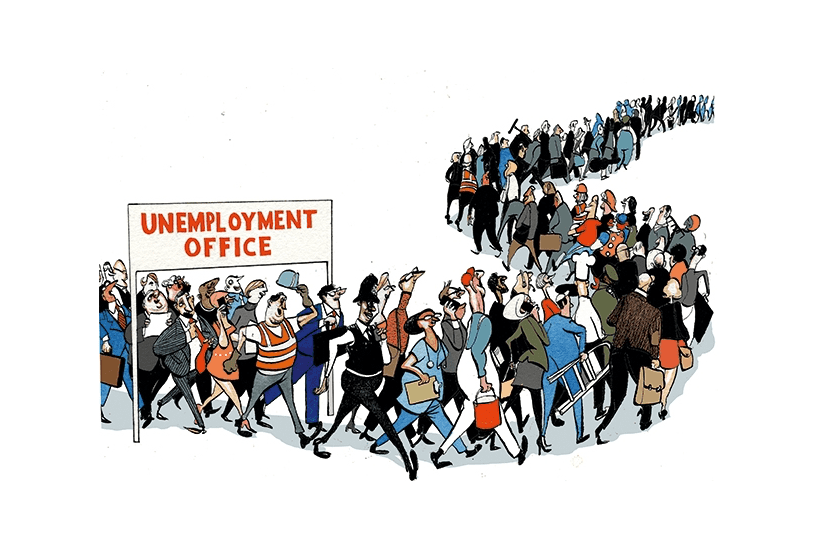
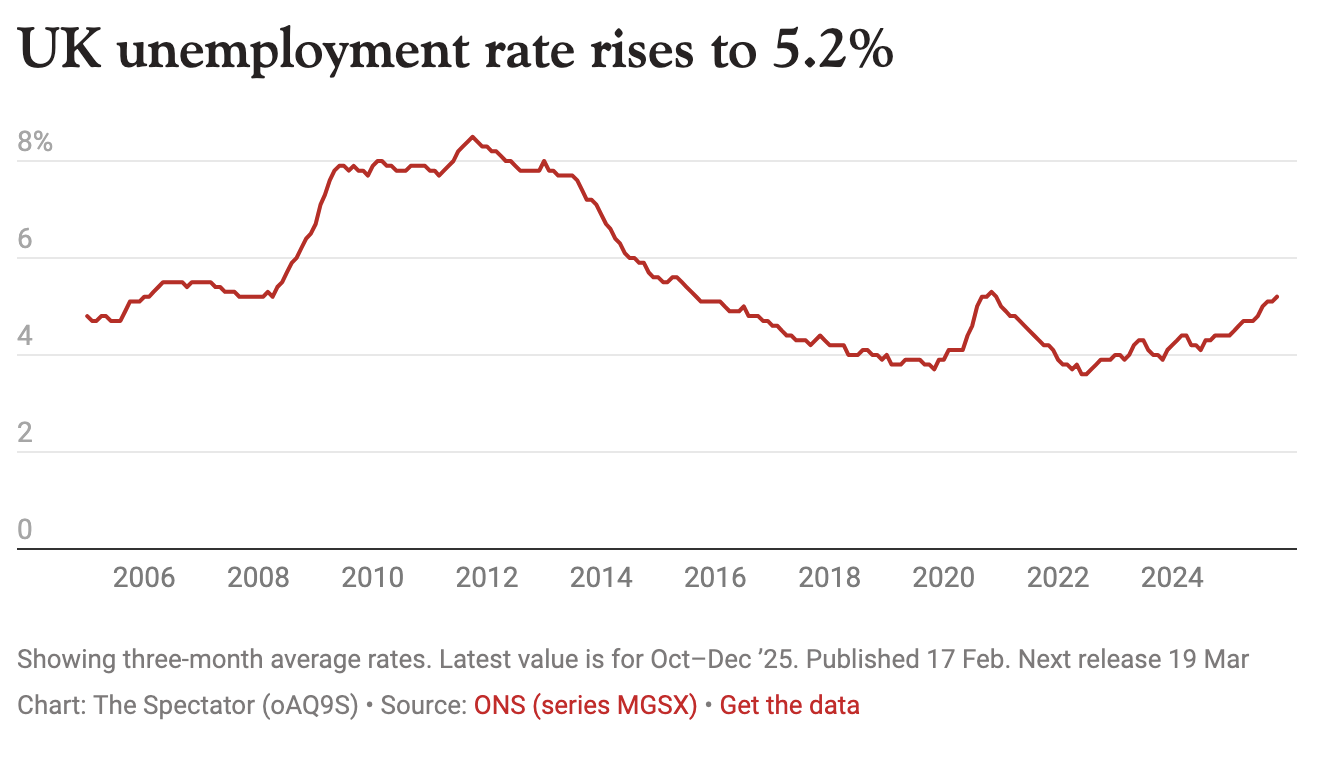
Britain’s jobs market continues to struggle. Figures released by the Office for National Statistics (ONS) this morning show that the unemployment rate increased to 5.2 per cent, the highest rate in almost five years.
Today’s release contains other worrying signals. The number of payrolled employees fell by 134,000 in the year up to January. Some 11,000 jobs were lost in January alone.
Several factors lie behind the weak labour market. Government policy choices, such as the hike in employers’ National Insurance contributions and the looming increases in business rates, have undoubtedly hit hiring. A number of economists have also blamed the UK’s high minimum wage for declining opportunities for young people. According to the OECD, the UK’s youth unemployment rate rose to 15.3 per cent, surpassing the EU’s 15 per cent for the first time on record and reaching over double Germany’s 6.9 per cent.
Graduate hiring at the UK’s top 100 employers fell by 14.6 per cent in 2024, the largest annual drop since 2009
That said, the labour market began cooling long before these decisions. Persistent economic stagnation is an important culprit. Business investment has flatlined since 2016 and the UK has not seen substantial productivity growth since the 2008 recession. The result: weak growth that reduces the need for businesses to consistently hire new workers.
Young people have been hit the hardest. Between December 2024 and December 2025, the number of payrolled employees younger than 34 decreased by 174,000. Only the age groups 35-49 and 65 and over saw an increase.
This is partly due to the downturn in opportunities for graduates. Data from High Fliers Research shows that graduate hiring at the UK’s top 100 employers fell by 14.6 per cent in 2024, the largest annual drop since 2009. In November, analysis by Indeed, the jobs site, found the number of graduate job postings had fallen by 13 per cent compared with 2024 and was the lowest for that time of year since 2020.
AI could be about to make things much worse. The recent surge in its capabilities, together with the high expectations that it could improve, has complicated hiring. In particular, AI is becoming increasingly capable of completing the mundane tasks that often offer young people a route into professional employment. Although the immediate impact of these advancements appears limited – according to the ONS only 4 per cent of businesses using AI have reduced their headcount as a result – such effects may be felt soon.
Britain’s job market could be changed for good. The once universal belief that a teenager gives themself the best chance in life by attending university is now seriously, and fairly, being questioned. Apprenticeships offering immediate income and on-the-job training are becoming increasingly appealing compared to student debt and a volatile graduate jobs market.
If the government is to stop the slide into youth unemployment, then it must do a better job at offering young people training opportunities that actually lead to skilled employment. The current system that disproportionately favours university degrees and too often leaves graduates with nothing but debt no longer works.