Most readers will be familiar with the now disused practices of stocks, pillories, public flogging, tarring and feathering, and other public corporal punishments and shaming.
These practices have ancient origins but persisted until the late 1800s in the Anglosphere. Even today, local equivalents continue in other parts of the world. The commonly used words ‘laughingstock’ and ‘pilloried’ come from these practices.
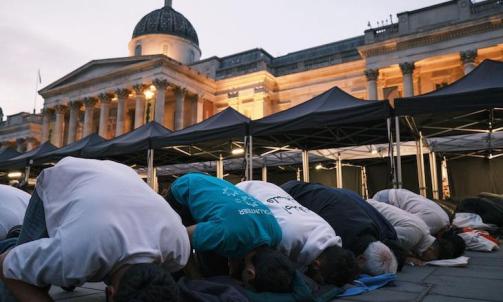
Public corporal punishment modes still subsist in some Islamic theocracies. In countries with Sharia Law, extra judicial flogging and stoning still occurs. These barbaric Medieval practices are rare but nonetheless enduring. As you would expect, reliable statistics are hard to come by. Enlightened regimes such as the Taliban in Afghanistan reportedly still engage in public stoning and flogging for adultery and other alleged moral transgressions.
Many years ago, I was travelling through Northern India on a public bus. A passenger was caught pickpocketing. The bus driver stopped the bus and the offender was marched off. All the other passengers except me, my companion, an infant, and a very old woman took turns at spitting on the teenage pickpocket, hitting him with their shoes and handbags and pulling his hair. It was confronting. The offender was not seriously injured but he was certainly humiliated. I guess that calling the police and processing the offender was not an option back then in the remote rural outskirts of Lucknow. He probably never pickpocketed again, but I note the poor fellow was malnourished-looking. Sub-cultures like outlaw motorcycle gangs and crime gangs still engage in corporal punishment and ritualised humiliation such as group bashings, kneecapping, and finger amputations for transgressions against their own codes.
The rationale for public floggings and other corporal punishment is well understood. The body would be punished but the real damage was to the psyche. Shame, humiliation, and opprobrium would be suffered. Justice dispensed in this way was cheap and visible and was intended to provide a punitive and deterrent function as well as serving to reinforce societal norms. The rationale has arguable pragmatic logic. Western nations with a belief in Judeo-Christian values and the rule of law thankfully ceased these practices long ago in recognition of their obvious weaknesses. The modern legacy includes things like open courts, offender registers, and other less extreme forms of public justice. Of course, the many and growing critics of Western nations and values pay little attention to the lead played by those nations in evolving to more civilised modes of behaviour and equally overlook the ongoing practices that occur in other parts of the world which resist such values.
Now to my real point.
Over the last few weeks, the social media algorithm has served up countless videos and posts of petty shoplifters caught on camera stealing sunglasses and cosmetics, vandals kicking garbage bins, e-bikers tearing up golf courses (and without condoning them), and a range of petty or low-level crimes. Sometimes the offenders are clearly visible and indeed identified by name in the comments. Often there are hundreds of comments in the posts in the form of a savage mob pile-on. Some of the comments are fair enough but very many are not. They incite threats of extreme physical violence and defame the individuals in the most extreme ways imaginable. If there is incontrovertible video evidence in the social media post of criminal or extreme anti-social behaviour, perhaps some public shaming and criticism could arguably be justified but even then, it’s a matter for the police not the mob. On many occasions a disgruntled poster with their own motivations will simply post a person’s image on Facebook and allege they are a fraudster, rapist, or paedophile without a skerrick of proof or substantiation and the commentators will proudly and openly offer to castrate the individual. Sometimes a consumer will relay their undoubtedly harrowing experience of having been served a bad meal at a café or poor workmanship by a plumber and the businessperson will need to answer for their life to the commentators.
This is a thousand times worse that the pillory or stocks as the shame is global not local and there is no accountability or opportunity for the alleged offender to say anything in their defence. Unlike the stocks which last a day, the social media post is eternal. It’s superficially easy to say that only those who commit crimes or anti-social behaviour, and hence deserve to be publicly shamed, are outed on social media but we all know that this isn’t always the case.
The risk of public online shaming can operate as a useful deterrent and punishment to bad elements of society, but like any mob justice it’s hugely risky and dangerous and the harms are growing and are unregulated. Defamation law is no practically useful answer.
In a similar vein, there are thousands of iPhone videos on social media posted by would-be sovereign citizens and other smartarses of police and other public officers trying to do their job being set up and through selective editing. They are made to look like brutes and incompetents. Again, there is no context and defence available and there is usually no reliability in these posts. Many are outright fakes or AI-generated, but it doesn’t stop the public pile-on and some comments display reveal very troubled minds behind the keyboard. The subject of the videos can have their lives ruined. Again, transparency in policing efforts is a good thing and some of the recent ICE incidents in the US picked up on video raise issues of huge concern but again they are necessarily selective and unreliable.
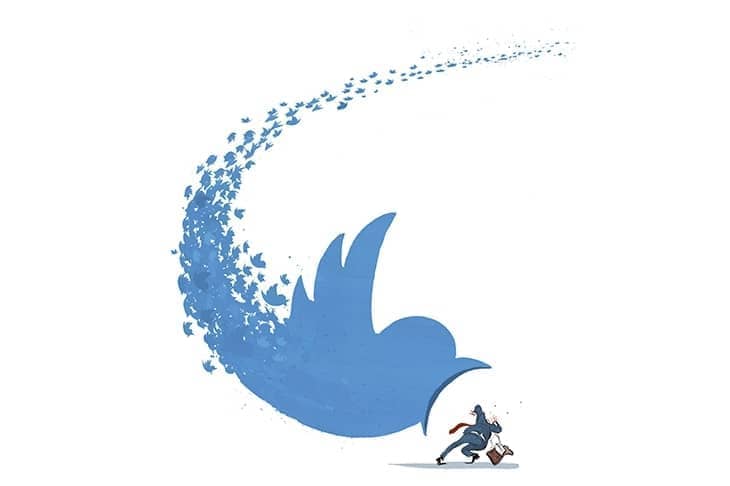
Today’s version of the stocks and public stoning is the social media pile-on. Over time, responsible lawmakers will need to search for solutions to unwarranted public shaming of citizens without proper reason. I suspect it will prove a lot harder to regulate this than it was to remove the stocks and whipping post from the town square.
Andrew Christopher is a lawyer and writer