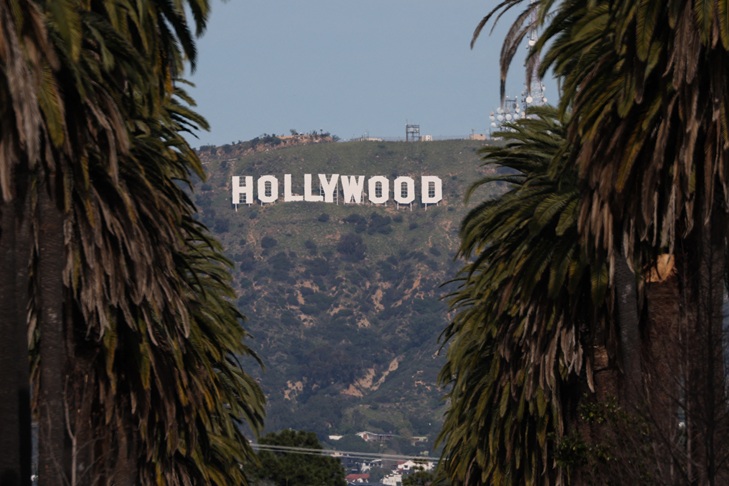
There was a time when one could identify a film’s author within minutes. Not from the credits, but from the atmosphere. From the pacing. From the moral tension. The film bore a temperament. It had a point of view. It possessed a distinct personality. That time has not vanished entirely, but it has receded.
Hollywood did not lose its technical capacity. It did not lose its budget. It did not lose its access to global distribution. What it gradually surrendered was something less measurable but far more important: individual vision.
The classical studio era was commercial, often ruthlessly so, yet it was not anonymous. MGM carried the imprint of Louis B. Mayer’s sensibility. Warner Bros. reflected the grit and populism of the Warner brothers. Harry Cohn’s Columbia was sharp-edged and pragmatic. RKO’s instability produced both experimentation and volatility. Even within the constraints of the Production Code, there was temperament at the top, and that temperament filtered downward.
When studios were still guided by identifiable personalities rather than diffuse boards of directors, the films themselves carried character. One could sense where they came from.
The flowering of the 1960s and 1970s represented something different still: the ascent of the auteur. The director ceased to be merely a craftsman and became the organising intelligence of the work. Films such as Five Easy Pieces, Chinatown, Don’t Look Now, A Clockwork Orange, and Barry Lyndon were not committee products. They were expressions. They assumed patience. They allowed moral ambiguity. They trusted the audience to sit with discomfort and complexity.
Across the Atlantic and in Asia, Fellini, Godard, Bertolucci, Kurosawa, and Oshima were doing the same. These filmmakers were not interchangeable. They did not pursue approval through calibration. They pursued something interior and often risky. Even when one disagreed with them, their authority was unmistakable.
Sam Peckinpah exemplified this era’s willingness to court unease. In The Wild Bunch and Cross of Iron, he forced viewers into moral territory without the reassurance of tidy alignment. In the latter, set among German soldiers on the Eastern Front, he refused patriotic comfort. The film’s power lies precisely in its refusal to flatten history into propaganda. It assumes the viewer can hold tension without collapsing into reflex. That confidence in the audience was once a defining feature of serious cinema.
Contrast that with today’s landscape, where directorial personality has often yielded to franchise management. The modern studio system is no longer personality-driven but conglomerate-driven. Entertainment divisions sit inside publicly traded corporations accountable to quarterly expectations. Volatility is minimised. Predictability is prized. Intellectual property libraries are assets to be leveraged rather than artistic legacies to be stewarded.
The result is not the absence of craft, but the absence of risk. Directors increasingly function less as authors than as stewards of brand continuity. They are hired to maintain tone, to deliver on expectations, to preserve franchise coherence. The film becomes a node in a larger universe rather than a self-contained work of vision.
In this environment, even substantial budgets can produce desultory results – technically accomplished yet spiritually unfocused. The spectacle may be vast, but the centre does not hold.
This transformation is not simply aesthetic; it is structural. When corporations absorb other corporations – when Disney acquires Fox, when telecommunications giants swallow legacy studios – the distinct personality of each entity dissipates. Consolidation produces scale, but scale rarely produces temperament. Conglomerates are engineered to minimise risk, not to cultivate singularity.
The profligacy of modern production budgets compounds the problem. When hundreds of millions are at stake, the tolerance for idiosyncrasy shrinks. Focus groups proliferate. International marketability becomes decisive. The film must appeal across linguistic and cultural lines, which often flattens nuance into universality so broad it becomes indistinct.
Recently, music producer Rick Rubin articulated this dilemma in a contemporary context. In an interview released only days ago, Rubin remarked that many films today feel lifeless because they are not being made by someone who cares deeply about them. They are made, he suggested, by people attempting to construct something they think others will like. ‘That’s not how art works,’ he observed. ‘That’s something else. It’s not art; that’s commerce.’
Rubin’s comment is not a nostalgic lament. It is a diagnosis from someone whose career has been built on stripping away artifice and returning artists to their core impulse. When creation becomes anticipatory rather than expressive – when it is guided primarily by projected approval – it shifts categories. It ceases to be art in the fullest sense and becomes product optimisation.
There are exceptions, and they are instructive. Julian Schnabel’s At Eternity’s Gate and Terrence Malick’s A Hidden Life stand as recent reminders that cinema of spiritual seriousness and formal daring still exists. Schnabel’s van Gogh biopic refuses biographical cliché in favour of interior experience; it is less a chronicle of events than an attempt to inhabit perception itself. Malick’s film, austere and unhurried, meditates on conscience, sacrifice, and faith with an almost liturgical patience.
Neither film was engineered for franchise expansion or algorithmic approval. Both demanded attention and contemplation. Yet their commercial reception was muted, and their awards recognition modest, as though the system no longer quite knows what to do with films that aspire to transcendence rather than market dominance. Their relative marginalisation does not signal artistic failure; it signals institutional misalignment.
One sees the contrast clearly in Martin Scorsese’s Silence. Here is a film austere in structure, demanding in theme, resistant to spectacle. It does not flatter the viewer. It invites reflection on faith, doubt, betrayal, and sacrifice. It offers no franchise hook. It asks for attention rather than promising distraction. That such a film struggled commercially is often cited as proof that audiences no longer possess the appetite for depth. A more plausible explanation is that the system no longer trains them to expect it.
Audiences adapt to what they are repeatedly offered. When the dominant model emphasises velocity over stillness and clarity over ambiguity, expectations shift accordingly. That shift does not imply incapacity. It reflects conditioning. The ecosystem of the 1970s, for all its flaws, regularly presented viewers with films that demanded interpretation and patience. Those habits were cultivated. Today’s industrial logic cultivates different habits.
Yet the decline of one sector does not signify the decline of art itself. Consider jazz. In small clubs across the country, musicians continue to push harmonic and rhythmic boundaries with extraordinary sophistication. The genre thrives not because it commands the largest market share, but because it remains decentralised, risk-tolerant, and driven by individual virtuosity. Its practitioners are not primarily guided by focus-group approval. They are guided by necessity and exploration.
Cinema once operated more like jazz. Directors led with conviction, and studios – while commercial – were often willing to stake reputations on singular voices. Today’s system favours stability. Stability is not inherently corrupting, but when it becomes the overriding priority, it narrows the range of permissible expression.
To say Hollywood has lost its way is not to say it is beyond recovery. The infrastructure remains. The talent remains. What has shifted is the locus of authority. When authority is diffused across committees and calibrated toward consensus, personality thins. When authority is entrusted again to directors with something urgent to say, distinctiveness returns.
Art does not vanish; it relocates. It migrates toward the margins when the centre becomes over-managed. The renaissance of cinema will not arrive through louder spectacle or more intricate franchise architectures. It will arrive when studios rediscover the courage to back individuals rather than formulas.
There was a time when one could walk into a theatre unsure of what one might encounter, but certain that it would bear the mark of a mind. That uncertainty was not a liability; it was the point. Hollywood lost its way not because it forgot how to produce films, but because it forgot why they matter.
The path forward lies not in nostalgia, but in restoration: the restoration of trust in vision, the restoration of risk, and the restoration of personality in an art form that once thrived on both.