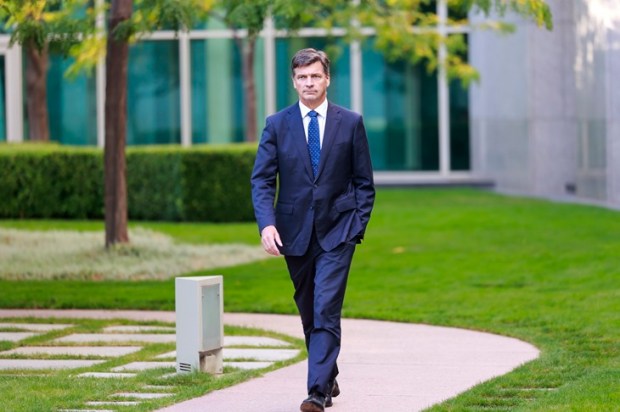
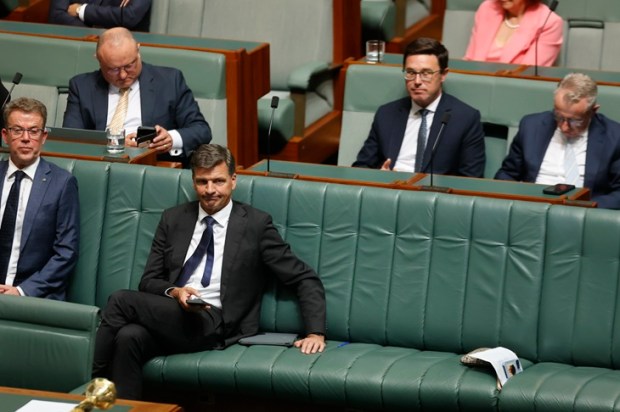
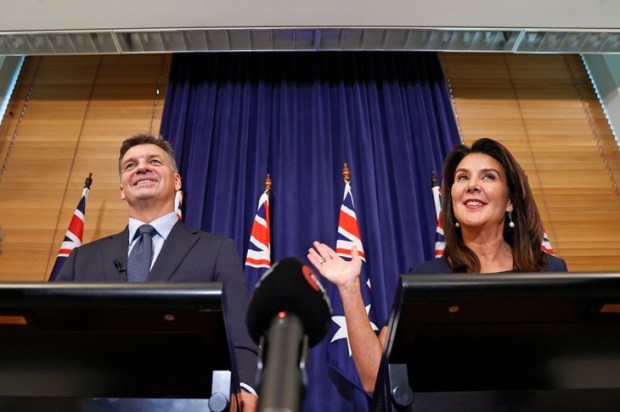
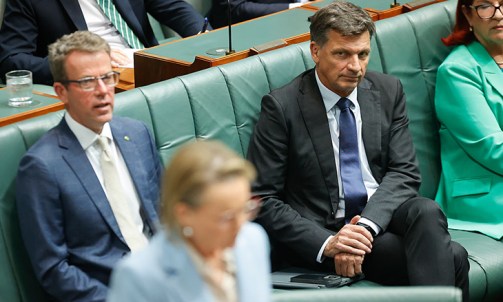
There is a palpable, renewed optimism now that Angus Taylor and Jane Hume are at the helm of the Liberal Party. ‘Change or die,’ says Taylor. It’s an honest phase, one that well captures the situation the Coalition finds itself in. While nothing in politics is ever certain, I’ll admit that the confidence in Taylor expressed by Tony Abbott and others is bolstering. A competitive Coalition campaign waged against Labor in 2028 no longer seems impossible. The trick now will be, bluntly, not to stuff it all up.
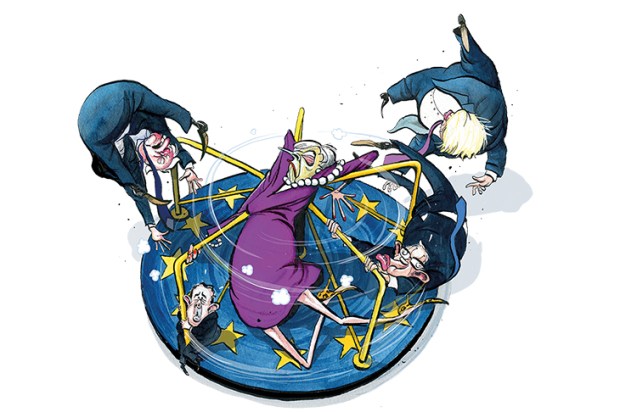
There is a line circulating through certain newspapers that says Taylor can only be as strong and successful as the team he leads. This is wrong. Taylor is now the captain of a ship that is foundering. To see his command righted, he himself must balance the iron-fisted determination of Magellan with the innovative experimentation of Nelson. Whereas life aboard S.S. Ley resembled something akin to Gilbert and Sullivan, Taylor needs to learn how to sail before he can ferry passengers along for the journey. It starts with him, not with others.
All the noise that is calculated to distract must be pushed by Taylor aggressively into the periphery. Expel Turnbull. Send that man back to Point Piper and into irrelevancy. Fire the staffers that need firing. Forget the renewable energy lobby. Importantly, forget the polls. The Liberal Party’s obsession with marginal seat polling began under Malcolm Fraser; in the last two decades, this political astronomy has yielded little and cost much.
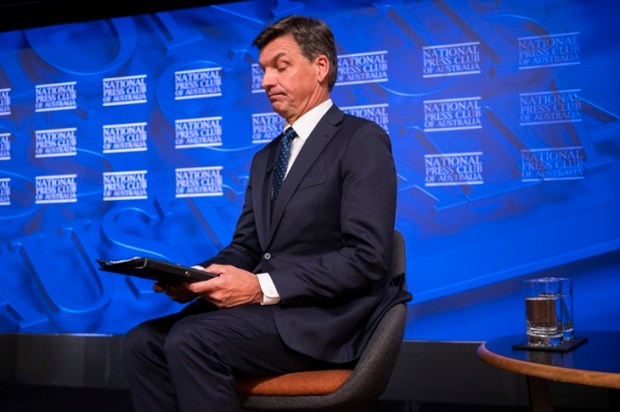
The days of speech patterns that sound condescending, as well as words that are so carefully chosen they are devoid of any real meaning, must end. A strong leader, however, need not be conceited in performance. During his first appearance, Taylor offered up something not seen among the Coalition frontbench for some time: a lighthearted smile. ‘We’ll get to you, PK; easy, PK!’ was the refrain. His handling of the press gallery was humorous and, one thought, rather Australian. Even the victim herself, Patricia Karvelas, seem to agree that Taylor and Hume performed well. It is essential that this new Liberal leadership, in projecting strength, not take itself too seriously.
That Taylor is unremarkable in identity for some is actually a broader boon. The Liberal Party’s rejection of the need for a leader who is a this or that, a record breaker or a charismatic populist, should be celebrated. This recalibration away from demagoguery back towards merit is worth continuing. I really do laugh at those who criticise Taylor for being a rich man with a private school education. Why shouldn’t we want a Rhodes scholar turned competent businessman for a political leader? The alternate currently serves as Prime Minister.
It was wise of Taylor to recognise, with respect, the orange parliamentary elephant. Anyone in the Coalition is kidding themselves if they think that One Nation’s increasing support is a mere triviality. What makes Pauline Hanson attractive to voters is not that she is unpolished and not even that she is infamous. Rather, she is consistent. The course of history has vindicated her. Immigration is now a major political issue. It is not coincidental that One Nation’s popularity increased sharply following events at Bondi.
Moreover, the Coalition might have some humility. One Nation is effectively its creation, which it conceived in 1996 when Howard disendorsed Hanson as a Liberal candidate. Back then, Hanson was punished for criticising the Aboriginal industry; decades later, during the Voice to Parliament referendum, Jacinta Price would argue similarly and, in victory, be praised a hero. If Taylor challenges major party hypocrisy and, by extension, the hypocrisy that tyrannises Australia’s legacy institutions, he’ll win much support.
Hume says the Liberals must move ‘forward, not left or right’ and, in practice, she’s spot on. Peter Sculthorpe used to say that if Australia were to create its own national ideology then that ideology would be founded upon pragmatism. Earlier, Menzies was getting at something similar during The Forgotten People when he argued:
‘…our greatest political disease – the disease of thinking that … every social and political controversy can be resolved into the question: What side are you on?’
In moving forward, the Coalition needs policy. Policy itself is formulated through intelligent ideas. Intelligent ideas are inspiring. They give rise to communities. Communities, when motivated and large enough, win elections. Without policy as its foundation, a political movement struggles to grow.
What policies, then, should Taylor and Hume lead with? There’s a caveat to the scope of this question: their policies must be Menzian. Although Howard was right to describe the Liberal Party as a broad church, even churches have roofs and walls. For too long, Menzies’ successors have been constructing outhouses in the churchyard to accommodate their illiberal policies. That has got to end. Change or die.
Last month, over in my Sky News Australia column, I detailed those policy directions that I sense are not only set to be electorally rewarding for any party that takes them up but that our moment in time demands. It’s true that Taylor and Hume made mistakes during the 2025 federal election. Menzies, too, made mistakes. He learned from them. The new Liberal leaders, as well as the entire Coalition parliamentary caucus, have access to a similar opportunity. In pioneering the novel policy approaches Australia needs, Taylor should lean into his past life as an agribusiness entrepreneur.
In these last nine months, many of my friends have left the Liberal Party. Some have gone over to One Nation. Others have retired, frustratedly, from the political scene altogether. I do think that much of the commentary farewelling Sussan Ley, although polite and well-intentioned, risks obscuring the extraordinary damage she has done. This episode can never be repeated; what remains of it in legislation must be repealed at the earliest opportunity. For now, under Taylor and Hume, it’s morning again.
Alexander Voltz is a composer. He is Music Editor of Quadrant, a columnist for Sky News Australia and National Spokesperson for the Australian Monarchist League. Follow his new Substack.