A crisis that began when I was still living in Latin America a quarter of a century ago has, at last, come to an end.
At the time, the company I was working with in Mexico took in Venezuelan refugees, as did my own household. Consultants I had worked with for years could no longer return home without fear. Careers were abandoned. Families were split.
A country once considered the jewel of South America collapsed into tyranny in full view of the world.
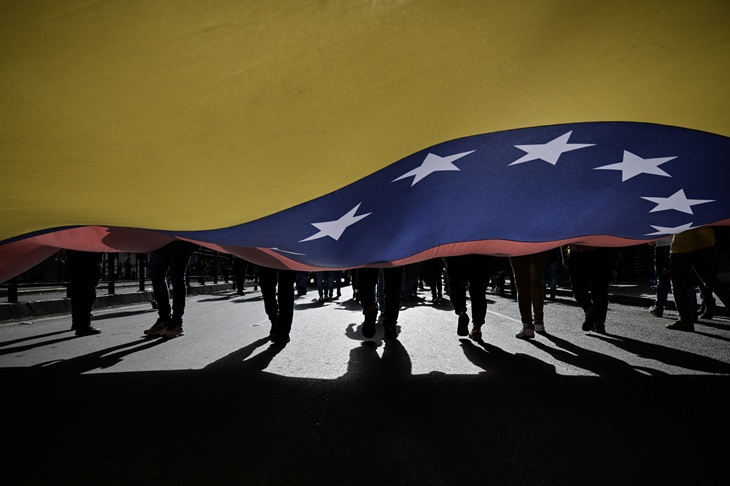
Today, that same country has erupted in celebration. Venezuelans can finally see a path back to recovering what was lost, not merely prosperity, but dignity.
Moments like this reveal character. What we are seeing from sections of the Western left is not celebration, but unease, ranging from open hostility to the ritual invocation of that hollow phrase, international law.
There is no such thing as international law in the sense it is usually invoked. There is no sovereign authority, no enforcement mechanism, and in cases like Venezuela, no serious intention to act. The phrase functions less as law than as a moral posture, a way of signalling disapproval without assuming responsibility.
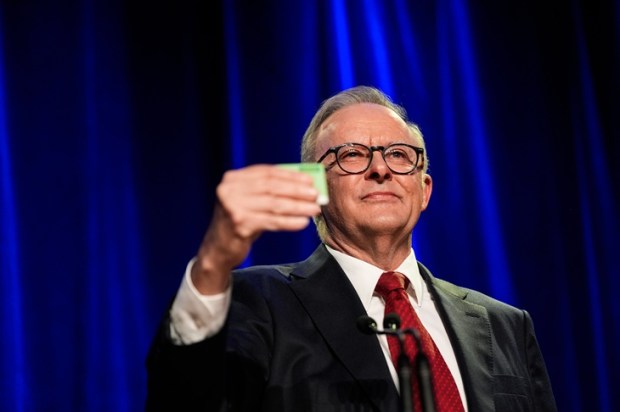
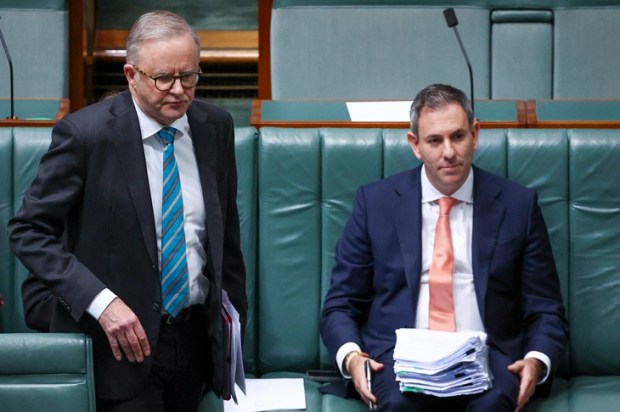
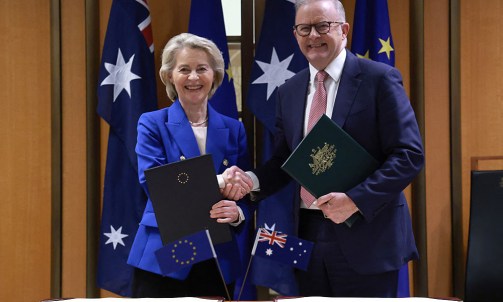
Australia’s Prime Minister, Anthony Albanese, offered the following statement:
‘Australia has long held concerns about the situation in Venezuela, including the need to respect democratic principles, human rights and fundamental freedoms. We continue to support international law and a peaceful, democratic transition in Venezuela that reflects the will of the Venezuelan people.’
Even the collapse of a dictatorship was not enough for the Prime Minister to side unambiguously with a liberated people. The qualifier had to be inserted. The distance maintained. The ritual phrase invoked.
Such statements do little beyond reassuring a domestic political constituency that has grown increasingly sceptical of Western power, wary of American influence, and hesitant to acknowledge the legitimacy of force when it results in liberation rather than domination.
This represents a notable shift. Even during the Cold War, much of the Western left recognised the Soviet Union as an enemy of human freedom and supported the right of peoples to live without fear. That moral clarity has faded.
As Venezuelans celebrated, Australian Greens senator David Shoebridge declared:
‘Murder, kidnapping, theft, greed and arrogance. Trump’s war on Venezuela is all of this. The US is a brutal and dangerous ‘ally’ that Australia, and the rest of the world, needs to protect itself from.’
In the United States, Bernie Sanders criticised American involvement while urging attention to domestic priorities. Meanwhile, New York mayor Zohran Mamdani offered public disapproval, despite holding no meaningful authority in the matter.
The pattern is difficult to ignore. Condemnation of power where it produces liberation is paired with silence where it produces oppression.
Australians should take note. We increasingly live under what can only be described as an elective dictatorship, a system in which citizens vote, but once governments are installed, possess limited recourse against executive overreach. In a country with no constitutional bill of rights and weak structural protections, this is not an abstract concern.
The events in Venezuela should serve as a warning. A political class that cannot bring itself to celebrate the fall of a dictatorship abroad is unlikely to defend liberty with conviction at home. Whether through the Liberal Party, One Nation, or a reconstituted National Party, Australia must move toward stronger democratic safeguards, beginning with a constitutional bill of rights.
The invocation of non-existent ‘international law’ is not neutrality. It is a signal of disagreement, issued in our name, to our closest ally for the act of liberating an oppressed people.