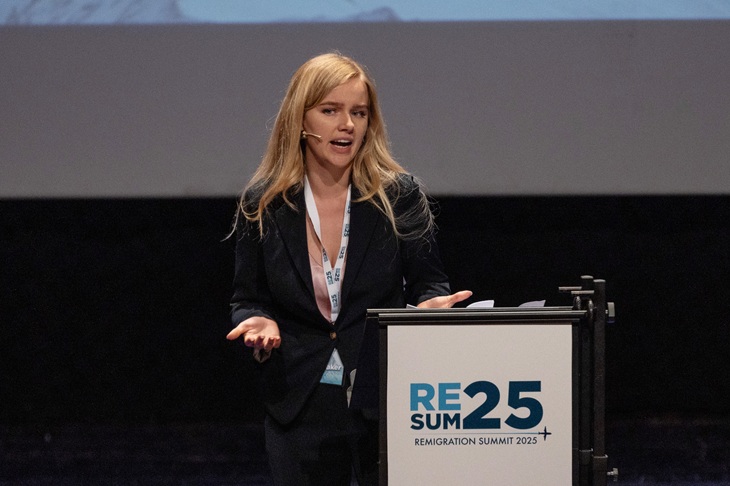
On January 13, 2026, British authorities abruptly revoked the Electronic Travel Authorisation (ETA) of Dutch political commentator Eva Vlaardingerbroek, effectively banning her from entering the United Kingdom.
She is a prominent young activist, with 1.2 million followers on X, which is impressive for a woman still in her 20s.
I’ve been banned from traveling to the UK. ??
No reason given. No right to appeal. Zero due process.
Just an email saying the UK government deems me "not conducive to the public good" – exactly three days after I criticized Keir Starmer.
I guess my point that the UK is no… pic.twitter.com/JAcMMcjf1I
— Eva Vlaardingerbroek (@EvaVlaar) January 14, 2026
The official notice stated her ‘presence in the UK is not considered to be conducive to the public good’, which is a broad and discretionary critique that she has been barred from appealing.
Not conducive to the public good?
Eva has been an avid supporter and defender of European farmers, and the common layman fed up with overregulation at the hands of Starmer and Ursula von der Leyen types, who Eva talks about on her X platform.
Not only does it look like Eva will be banned by a supposedly democratic government, but that the UK appears to be curious about whether or not it can censor X itself.
The move to ban Vlaardingerbroek has touched off intense debate.
Supporters of the activist argue the ban is politically motivated and hostile to free speech, while critics counter that governments have long had the right to restrict entry to individuals they believe pose a threat to public order.
Yet the language of the ban – coming days after Vlaardingerbroek sharply criticised UK Prime Minister Keir Starmer – has made it a lightning rod in broader culture wars over dissent, media control, and freedom of expression.
Many suspect the government believes Vlaardingerbroek is a threat to their ideology and policy agenda for the UK because her words resonate.
These moves by the UK government only invite a deeper look into who Eva Vlaardingerbroek actually is and what she stands for…
Vlaardingerbroek is a Dutch-born lawyer and commentator and right-wing political activist known for her outspoken views on immigration, national sovereignty, and cultural identity. She shot to prominence through speeches at international conservative events and media appearances, often framing her politics around a narrative that Western societies are undermined by unchecked immigration, globalist elites, and a loss of traditional values. She is unafraid to name names in a climate where global war tensions are ever increasing. No wonder many in the halls of European power are not fond of her and her huge platform.
Her platform online is nearly the same size as the UK Prime Minister’s – and she is particularly popular amongst young people, at only 29. She is an emerging political figure essentially helping spearhead the right-wing youth-led movement in Europe.
While some view her as a fearless truth-teller, others see her rhetoric as aligned with far-right ideologies, including a popular ‘conspiracy’ regarding the replacement of the European population. Her critics and some analysts argue her commentary amplifies divisive narratives and fuels social polarisation.
Personally, I am a huge fan of her. As someone her exact age, with a law degree as well, I have consistently been impressed by how factually accurate and well-researched her content is. I would not call her a conspiracy theorist at all.
Central to Vlaardingerbroek’s public persona is her critique of what she characterises as ‘globalist’ institutions – powerful networks of politicians, business leaders, and technocrats who, she claims, seek to erode national sovereignty and impose top-down policies on ordinary people.
Vlaardingerbroek and her supporters argue that these institutions embody a globalist agenda that undermines national identity, economic autonomy, and popular will. Whether one agrees with these claims or not, the influence of such institutions on policymaking and global discourse is undeniable – and a frequent subject of scrutiny in debates over globalisation and democratic sovereignty.
Supporters of Vlaardingerbroek argue that the UK’s decision infringes on basic norms of free expression, particularly in light of the thousands of arrests that have taken place in UK under new draconian hate speech laws.
Critics of Eva’s ban note that similar discretionary powers have been used in many countries to bar individuals perceived as inflammatory or harmful to public order. If more political activists are banned from Western countries, this may set a very low bar of ‘human rights’ standards for Western democracies that ordinarily pride themselves in being free and inclusive.
Whether seen as a principled defender of free speech or a provocative right-wing activist, Eva Vlaardingerbroek’s ban from the UK has become a catalyst in wider discussions about the limits of protest, the influence of global institutions, and the nature of democratic discourse.
In an era of deep political polarisation, cases like these underscore how charged the intersection of politics, public policy, and liberty is becoming. Unless more people fight for right-wing free speech in these times, it appears these freedoms will likely be taken from us, and within a very short period of time.