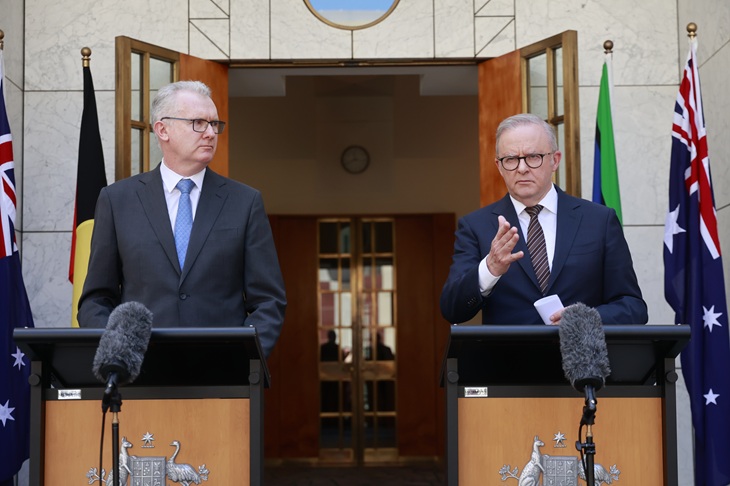
Within days of apologising to the Jewish community, an apology widely dismissed as empty words in the wake of the Bondi Hanukkah terrorist attack, Home Affairs Minister Tony Burke has once again denied a visa to an Israeli, mere hours before departure.
This time, it is Sammy Yahood, a British influencer now living in Israel. He was due in Australia to run self-defence workshops and launch his Peace Through Strength campaign, aimed at empowering Jewish communities and allies. Yahood’s program is designed to instil courage, resilience, and a sense of personal security, especially for young Jewish Australians who have grown up under the shadow of threats to their safety. He was also scheduled to speak at events organised by the Australian Jewish Association, a well-established community body devoted to fostering Jewish life and education.
Yet the Australian government cancelled his visa hours before his flight. The official reason: Yahood’s social media posts, in which he called for Islam to be banned and described it in hostile terms, constituted ‘spreading hatred’. Under the expanded character grounds introduced in the Combatting Antisemitism, Hate and Extremism Act 2026, this was sufficient to refuse entry.
On paper, this may sound principled. In practice, it feels deeply selective. Just last week, Burke issued statements expressing solidarity with the Jewish community after Bondi. Yet these words rang hollow. Despite announcing the appointment of an antisemitism envoy and new hate-speech laws, Jewish Australians continue to feel under-protected. Empty words will never compensate for a government that repeatedly fails to act decisively when the safety of a community is at stake.
Meanwhile, Burke has repeatedly denied visas to Israeli and Jewish speakers deemed likely to ‘spread division or hate’, including Israeli politicians Simcha Rothman and Ayelet Shaked, and American-Israeli entrepreneur Hillel Fuld, scheduled to keynote a charity launch on Israeli innovation. Each of these individuals was engaging in legitimate dialogue on Jewish resilience, Israeli politics, or community empowerment. Yet Burke’s office barred them, while figures who openly promote hostility operate with impunity.
Take some of the more extreme Islamic preachers, whose sermons and public statements have repeatedly alarmed Jewish Australians, or commentators who have said to Zionists ‘may you never know a second’s peace in your sadistic, miserable lives’ while denying their right to ‘cultural safety’. Neither sentiment has faced scrutiny comparable to that applied to Jewish or Israeli speakers. The contrast is stark: some forms of opinion are aggressively policed; others excused, even normalised.
This double standard is not just frustrating; it is dangerous. It erodes trust in Australia’s institutions and sends the message that enforcement is politically motivated, not principled. Laws designed to combat hate lose credibility when selectively applied, and communities that feel unprotected grow understandably wary.
The new hate laws themselves are another concern. Rushed through faster than a Formula 1 race, they concentrate enormous power in the hands of a single minister. By expanding visa cancellations, group listings, and enforcement discretion, the legislation effectively hands Tony Burke sweeping authority with limited transparency or accountability. Theoretically, these laws are meant to prevent the spread of hatred and extremism. In practice, they risk becoming tools for political theatre: denying visas to Jewish speakers while avoiding decisive action against other figures who may promote hostility.
If Burke was to attend a Jewish event in Australia, he would see that hate is neither encouraged nor tolerated. Jews don’t need higher walls outside their institutions. They don’t want fortress-like protection; they want to walk down the street feeling safe in their own country and suburbs. Self-defence workshops, educational programs, and community dialogue are not threats, they are acts of empowerment. Yet those who promote them are treated as a problem, while those who openly incite hostility face little scrutiny.
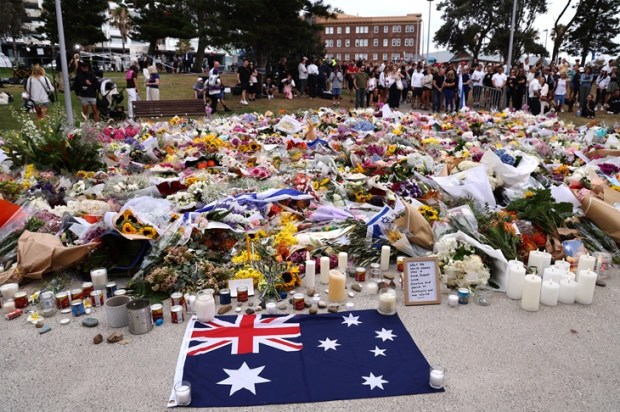
The Bondi massacre should have been a wake-up call. Fifteen innocent lives were taken by radical Islamists. The environment that allowed it has been emboldened by silence and selective enforcement. While condolences were offered and speeches made, little substantive change followed. The sooner Burke admits that radical Islam is a problem, not just for the Jewish community but for all Australians, the better. Is he really willing to play roulette with Australian lives again? Strong words alone do not protect communities; action does.
Looking back on Australia Day, perhaps Bourke should reflect on which community celebrated Australia Day and who was marching against Australia and yet again making our national day about Palestinians. I digress…
The expanded character grounds in the Combatting Antisemitism, Hate and Extremism Act allow the minister to refuse or cancel visas if someone’s public rhetoric constitutes hateful or extremist conduct. But the law’s selective application reveals its weakness. If the goal is to protect Australians from extremism, enforcement must be consistent and equitable. Denying visas to Jewish speakers while ignoring others undermines both the law and its intent.
Jewish Australians have a long history of resilience in the face of targeted violence, discrimination, and marginalisation. From the Holocaust to attacks in Melbourne, Sydney, and beyond, the community has learned the cost of ignoring early warning signs. Yet the current government appears content to focus its powers selectively, leaving the community to navigate threats largely on its own.
This is not about appeasing one group or another. It is about principle, fairness, and safety. Jewish teenagers just last week were allegedly almost run down in East St Kilda by 15 and 16-year-old offenders who allegedly yelled ‘Heil Hitler’. One of them has been bailed. When community members are denied the opportunity to learn self-defence, and when political expedience overrides protective action, the government is still failing in its primary duty: to keep Australians safe.
The question remains: when will this stop? When will enforcement be applied evenly, without political bias or selective outrage? When will the current government recognise that Jewish Australians are not asking for walls or fortresses. They are asking for the simple, fundamental right to live safely in their own country? When will the minister stop accusing the opposition of politicising antisemitism when every decision his party makes is politically driven.
If Tony Burke were serious about combatting hate, he would attend these workshops, meet the community, and see first-hand that empowerment is not extremism. It is necessity. And we may further hope that he acts consistently, whether the target of scrutiny is Jewish, Muslim, Christian, or anyone else because the law’s credibility, and the safety of Australians, depends on it.
For now, what we see is a troubling pattern: selective enforcement, political calculation, and a failure to confront real threats. Jewish Australians should not have to choose between their safety and their freedom of expression. They should be able to walk down the street, attend a synagogue, or participate in a community program without fear, not face barriers because a minister chooses to wield law as a political tool.
The Bondi attack was a tragedy. Its lessons remain unlearned. And until ministers like Burke start applying laws consistently, Jewish Australians will continue to live in fear, their voices marginalised, and their communities under threat. Self-defence workshops, education, and open dialogue are not problems to be banned; they are solutions to be embraced.
It is long past time for transparency, consistency, and courage in leadership. The sooner Tony Burke admits radical Islam is a threat to all Australians, not just one community, the sooner real change can begin. Until that happens, words will remain just words and communities will remain at risk.