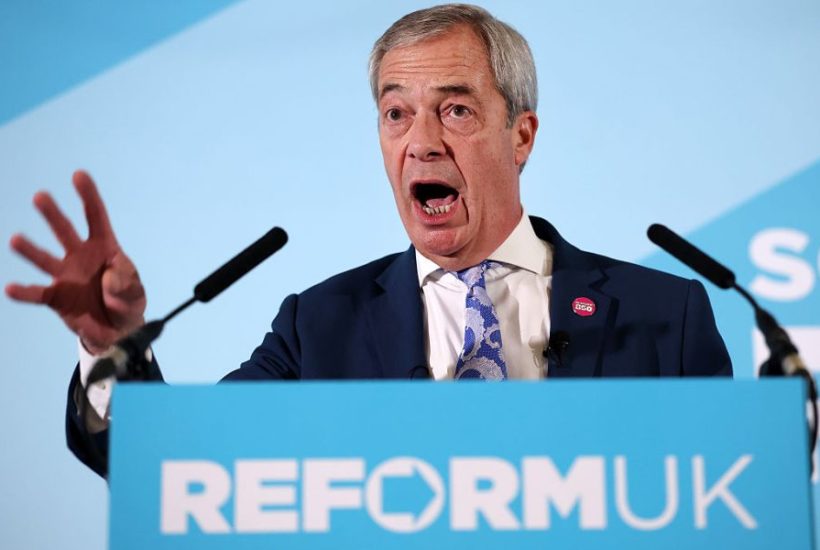
It is easy to see the political attraction for Nigel Farage of promising to reverse Rachel Reeves’s decision to end the 5 pence cut in road fuel duty. The idea that we are in the midst of a cost of living crisis has not gone away – in spite of the fact that, notionally, average wages are rising well ahead of inflation. It will seem a very different picture for homebuyers who are coming off fixed-rate mortgages this year – rates which were fixed in the months of ultra-low interest rates during and immediately after the pandemic. But is it really such a good thing to suppress taxes on road fuel at a time when the roads are in such poor condition? It might be a better and more popular policy to let road tax rise – and to ring-fence the money for resurfacing work.
We have been thumped with all manner of tax rises in recent years as governments have tried and failed to tackle an enormous deficit. But fuel duty is the tax that got left behind. It has not been raised in 15 years, when George Osborne froze it at 57.95 pence per litre. In 2022 Rishi Sunak cut it by five pence, to 52.95 pence per litre.
Motorists still pay more in fuel duty than is spent maintaining and building new roads
On both occasions the initiative was supposed to be a temporary measure to cope with high global oil prices – the government was absorbing some of the rise in fuel costs so that motorists wouldn’t feel the full effect of the surge in oil prices at the pump. But the freeze somehow stuck, even when crude oil prices started to fall again. As a result, the duty you now pay on a litre of fuel is equivalent only to 35.53 pence at 2011 prices – the real take from a litre of fuel has fallen by 39 per cent, in other words.
This is fiscal drag in reverse – where the Exchequer rather than the taxpayer benefits from the effects of inflation. Meanwhile, cars have become a little more fuel-efficient, and the rise of electric cars is starving the Exchequer of revenue – something which will be partially reversed by Rachel Reeves’s 3 pence per mile charge on electric cars, but not until 2027.
But what seems like a good deal for the motorist seems rather less so when you look at the state of the roads. The longer fuel duty has been frozen, the worse the state of the roads. Stretches of highway in one of the world’s wealthiest countries are beginning to resemble third world conditions. It is impossible to drive anywhere without being faced with deep, suspension-killing potholes.
When they do eventually get filled, it is often with a dollop of tarmac which itself soon begins to disintegrate. Resurfacing works to avoid the development of potholes in the first place have become a rarity. Meanwhile, towns and villages remain heaving with traffic for want of bypasses. With a few exceptions, investment in the country’s road network has come to a halt. No stretch of new motorway has been opened since 2018 – a record since the first motorway was opened in 1958.
Motorists still pay more in fuel duty than is spent maintaining and building new roads – fuel duty will raise around £24 billion this financial year, compared with the £6.4 billion spent last year on national roads and the £6.4 billion spent on local roads. While Reeves promised an extra £24 billion for roads in her spending review, that is spread over a five-year period.
So long as fuel duty remains frozen, it is hard to see significant extra sums being spent on roads, either new ones or looking after old ones; the political will is going to be lacking. Motorists essentially face a choice: low road taxes and awful roads or higher taxes and better roads.
There is certainly a Mr Toad vote for Farage – and any other political leader, for that matter – to tap into. But would these voters really be more impressed by a continuation of a fuel duty freeze at a time when petrol prices are falling anyway – or would they prefer more to be spent on the roads? That is not clear.