Almost 19 years ago, I touched down at Darwin International Airport as a wide-eyed six-year-old alongside the two people I admired most in the world. I didn’t know much about Australia and, to be frank, I didn’t particularly care, because my mother had assured me that we were ‘just visiting’ (as with all children, I abhorred the idea of change).
Like any great love story, Australia and I got off to a rocky start. At lunchtime on my first day of grade two, I unleashed a blood-curdling scream in the school playground after coming face-to-face with a descendant of the devil. Against a backdrop of rapturous laughter, one of my classmates was kind enough to inform me that this creature was the perfectly harmless frilled-neck lizard. Further embarrassment followed a few days later when I accepted an invitation to a lunchtime game of ‘marker’s up’ and – without any foreknowledge of the rules – showed up wearing shin guards.
Yet, for reasons inexplicable to my younger self, I kept being invited back. My earliest friends introduced me to the ecological peculiarities, linguistic idiosyncrasies, and culinary quirks that set Australia apart. My bumbling ways didn’t seem to matter; I embraced their way of life and they embraced me. With their help, I began to feel like less of a misfit – and this strange new land began to feel like home.
That was the first time I understood the meaning of a fair go.
The stakes were slightly higher for my parents. As I navigated the treacherous terrain of primary school, they sought to lay the foundations for a new life. That meant working punishing hours, tackling notoriously difficult qualification exams, and even living in different cities for one year – all the while raising a child who was too young to understand why he had to be the last one picked up from after-school care every single day.
Despite the challenges of those early years, I never once saw my parents complain. Instead, they would commonly invoke a different precept: that being in Australia was not a right but a privilege, and that the measure of our time here was not how much we took but how much we gave.
I now realise that their steely resolve – as impressive as it was – rested on an unerring belief in the greatness of this country; a greatness composed of economic prosperity, expansive liberties, rich traditions, and a greatness made accessible through the promise of a fair go. Equally, they understood that a fair go does not ensure a bountiful harvest – it merely guarantees fertile ground. The fruit must still be earned. This was a feature, not a bug, of a free society.
These qualities remain distinctive to Australia and its Western allies. We aren’t perfect – archaic tax codes, reckless immigration policy, profligate government spending, soft sentencing, and increasingly brazen assaults on free speech all threaten our social fabric. Nevertheless, the opportunities and privileges that we take for granted have eluded the majority of people in the majority of countries for the majority of human history.
Such a statement, though verifiably true, has become ever unpopular in recent years. Prevailing intellectual winds have cast national pride as a symptom of ignorance, and shame as a sign of enlightenment. Anti-Western bias has become a status symbol, giving rise to unlikely alliances, selective activism, and a booming market for victimhood. There is no longer such a thing as a good or bad action: only a good or bad actor.
Only under this paradigm does an Australian sportsman represent his country and build a multi-million property portfolio before using his retirement speech to preach about racial injustice.
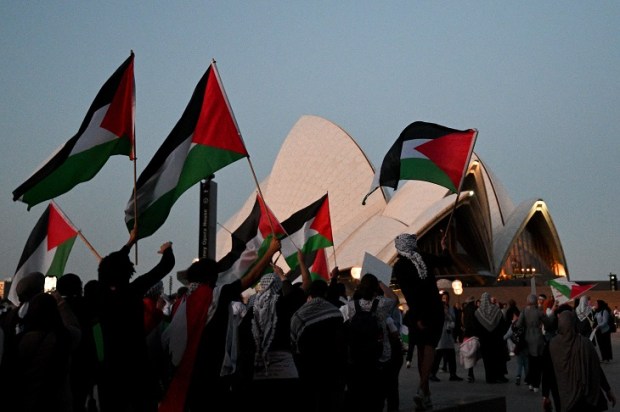
Only under this paradigm do thousands march against an inactive foreign conflict while their own state burns.
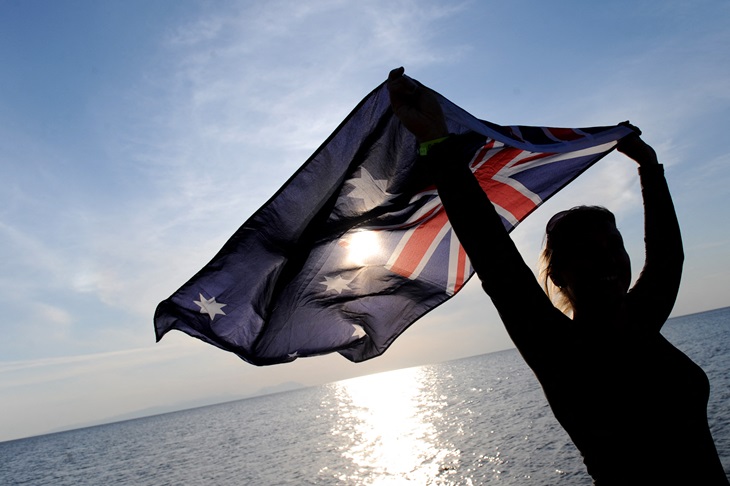
Only under this paradigm does the destruction of the national flag constitute an act of resistance.
Only under this paradigm does a sitting senator talk about burning down Parliament House.
Only under this paradigm does solidarity with the oppressed depend on the identity of their oppressor.
And only under this paradigm do reactionary fringe groups have a chance at gaining relevance.
It is plainly obvious to most Australians that our nation is not the author of all evil. After all, the war on the West is being waged under the banners of equality, compassion, tolerance, and self-determination: ideals that we sanctified in the first place.
And yet our deference to the hostile minority may prove to be our undoing. For all of our policy shortcomings, the deadliest threat to Australia’s greatness is the rejection of its goodness.
That is why Australia Day matters to me. On this day every year, I think about frilled-neck lizards and marker’s up. I think about those long days at after-school care and the year my parents spent apart. I think about our exemplary record of egalitarianism, our unshakeable spirit, our spectacular landscape, our doggedness, our fervour, our sincerity. I think about the moments that defined our history, from Kokoda to the 1967 referendum. I think about the trailblazers who pioneered women’s suffrage and shaped the Universal Declaration of Human Rights. I think about the great Australians; the darers and the dreamers, the Steve Irwins and the Cathy Freemans.
And when I think of these things, the truth becomes clear: the Australian experiment has been a resounding success. While we ought not to shy away from the darkest chapters of our history, we can also take pride in our ability to change for the better. On that front, we remain peerless.
There will always be a debate around the date – but for as long as January 26 is Australia Day, it must remain a day of unabashed celebration. The story of our nation is like no other. The legacy we’ve built is well worth preserving.
Happy Australia Day, all.