There’s no doubt John Stuart Mill regards free speech as an essential characteristic of any liberal, democratic society. Mill argues, ‘If all mankind minus one were of one opinion, mankind would be no more justified in silencing that one person than he, if he had the power, would be justified in silencing mankind.’
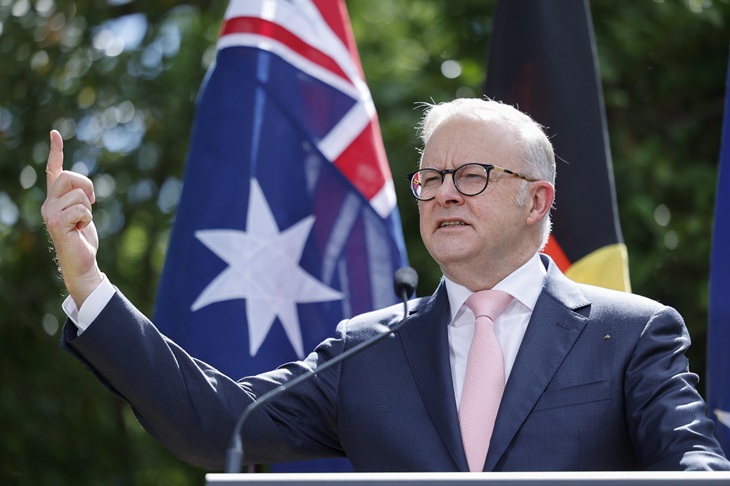
Based on recent events in Australia it’s obvious very few, if any, know of Mill’s argument or, if they do, they see no value in protecting such a critically important right. The so-called hate speech legislation introduced by Australia’s Labor government, led by Prime Minister Albanese, provides an apt example.
While justified in terms of protecting citizens by ensuring they are not victims of hate speech, especially antisemitism, the legislation threatens long-held freedoms that thousands have fought for and defended with their lives.
As argued by Morgan Begg from the Melbourne-based Institute of Public Affairs, ‘The government’s proposed “hate speech” legislation will further entrench sectarian division, allow the government to censor and imprison Australians for their political beliefs, and could result in certain political parties being outlawed.’
Begg goes on to say, ‘The proposed “hate speech” laws are one of the biggest assaults on Australian values in peacetime history, and, if passed, would be used to usher in a police-state that would shut down debate and democracy.’
A second critic of the legislation, Senator Matt Canavan, a senior member of the National Party, also sees the bill as a threat. He said, ‘This bill gives the government the power to ban entire organisations as hate groups. It restricts the basic democratic right to freely associate.’
Such were the flaws in the legislation, including it being poorly designed and being rushed through Parliament, most of the National Party voted against the legislation leading to the party splitting from its coalition partner, the Liberal Party.
There’s no doubt the Labor government and bodies like the Australian Human Rights Commission, under the guise of protecting so-called victim groups from unfair abuse and harassment, could pose a threat to freedom of speech.
During Covid in Victoria, a pregnant mother was arrested in her house for daring to post on social media her condemnation of the draconian laws introduced by the then-Premier Daniel Andrews. Freedom of assembly and freedom of speech where also subject to police brutality including pepper sprays and rubber bullets.
The various state-based human rights organisations are also threats to citizens’ ability to argue the case for deeply held convictions and beliefs. In Tasmania Archbishop Porteous was taken before the Anti-Discrimination Commission for daring to circulate pamphlets to Catholic schools arguing the case for traditional marriage.
Unfortunately, censoring opinions and cancelling debate is increasingly common and no longer restricted to left-of-centre governments and organisations. Two personal examples illustrate the danger. In the lead up to celebrating the arrival of the First Fleet in 1788 there are always debates about the impact of British settlement.
Aboriginal activists condemn it as Invasion Day and the beginning of genocide. Supporters praise the arrival of the British as the beginning of what now is a relatively prosperous, democratic nation based on the best of Western Civilisation.
In response to an opinion piece in The Australian newspaper, normally considered a right-of-centre publication, I submitted a response arguing it was wrong to suggest Aboriginal culture, before the arrival of the First Fleet, was a garden of Eden. I wrote, ‘Read Watkin Tench’s and William Buckley’s first-hand accounts of Indigenous Australians after the arrival of the British and it’s obvious Aboriginal culture, by comparison, was primitive and life was far from ideal. Stop romanticising the past.’
Instead of publishing the comment, I was told it was ‘Not Approved’ without any explanation as to why. A second example of being censored was when I posted a comment on LinkedIn arguing, once again, it was wrong to characterise Aboriginals before settlement as noble savages.
Based on historical evidence I wrote Aboriginal culture involved cannibalism and tribal wars as well as being primitive, and compared to the British, uncivilised. The censors argued my comment did not comply with LinkedIn’s hate speech guide and if I continued to post such comments ‘your account may be restricted’.
There’s no doubt the freedom to speak one’s mind and to publicly engage in discussion and debate championed by Mill has been lost. The type of censorship and thought control common to totalitarian regimes and warned about in George Orwell’s 1984 is now widespread across the Anglosphere.
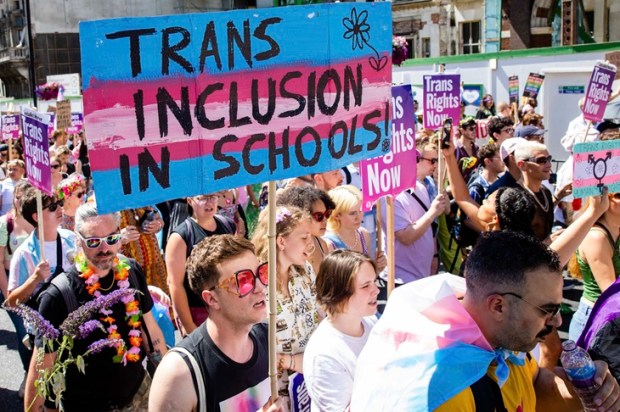
The infection is so virulent that the Left is eating its own, proven by the number of progressive, lesbian academics in the UK and Australia condemned and abused for arguing against transgender ideology and in favour of protecting women’s rights.
Such is the danger we are now in it’s critical, regardless of political or ideological beliefs, that those committed to free speech reassert open and free debate as one of the essential characteristics of a liberal, democratic society.
Dr Kevin Donnelly is a Melbourne author and cultural critic, his email address is kevind@netspace.net.au