Does a nation have rights? Must others respect its sovereignty? It depends.
Since only individuals have rights, Ayn Rand (1905-1982)’s answer is that only nations that respect individual rights should have rights to sovereignty and have their borders respected.
Once we enter the world of realpolitik, Rand must, and does, distinguish between different shades of rights violations. She puts forward four criteria for a nation to be earmarked as dictatorial:
- There are no free and fair elections.
- Executions [and presumably arrests] without trial or with a mock trial, for political offences.
- The nationalisation or expropriation of private property.
- Censorship by government.
Even the so-called free world has fallen prey to one or more of these offences. The Biden Administration violated the free speech rights of its citizens by pressuring Facebook behind the scenes to ‘fact-check’ and censor as per the establishment’s preferred narrative. But the ‘free world’ is to be distinguished by its recognition of the principle of individual rights (even though it does not implement it fully in practice). The United States has a Bill of Rights written into its Constitution. In the essay Collectivised ‘Rights’, (Chapter 13, The Virtue of Selfishness), Rand says:
It is not a free nation’s duty to liberate other nations at the price of self-sacrifice, but a free nation has the right to do it, when and if it so chooses.
But there is, of course, a posterior condition on the ‘conqueror’, that they free the oppressed nation from enslavement, rather than proceed to enslave it themselves, or switch one dictatorial regime for another. One could say this is the straightforward classical liberal answer to the perennial foreign policy question.
This answer does not seek to fit any of the four major schools of foreign policy. It’s neither Jeffersonian (isolationist, non-interventionist … think Ron Paul), nor Wilsonian (a moral duty to promote democracy, peace, and international order globally), nor Hamiltonian (alliances between big business and government), nor Jacksonian (only American security interests first). Nor does it go anywhere near the Monroe Doctrine (no colonialism in the Americas) now quoted by President Donald Trump to justify the Venezuelan coup.
Way back in 2017, early in Trump’s first term, Professor Daniel Hamilton (ironic name) of Johns Hopkins University classified Trump as squarely Jacksonian.
In Professor Hamilton’s opinion, Jacksonian sentiments are [emphasis mine]:
Americans must remain vigilant and well-armed in a dangerous world. They are ready and willing to do whatever it takes to defend the United States. Jacksonians do not like limited wars for limited goals. Although they value allies and believe that the United States must honour its word, they do not believe in institutional constraints on America’s freedom to act, unilaterally if necessary, in self-defence. They share the Jeffersonian preference for selective or limited engagement with the outside world, but they are also least tolerant of Jeffersonian efforts to restrict or limit American power. They do not support free trade and are wary of the loss of economic autonomy implied by trade liberalisation and economic interdependence.
As recently as May 2024, and then again in Trump’s second term in December 2025, Trump has been labelled a Jacksonian or a Hamiltonian-Jacksonian by scholars on both sides of the aisle.
Libertarian theorist Murray Rothbard (1926-1995) would agree with Ayn Rand that the conqueror must free the enslaved nation and then retire to its old position to justify a war – one invasion that the intensely anti-state and anti-war Rothbard approved of (‘just cause’ war) was the Indo-Pak war of 1971 where India liberated East Pakistan from the oppression of West Pakistan to create a new country, Bangladesh, and then went back.
But Rothbard was heavily in favour of private security agencies – he would applaud a security agency crossing borders to avenge and restore the expropriation of property, which is exactly what Venezuela and several Arab nations did undertake in the 1960s and 1970s. But then, why would the same action undertaken by a state force be evil? The danger, says Rothbard, is that the state is far more likely to loiter around rather than revert to its original position.
The Confiscation of Property
Trump does cite oil confiscation as one cause, and the Australian Broadcasting Corporation (ABC) says his claim is false. But the ABC is sadly mistaken. Firstly, the ABC quotes an economist who claims that Venezuelan law allows the state to ‘steal oil’ – assets under the ground belong to the State – never mind the immense investment of technology. But such a shameful law does not make the steal moral. And the Arab-nations and Venezuelan steal was much more than oil – it’s of technology, know-how, platforms, exploration costs, R&D, and of proven and probable reserves.
Reuters reported that the World Bank arbitration tribunal ordered Venezuela to pay Exxon US$1.6 billion. Even if that amount was fair (which is doubtful), Venezuela unilaterally reduced it to US$1 billion and seemingly, never paid most of it. President Maduro also aggressively invaded Guyanese airspace to forcibly take Exxon’s oil in Guyana, reportedly ‘denying the US oil companies their rightful share’. Maduro used socialist rhetoric against Exxon in particular – he may be profoundly ignorant that capitalism would have made his country prosperous. Arguably, many billions are still owed to the oil companies by Venezuela. So far, no US president has had the courage to topple a dictator unwilling to pay what’s due. But Trump wants to go further, and force the regime to develop its more difficult ‘heavy oil’ reserves, which it does not have the technological capacity to do on its own (hence the decline in production). Inadvertently, this will boost the Venezuelan economy. But Trump does not cite such Wilsonian sentiments to go out and develop other nations, and help other peoples, albeit both he and Secretary of State Marco Rubio argue that Nicolás Maduro was not properly elected to the Venezuelan presidency, and at some point in the future there could be free and fair elections.
Trump, a statist actor, is definitely not a Rothbardian. A classical liberal Randian? Not quite. ‘Individual rights’ and ‘freedom’ are not entering the Trump lexicon on the Caribbean. But that does not make Trump’s actions morally repugnant. We need to dig a bit deeper.
It’s Jacksonian security interests that are top of the Trump agenda, especially when he asserts that the US will run Venezuela in the foreseeable future.
The Jacksonian Security Angle
According to Kyle Gunn’s piece on 17 December 2025:
The relationship between Iran and Venezuela isn’t new. Their formal ties predate the Iranian Revolution of the late 1970s, but they got much deeper under Hugo Chávez in the early 2000s and under Nicolás Maduro since 2013. In the past two decades, the two oil-dependent countries have deepened their ties with increasing industrial, economic, and military cooperation that includes fast-attack boats, anti-ship missiles, drones, and even a Hezbollah presence.
Sworn to wiping Israel off the map, Hezbollah and the Iranian Ayatollahs are not merely irrational enemies of the US ally, Israel. They are enemies of humanity, and thereby enemies of the US, the West, the Iranian people, and of everything that’s decent and humane in this world.
Gunn reports that, in June 2022, Venezuela and Iran signed a 20-year cooperation agreement that covered oil, industrial projects, and defence. Via this deal, Iran got a logistics hub in the Western Hemisphere to dodge US sanctions, new markets for its oil and arms industry, and a friendly government willing to host Iranian ships, aircraft, and advisers. Venezuela got fuel and refinery expertise to keep its declining energy sector running, industrial assistance for automobile factories and drone workshops, and access to new Iranian military technology, including drones, at a time when its Russian-supplied gear was aging. Hence the citation of the Monroe Doctrine – my enemy is too nearby, in South America.
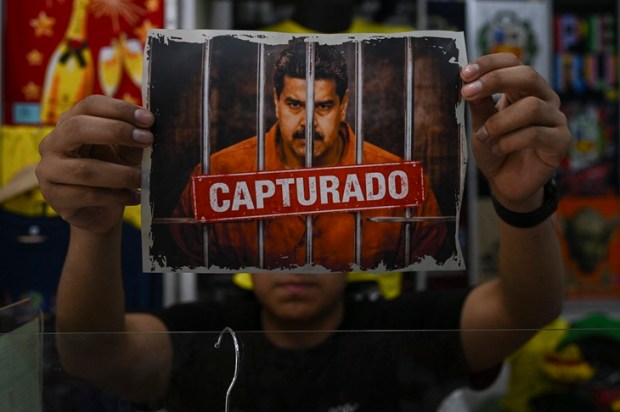
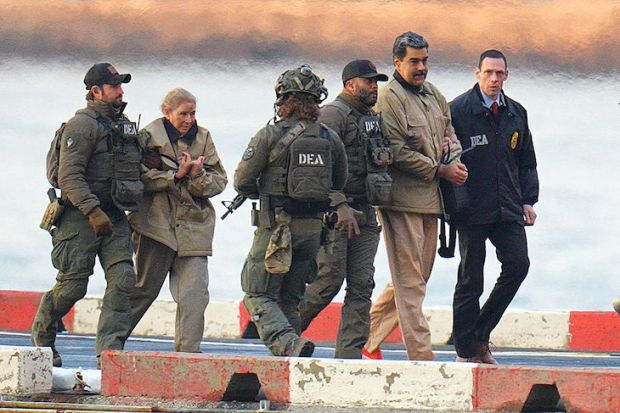
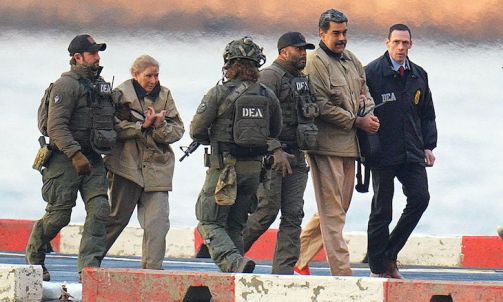
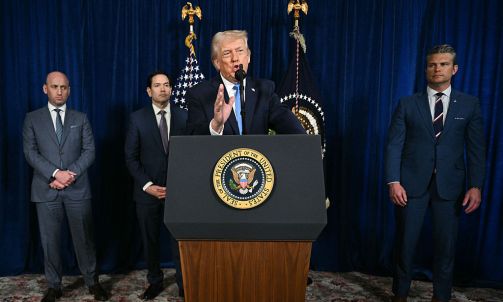
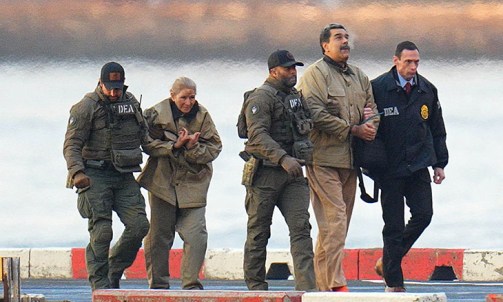
After Maduro was captured, Rubio expressed the Jacksonian security objective: ‘Caracas must sever ties to Iran and Hezbollah, stop drug trafficking, and ensure Venezuela’s oil industry does not benefit adversaries of Washington.’ Rubio said Maduro had been given ample opportunities to comply or have a rich exile in Turkey but chose not to – the ‘topple’ could have been peaceful. Maduro called Trump’s bluff – only, Trump wasn’t bluffing.
The Jacksonian Primal Beast
This perspective now gets us inside Donald Trump’s head.
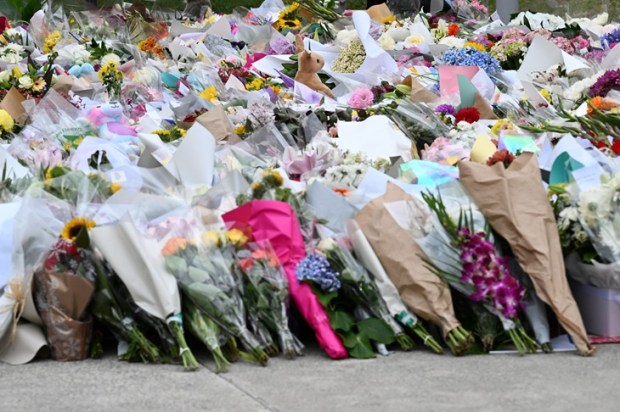
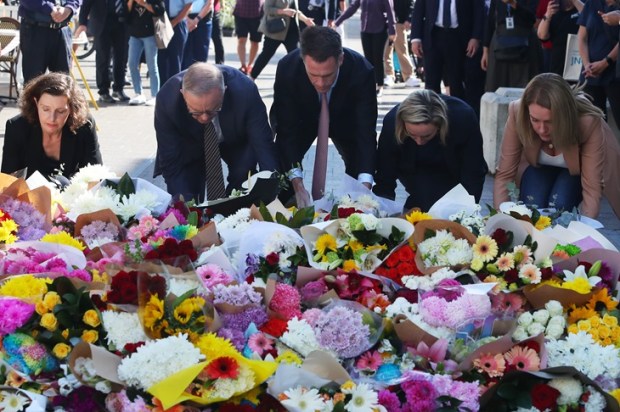
Now imagine yourself to be the lone sniper with a clear shot for about ten minutes (as was the case) of the lone terrorist inside Lindt Café in Sydney, December 15, 2014, holding 18 innocents hostage. The sniper reportedly never received the authorisation to take the shot, apparently because police protocol required a clear, immediate threat to justify lethal force (the terrorist carried a rifle and claimed he also had a bomb).
Now, you must further imagine that your family – your loved ones, your spouse/partner, your children – are part of the 18 hostages. Who knows which way the negotiation will go? Will anyone die?
One shot can end it now. Would you take the unauthorised shot if it costed you your job? And perhaps some time in prison? What may happen afterwards? The details are unclear.
- If her husband Frank was inside, Rand would state an overwhelming Yes.
- Even the non-interventionist libertarian Rothbard would shoot.
- I would take the shot without hesitation.
- And Donald J Trump would shoot without blinking for half a second.
And now remember that Trump takes his presidency seriously – Americans are family and he will stop at nothing to protect them – he’s not merely Jacksonian, he’s a primal beast of a Jacksonian. And if you, the reader, just said, ‘Yes!’ inside your head, you, too, are like Trump, Rand, and the rest of us – Jacksonian – security is paramount.
Back to earth. Trump has taken the shot, a morally righteous one – the action defensible in Randian terms, strongly from a Jacksonian viewpoint, but at a stretch (police, not military action as Rubio said) from a Rothbardian perspective.
What may happen afterwards? The details are unclear. But there is an opportunity to immensely benefit ordinary Iranians, Venezuelans, Israelis, and Americans. And to make the world a safer and more prosperous place – let’s do it.
N.B. Vinay Kolhatkar is an author, publisher, and podcaster. He is also the federal director of policy of the Libertarian Party (Australia), but the views expressed herein are his own.