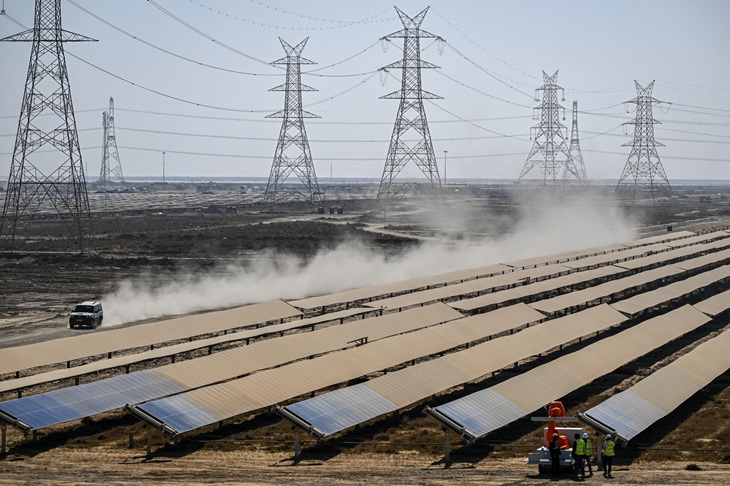
Australia has reached an emperor-has-no-clothes moment in energy. The cracks are visible. But the course doesn’t change. Not because the evidence is unclear. But because ideology has become a blindfold.
For many years, Australia has told itself a reassuring story about energy. Coal would go down. Renewables would go up. Emissions would fall. Costs would fall. Reliability would be maintained. It was a nice story. But energy systems don’t run on stories. They run on physics. Engineering. Materials. Land. Weather. And time.
What Australia effectively did was set a target, an endpoint, before designing the system to reach it. We chose a destination – ‘100 per cent renewables’ – and assumed the system would adapt. That transmission would appear. Storage would scale. Communities would consent. Costs would fall. And reliability would take care of itself.
Over time, the gap between narrative and reality got bigger. To the point that Australians now face some of the highest electricity prices in the OECD, despite living in one of the most energy-rich countries in the world. The Australian Energy Market Operator has to intervene more frequently than ever because weather-dependent generation creates volatility in the grid that must be actively managed. Coal plants scheduled to close are being kept online because we haven’t solved what replaces them at scale. And the same politicians who promised that electricity would be cheaper, cleaner, and more reliable now rarely say all three together. That silence tells you something.
My Own Reckoning
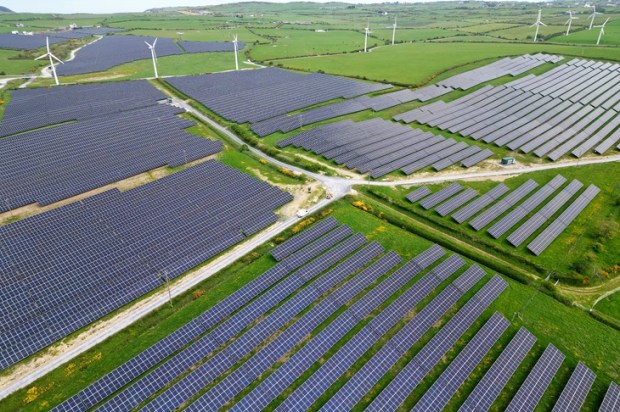
I was a strong advocate of renewable energy. Then I started seeing things that didn’t add up. I woke up to the cost of everything required to make intermittent power usable: transmission lines, grid stabilisation, and storage. Then, the scale of what we needed to build. Not just wind and solar. But batteries, interconnectors, peaking plants and duplicate capacity. Then the footprint. Thousands of square kilometres of land. Cutting through pristine landscapes.
I realised that no matter how much we built, we needed to build more. Weather dependency means the system can never be complete. I saw projects announced with excitement, then quietly abandoned. Transmission lagged generation. Communities pushed back because of land use, cost, and fairness. Curtailment became routine.
And here’s the paradox. Australia is installing renewables faster per capita than almost any country on Earth. Yet bills are rising, reliability is falling, and we need more coal and gas than the plan promised.
I began to notice a gap. Between what was being said publicly and what engineers, grid operators, insurers and investors were saying privately. That was my own emperor-has-no-clothes moment.
So, I did what any serious person should do. Due diligence. I tested the system. I went around the world attending international energy conferences, technical briefings, and policy forums. Met with regulators, industry, and utilities across Europe, North America and the Middle East. And everywhere, the same thing came up. Firm power. The engineers understood it. The grid operators planned around it. The insurers priced risk through it. The investors demanded it. But the political conversation back home avoided it.
The Real Constraints
Australia’s problem isn’t renewables. It’s treating ‘100 per cent renewables’ as a system endpoint, rather than a component. This approach presents four structural constraints.
First, the true system cost. Renewables are often described as cheap based on one narrow metric: the Levelised Cost of Energy. It measures the cost of producing electricity at the generator. But it excludes the costs that make intermittent power usable – transmission, grid stabilisation, storage, gas plants kept online as insurance, curtailment payments when power arrives at the wrong time. When you include them, renewables stop being cheap. They become capital-intensive and subsidy-dependent. AEMO estimates the full system cost of the transition to be between $300 to $500 billion by 2050.
Second, social licence and land. To meet our targets, we need tens of gigawatts of additional wind, solar and batteries, and around 10,000 kilometres of new transmission lines. That footprint lands on real communities. And they’re pushing back. In parts of Northern Queensland, some of the oldest and most ecologically valuable rainforests on Earth are being cleared to make way for renewable energy projects and transmission corridors. If decarbonisation requires us to sacrifice our ecosystems, we’re not solving an environmental problem. We’re relocating it.
Third, intermittency and curtailment. On mild spring days in South Australia, solar generation can exceed total demand around midday. The excess must be curtailed, exported, or stored. But transmission capacity is limited. Storage remains expensive and limited in duration. Curtailment becomes routine. The more weather-dependent generation you add, the more often supply and demand misalign. Curtailment does not disappear as systems mature. It intensifies.
Fourth, abundance versus adequacy. A single data centre can consume as much power as a city of 50,000 people. AI, advanced manufacturing, mining, desalination – all require continuous, firm, predictable power at scale. That is where ‘100 per cent renewables’ stops being ambitious and starts becoming a constraint.
What the World Shows Us
I now live in France, and I experience every day what a firm, low-carbon system looks like. It’s boring. Predictable. Reliable. Clean. France generates around 70 per cent of its electricity from nuclear. The result is low prices and low emissions. Stable supply. Electricity prices are roughly half those of Germany.
Ontario faced exactly what Australia faces now. How to phase out coal while keeping the lights on. In 2003, coal provided about 25 per cent of Ontario’s generation. By 2014, coal was phased out entirely by pairing renewables with nuclear and hydro. Emissions fell. Reliability held. Today, nuclear provides about 60 per cent of Ontario’s electricity. Ontario didn’t have to de-industrialise.
Meanwhile, California and Germany set aggressive renewable targets and banned nuclear. Both are struggling. California experienced rolling blackouts in 2020. Germany shut its nuclear plants in the middle of an energy crisis. Since then, emissions reductions stalled. Electricity prices are among the highest in Europe. And despite one of the world’s largest renewable build-outs, Germany remains dependent on electricity imports from France – a system anchored in nuclear power.
Physics doesn’t negotiate.
Why We Can’t Change Course
Australia is one of only two OECD countries with a legislative ban on nuclear power. We are the world’s third-largest uranium exporter. We mine it. We sell it. Other countries use our uranium to generate clean, reliable power. We do not.
Everyone can see the problem. But no one wants to be the first to say it out loud. It’s electoral suicide. Renewables have become a progressive identity. Nuclear has been coded as conservative. Crossing that line means betraying your base. Once you create a subsidy-dependent industry, it lobbies hard to protect itself. Environmental groups defined themselves by opposing nuclear for decades. They can’t reverse without losing credibility. And in most newsrooms, questioning renewables equals climate denial.
The result? A system locked in place. Not by physics. By politics.
The Way Forward
I didn’t change my values. I changed my conclusions when the system stopped behaving as promised. I support renewables. But I’m no longer a supporter of renewables-only. The evidence is clear. Systems combining renewables with firm power outperform those that do not.
Australia has every advantage. Engineering expertise. Stable institutions. Wealth. Space. What we lack is the intellectual honesty to admit the emperor has no clothes. We need to accept that a diverse system is better – one that includes renewables, gas, hydro, geothermal, batteries, and nuclear. We need to lift the prohibition. We need to commission a serious analysis. And we need to keep all options open.
The emperor’s clothes are gone. What matters now is whether we choose competence. Or continue pretending not to notice.