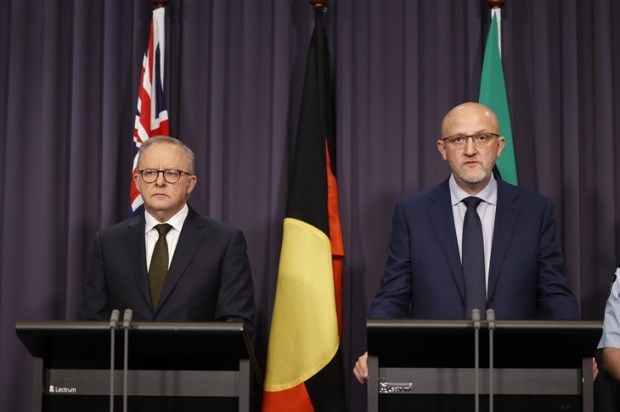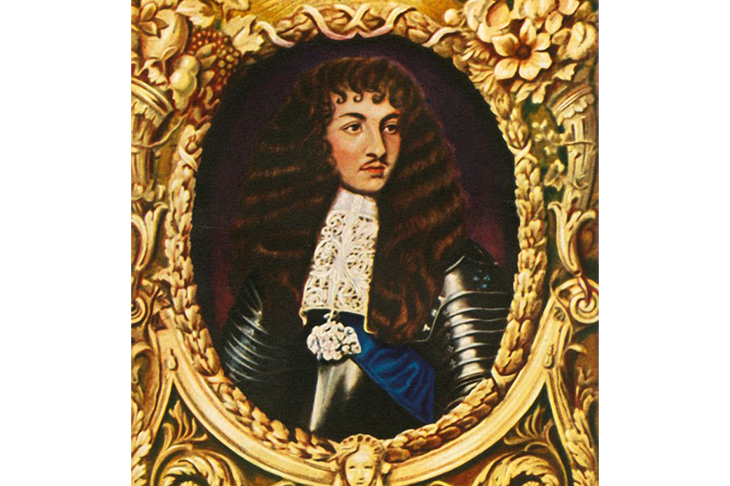
I have it on good authority that Anthony Albanese and Chris Bowen privately refer to one another as the Sun King and Cardinal Richelieu. Not as a joke, but in the alarming sense that they mean it. It is a court fantasy indulged by men who no longer believe in a liberal order – acted out by ministers who treat the country as an object to be administered rather than a people to be answered to.
Given this belief that ideas rule the world more than facts do, I needed to get out of the Canberra bubble, so I travelled north through Gympie and then west to Kilkivan, Goomeri and Murgon. Charpentier’s Médée was on the stereo – music written for Louis XIV, though the original Sun King at least understood that power is constrained by reality.
Queensland resists all forms of abstraction because it remains grounded. Walk Murgon and you see it. The Florence Bjelke-Petersen Terrace – a wide, manicured median strip – is a civic statement, not a provocation. The town is neat, proud, unembarrassed. More tenanted shops than in many inner-city suburbs. Murgon is also home to Nev Zelinski Earthmoving – clearing scrub, not mines.
These small Queensland towns are not cultural backwaters. They have produced serious thinkers – Leah Purcell, born in Murgon, Alexis Wright, and Noel Pearson. That is real integration: not bureaucratic ‘inclusion’, but voices that belong deeply enough to criticise and shape from within. Pearson has been radically underutilised by Canberra, not for lack of brilliance, but because he refuses to flatter multicultural pieties.
Even the pubs tell you something. At the Kilkivan Hotel, the sign says that people who are unduly intoxicated will be refused service. That adverb contains an entire moral philosophy.
Médée is a tragédie mise en musique – Thomas Corneille’s libretto set to Charpentier’s score. It stages what Queensland still knows, and Canberra has forgotten: that ideals do not command the world. Corneille’s Medea is not vengeance as an ideal but a woman whose actions are irreversible. Charpentier’s score incarnates emotion in bodies and voices. A tragédie mise en musique is what happens when ideals collide with what is, and the world collects its due.
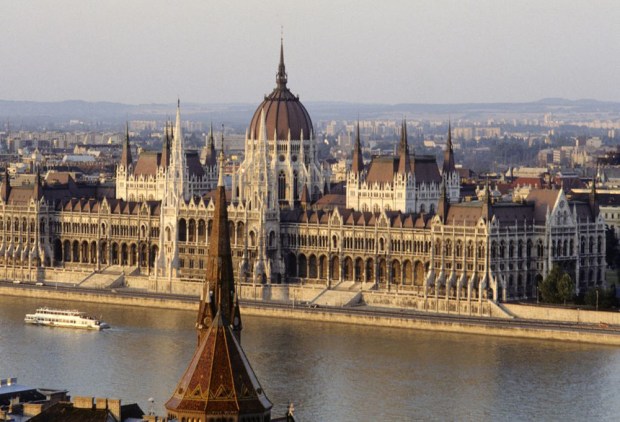
Queensland feels more hopeful than the Labor-run states to the south. In Victoria, crime in places like Boroondara is surging while Labor quietly pushes police numbers down. And at Versailles-on-the-Molonglo, the Sun King and his Cardinal misread inflation, spend as if the treasury were inexhaustible, and pour money into government while the private economy gasps. Read this and weep, Australians under forty: your mortgage repayments are rising to pay for their narcissistic Hall of Mirrors.
All is not rosy in ultra-affluent Australia. A governing class that has spent more than a decade insulated from the consequences of its own lax migration decisions has now discovered that it has a problem, hence the sudden calls for a royal commission into the Bondi massacre. Fourteen December was not ambiguous. An Indian Muslim and his Australian son walked into a Hanukkah gathering and murdered people because they believed they were Jews. That is a civilisational attack – part of a well-established current of Islamist hostility toward Jews and toward any society that does not submit to a Sharia-ordered moral world.
It has become wearying to hear this described merely as antisemitism, as if it were a sociological curiosity. In this case, the antisemitism and the Islamism are inseparable: a theological and political hatred directed at a liberal society that had convinced itself it no longer needed to think seriously about what it was inviting in.
Families of the dead are right to demand answers. But royal commissions are how elites launder responsibility. They convert failure into process, agency into inquiry. Senator Jane Hume managed to suggest, with a straight face, that it would take a royal commission to work out the gunmen’s motivation – a level of wilful fog that shows how compromised our political class has become.
Here is what a royal commission will not say: that our political class has welcomed hundreds of thousands of people who do not share our values, and multiculturalism made it impossible to notice.
Nick Bolkus, who died on Christmas Day, was the emblem of that settlement. A decent man, a family man, a sincere believer. But he belonged to the generation that elevated multiculturalism into a doctrine and stripped Australians of the standing to say what their country was. Multiculturalism did not create tolerance – Australia already had it. It did not create diversity – migration had done that. It created a priesthood of relativists who taught that a host society could only apologise for existing. The nation became a hotel. No one was permitted to ask what held it together.
Bolkus helped entrench that ideology, then moved into corporate lobbying – energy firms, developers, foreign operators. The rhetoric of the working man faded. Identity politics had done its work. The people were no longer needed.
Here is the truth multiculturalism obscured: assimilation does not happen in the first generation. It never has. Identity shifts in the second generation. Belonging forms in the third. That is how Jews became American, Italians became Australian, Greeks became Melburnians.
America never needed multiculturalism because it had a republic. The Constitution, free speech and the rule of law did the integrating.
Post-war Australia achieved something similar by accident. Europeans came not because they loved Australia but because Europe after 1945 was rubble, hunger and chaos. As Tony Judt showed in Postwar, the war did not end for millions; it merely changed form. Australia was not chosen. It was fled to.
Multiculturalism was born in Canada and Britain, theorised in the United States, and perfected as a governing ideology in Australia. So, when SBS’s eulogy to Bolkus said that he was the architect of multiculturalism, they were half right.
Mass migration has at times been good for Australia. But what we are living through now is different: scale without integration, diversity without cohesion, arrival without entry into a shared political story.
Albanese increasingly reminds me of Lenin – not in policy, but in political character. The fanaticism. The thirst for control. The beady fixation on power over persuasion. The contempt for liberal constraints. Australians should remember what Russians should have remembered in the early-1920s: it is not only the ruler you must fear, but the system that comes after him. Albanese’s authority is already eroding, shredded by incompetence on antisemitism and dishonesty on migration. His time will likely end in 2026. His replacement will inherit a state that no longer knows what it exists to defend.
Charpentier understood this before Canberra forgot it. Médée ends in fire because ideals floated free of the world that had to bear them. That is where we are heading if the Sun King’s court does not remember what a people is – and what it owes them.
Got something to add? Join the discussion and comment below.
You might disagree with half of it, but you’ll enjoy reading all of it. Try your first month for free, then just $2 a week for the remainder of your first year.