Alert readers will recall that I have previously described the US version of so-called National Conservatism – otherwise known as ‘the new right’ – as a wobbling American intellectual fad. It was wobbling quite a bit after the death of conservative activist Charlie Kirk. It is wobbling even more now, and this time over something arguably more existential than cancel culture or free speech: antisemitism.
Is conservatism even possible if it cannot bring itself to confront antisemitism? That question is now tearing the Maga coalition apart. It should concern Australian conservatives too, given the growing influence of American right-wing debates on our own political narratives.
In The Strange Death of Liberal England (1935), British journalist George Dangerfield traced how a once-successful political coalition unravelled when it could no longer reconcile moral sympathy with the exercise of authority. Something similar is now playing out in the United States. The convulsion is over whether a movement is willing to draw moral boundaries, or whether it will refuse to do so to preserve its scale, energy and online momentum.
In the days following Kirk’s death, prominent voices on the Maga right demanded consequences – professional, legal, even regulatory – for those whose speech about him they found offensive. Suddenly, just like the left, for the new ‘cancel conservatives’ speech was something to be policed and punished.
Yet when that same movement has been pressed to articulate its own internal standards against antisemitism, many of those voices have retreated into free-speech absolutism.
This oscillation – between calls for punishment for merely offensive speech and then refusals to judge speech or silence that is morally indefensible – is not principled. It is the reflex of a movement without a coherent moral or governing framework through which to decide what it will tolerate and what it will not.
That incoherence was laid bare at Turning Point USA’s recent AmericaFest gathering. Ben Shapiro denounced what he called antisemitic ‘charlatans’. Vivek Ramaswamy rejected the language of ‘heritage Americans’ as indistinguishable from the identity politics conservatives claim to oppose. Both were making the same point: a movement that refuses to discriminate between what it will tolerate and what it will not is in serious trouble.
Vice President JD Vance, the presumed heir to the Maga mantle, chose a different response. He declined to draw lines, insisting instead that anyone who ‘loves America’ belongs within the tent. It is an appealing sentiment. But love of country is not a governing principle, nor an answer to a serious moral question that requires leadership.
That refusal to judge has now produced an open fracture. Senior conservative figures who once shared platforms are openly at odds. Shapiro and Ramaswamy have warned that antisemitic rhetoric and racialised identity politics are dragging the movement toward moral and intellectual disrepute. Others – including Tucker Carlson and Megyn Kelly – appear to believe that refusing to exclude anyone is the price of maintaining a winning coalition. The departure of key figures from the Heritage Foundation following its president Kevin Roberts’ refusal to take a stand makes clear that this dispute is not confined to media personalities. It has reached the movement’s institutional core.
The reason antisemitism matters so much in this context is not sentimental and not merely historical. Movements that minimise it, excuse it, or defer judgment in the name of unity have repeatedly found that their internal discipline collapses soon after. History is unsparing on this point.
That is why Jewish conservatives have been among the first to sound the alarm. But it would be a mistake to treat this as only a Jewish concern. Trump-supporting free-market economists, national security conservatives, legal institutionalists, and others have also begun to peel away.
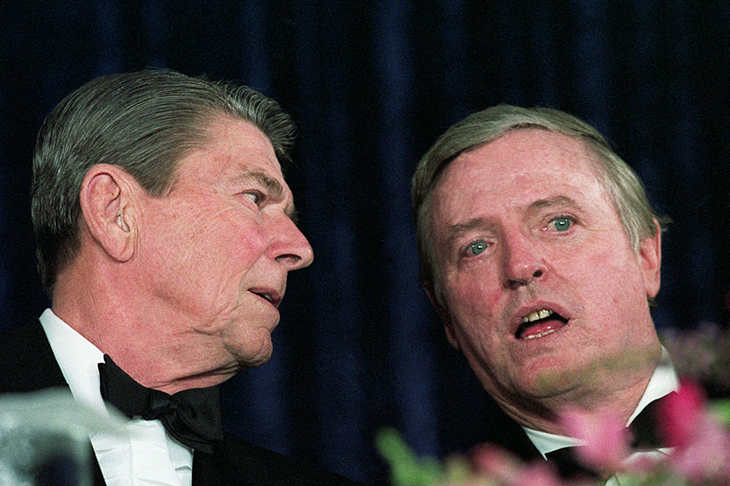
This is not the first time American conservatism has faced this choice. In the 1960s, William F. Buckley Jr, editor of the National Review and the father of modern conservatism in the US, confronted a similar dilemma when conspiracy thinking and antisemitism took root on the right. Buckley understood that free speech did not require moral neutrality, and that open debate did not mean unlimited amplification. He effectively expelled the John Birch Society from the conservative mainstream, not because he opposed free expression, but because he recognised that movements unwilling to police their own boundaries are eventually consumed by their own excesses.
Heritage was born of that same intellectual ecosystem. Its current implosion reflects not an excess of judgment, but its absence.
What makes this moment particularly dangerous is that Maga is no longer a protest movement. It is in power. Governing requires prioritisation, compromise and trade-offs. It requires the willingness to disappoint some supporters in order to preserve authority. What can be deferred in opposition becomes unavoidable in office.
Australians should not imagine themselves immune. In the aftermath of the Bondi massacre, many Australians who had looked away have been forced to confront the re-emergence of antisemitism closer to home. The Prime Minister’s response – to relativise, to defer, to avoid difficult judgments – is an abdication. It is also dangerous. Antisemitism left unchallenged does not remain contained.
For now, in Australia, this failure lies more with the mainstream left than the mainstream right. But the lesson is broader.
Antisemitism is the canary in the coal mine. Movements that cannot confront it are not merely morally compromised; they are structurally unfit to govern. And that is the warning sign now flashing for the so-called National Conservatives or ‘new right’ – including those who speak confidently about moral renewal but shrink from the leadership required to bring it about when it matters.
Got something to add? Join the discussion and comment below.
You might disagree with half of it, but you’ll enjoy reading all of it. Try your first month for free, then just $2 a week for the remainder of your first year.