If President Trump ordered the 82nd Airborne to drop into Heathrow tomorrow morning, the only resistance they’d encounter would be queue-jumping accusations and passive-aggressive tutting. By lunchtime, the Stars and Stripes would flutter over Downing Street, and by teatime, a grateful nation would be pressing scones upon their liberators, jam before cream.
Don’t believe me? Consider the numbers.
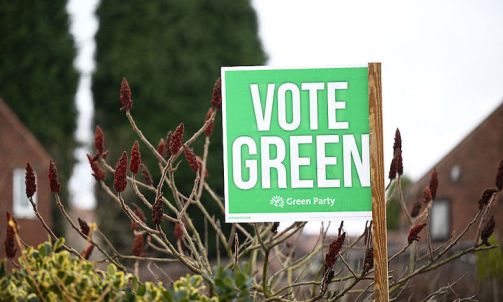
Reform UK now polls at 34 per cent nationally, with some surveys projecting Nigel Farage’s merry band of malcontents winning an unprecedented 445 seats at the next election. Keir Starmer, meanwhile, has achieved something remarkable: a net approval rating of minus 54, putting him in the distinguished company of Boris Johnson on resignation day and Jeremy Corbyn at his nadir. A clear majority of those who actually voted Labour on July 4, 2024 (American Independence Day) now view their own Prime Minister unfavourably. It takes genuine talent to alienate your own supporters that comprehensively.
The Pentagon’s scenario planners must be salivating. Venezuela’s Maduro was extracted over the weekend with barely a shot fired. Imagine how much easier Operation Enduring Farage would be. No jungle terrain. No language barrier (well, mostly). And crucially, no will to resist whatsoever.
The first wave of Marines would be met not by the British Army – currently equipped with precisely zero functioning tanks and morale to match – but by Tommy Robinson supporters offering to show them the best kebab shops. The second wave would find Nigel Farage waiting on the tarmac with a pint of warm ale and an application to become the 51st State’s first governor.
What would the resistance look like? Picture it: Keir Starmer issuing stern statements about ‘those spreading lies and misinformation’ while Rachel Reeves frantically searches for a fiscal black hole large enough to hide in. The Conservatives, meanwhile, polling at a historic low of 14 per cent, would be too busy fighting over the last life raft to notice the occupation had begun. Kemi Badenoch would likely pen a thoughtful essay about small-c conservative principles while American contractors repainted Whitehall.
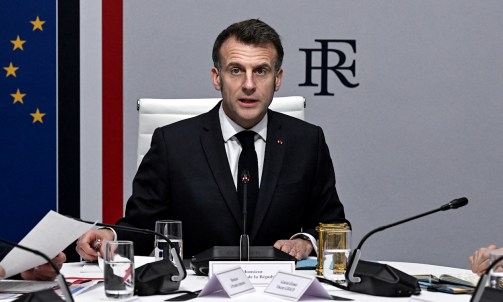
The Europeans would issue statements of solidarity, of course. They always do. Emmanuel Macron would probably launch another Working Group on Transatlantic Relations while the German chancellor – whoever it happens to be that week – would express ‘uneasiness regarding recent developments’. Brussels would convene an emergency summit, order another round of croissants, and draft a strongly-worded letter that nobody would read…
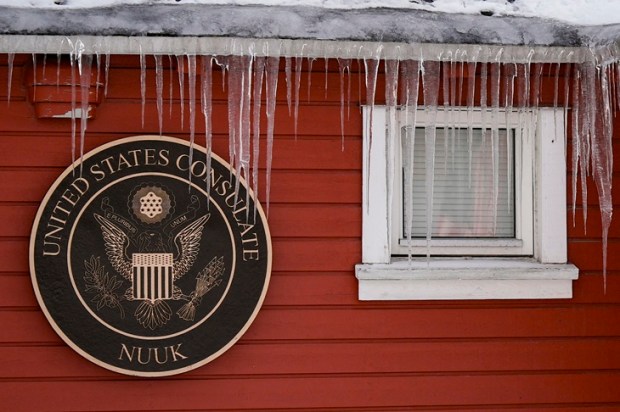
Trump’s stated justification for acquiring Greenland – national security concerns about Russian and Chinese ships – would apply with even greater force to Britain. ‘You look at Britain,’ one can imagine him saying, ‘you have Russian oligarch money all over the place. You have Chinese interests in your ports, your universities, your everything. We need this for protection. And frankly, they need it too.’
He wouldn’t be entirely wrong.
The beauty of the scenario is that Trump wouldn’t need to use force at all. He could simply make an offer. Citizenship for the 70 million residents of the former United Kingdom. No more NHS waiting lists – you’d be on American healthcare (admittedly, a mixed blessing). No more grooming gang inquiries, because Elon Musk would already be running the justice system. No more inheritance tax, because President Farage – sorry, Governor Farage – would have abolished it on day one.
The House of Lords would be repurposed as a branch of Trump Tower London, its hereditary peers finally given something useful to do as concierges and bellhops. The House of Commons would become a combination WeWork and an evangelical megachurch. Buckingham Palace would host the world’s most exclusive Mar-a-Lago satellite club, with King Charles retained as a sort of high-end greeter in ceremonial dress.
The constitutional objections write themselves: Nato allies don’t invade each other, territorial integrity is sacrosanct, and international law forbids such acquisitions. All true, and all irrelevant. Trump has already demonstrated that the old rules apply only to those without the power to ignore them. When the Danish Prime Minister begs Washington to ‘stop the threats’ against another fellow Nato member, she is essentially acknowledging that the threats are credible enough to warrant begging. That’s not a strong negotiating position.
And here’s the uncomfortable truth that nobody in British politics wants to acknowledge: a significant portion of the electorate would welcome it. Not a majority, perhaps, but a substantial, vocal, and increasingly organised minority who have concluded that the existing political class is beyond redemption. When Elon Musk posts a poll asking whether America should ‘liberate the people of Britain from their tyrannical government’ and 60 per cent vote yes, that’s not entirely explained by bot activity and American partisanship. Some of those clicks came from postcode areas beginning with B, L, and M.
The British establishment’s response to this phenomenon has been characteristically inept. Starmer’s strategy of ignoring Musk while denouncing ‘misinformation’ satisfies no one and convinces fewer. The Conservatives’ attempt to ride the populist tiger has left them looking like opportunistic coat-tailers rather than principled advocates. Only Farage seems to understand the moment, which is precisely why a significant portion of the British public now prefers him as Prime Minister.
All of which raises an awkward question for those of us who retain some vestigial attachment to British sovereignty: What exactly would we be defending?
A Parliament that can’t pass meaningful legislation? A civil service that can’t deliver basic services? A political class united only in its contempt for the voters who elected them? An economy that hasn’t achieved meaningful growth since the financial crisis? A national culture so uncertain of itself that it can’t decide whether its historical legacy is something to celebrate or apologise for?
Trump’s America, whatever its manifold flaws, at least projects confidence. It believes in something, even if that something is merely its own greatness. Britain, by contrast, has spent the past decade in a prolonged nervous breakdown, unable to decide whether it is European or Atlanticist, progressive or traditional, a serious country or a heritage theme park.
If the 101st Airborne did arrive, what would the defenders of British sovereignty actually say? ‘Please leave, we were just about to sort everything out?’ ‘You don’t understand, the NHS is the envy of the world?’ ‘But we have tradition?’
The uncomfortable reality is that Britannia no longer rules even the waves immediately adjacent to Dover, where small boats arrive daily with the regularity of a ferry service. The idea that she could repel a determined American expeditionary force is the kind of fantasy that could only be entertained by people who haven’t noticed that the defence budget has been systematically cannibalised for decades.
Of course, Trump won’t actually invade Britain. The paperwork would be a nightmare, and frankly, he has bigger imperial fish to fry in Colombia, Greenland, and Panama. But the very fact that such a scenario can be entertained without immediate dismissal tells you everything you need to know about Britain’s current standing in the world.
Keir Starmer will survive this crisis, as he has survived all the others, by the simple expedient of not being particularly noticeable. The polls will continue their dismal trajectory. Reform will continue its rise. And somewhere in Washington, Elon Musk will continue posting inflammatory content about British politics, secure in the knowledge that there is absolutely nothing the British government can do about it.
Perhaps that’s the real lesson here. In 2025, soft power has been replaced by platform power. The greatest threat to British sovereignty isn’t American Marines; it’s American billionaires with social media accounts and too much time on their hands. The empire that once governed a quarter of the world’s population now finds itself governed by the algorithm of a South African’s social media platform.
God save the King, as we used to say. These days, we might need Him to.