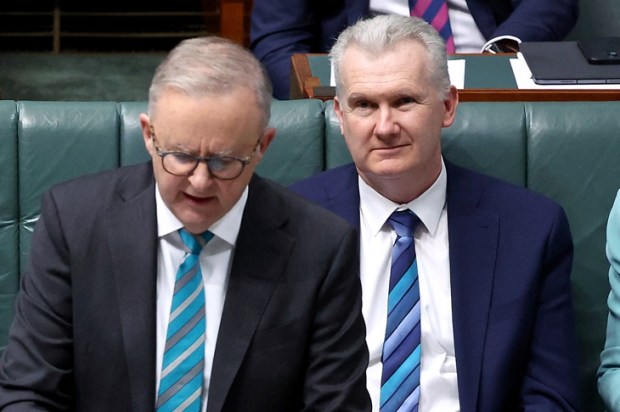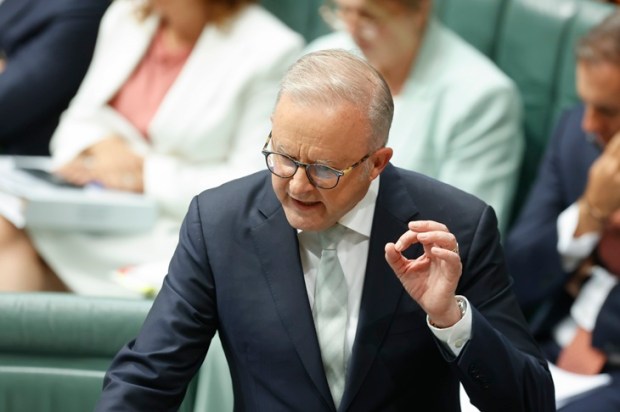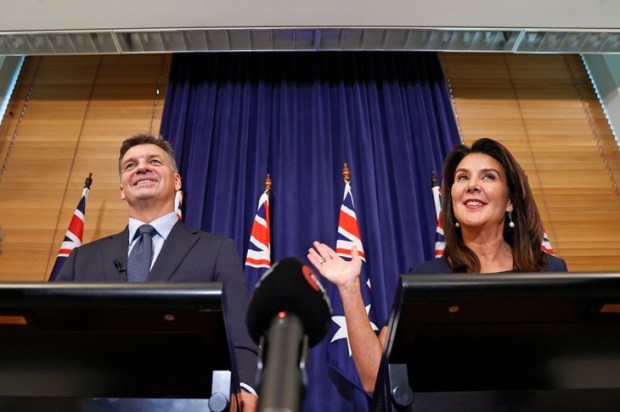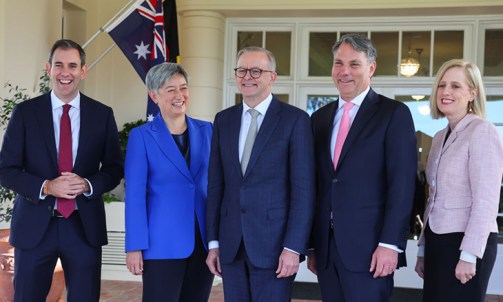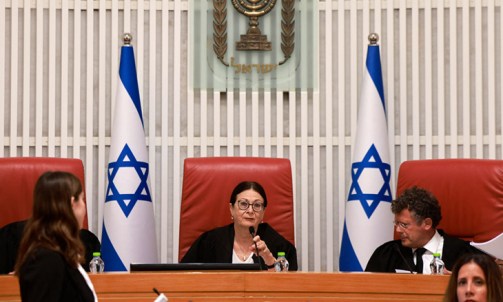
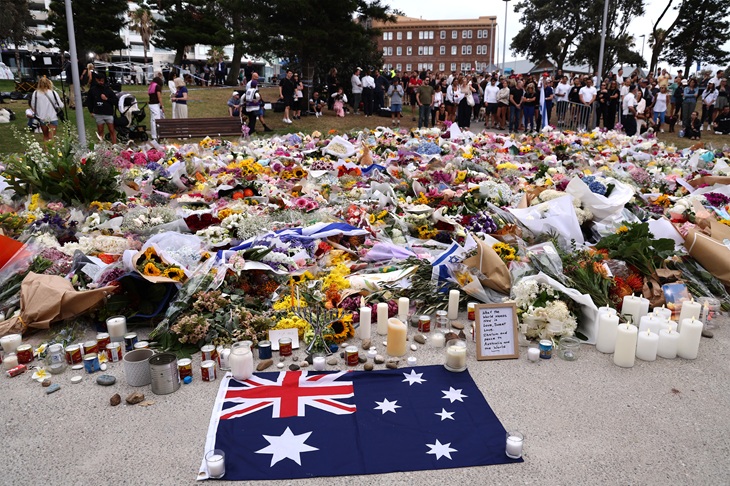
Yesterday, Prime Minister Albanese announced a Royal Commission into Antisemitism and Social Cohesion. Retired High Court Justice Virginia Bell AC has been appointed to lead the inquiry, despite opposition from some in the Jewish community over a lack of consultation, despite Mr Albanese claiming to have consulted widely.
As a political scientist, I’ve observed how governments wield the instrument of Royal Commissions not just to uncover truths, but to shape narratives that suit their political agendas. The Australian Labor Party has earned a particular reputation for crafting terms of reference and timeframes that conveniently cast their opponents as villains while airbrushing their own historical complicity. This isn’t about partisan sniping, it’s about ensuring that inquiries serve justice and reform, not electoral advantage.
A prime example is the 1983 Royal Commission into British Nuclear Tests in Australia (the McClelland Commission), where Robert Menzies was scapegoated for decisions that were, in fact, bipartisan and initiated under Labor’s Ben Chifley. But this pattern extends beyond nuclear history, as seen in the Royal Commission into Institutional Responses to Child Sexual Abuse, which may have, in my opinion, contributed to the wrongful conviction of Cardinal George Pell. Pell’s conviction was later overturned by the High Court.
The nuclear tests are a chapter of Australian history I explored in depth in my contribution to a 2024 biographical volume on Sir Robert Menzies. The British conducted nuclear weapons tests on Australian soil from 1952 to 1963, during Menzies’ tenure as Prime Minister.
Yet, when Bob Hawke’s Labor government launched the McClelland Royal Commission in 1983, the terms of reference were curiously limited to events from 1952 onwards. That was the year Menzies’ Coalition was firmly in power, conveniently excluding the foundational role played by Chifley’s Labor government from 1946 to 1949. It was Chifley who negotiated the ‘joint project’ with Britain to develop nuclear weapons, providing access to Australian territory, skills, and uranium resources in exchange for technological know-how. This arrangement stemmed from the US McMahon Act of 1946, which cut off Britain’s access to American nuclear tech, forcing them to turn to allies like Australia and Canada.
Declassified documents reveal a bipartisan consensus where both Chifley and Menzies saw nuclear capabilities as essential for Australia’s security in the early Cold War era. The Soviet Union’s 1949 atomic test, the rise of communist China, and regional conflicts like the Malayan Emergency and Korean War made nuclear deterrence an ‘ideal deterrent’.
Chifley’s initiatives included a £25,000 reward for uranium discoveries, massive funding for nuclear research at the Australian National University, and the establishment of the Woomera Rocket Range, all under Labor’s watch. Menzies inherited and expanded this framework, establishing the Australian Atomic Energy Commission in 1952 and overseeing the tests, but he didn’t invent it.
By starting the clock at 1952, the McClelland Commission ensured no Labor figures were scrutinised. Justice Jim McClelland, a former Labor senator with a penchant for anti-British rhetoric, produced a report that laid blame squarely at Menzies’ feet, portraying him as the architect of ‘nuclear colonialism’. This ignored the context of Australia’s vulnerability after the failure of appeasement in the second world war, Britain’s inability to defend Australia post-Singapore, and the genuine fear of nuclear proliferation.
As I argued in my chapter, judging history without this context is revisionism at its worst. The Commission’s partial view not only scapegoated Menzies but also shielded Labor’s legacy, allowing the ALP to position itself as the moral guardian against nuclear folly, a stance that persists in today’s debates over Aukus and nuclear energy.
This isn’t an isolated tactic. Labor has a history of designing Royal Commissions with inherently political terms of reference, prioritising scapegoats over systemic fixes.
Consider the 2012 Royal Commission into Institutional Responses to Child Sexual Abuse, established under Julia Gillard’s Labor government. The inquiry was vital in exposing horrific abuses within churches, schools, and other institutions, leading to necessary reforms like the National Redress Scheme. However, its broad scope and high-profile focus on the Catholic Church created an environment ripe for politicisation.
It has been reported that the Commission’s findings played a role in Victoria Police’s investigation into Cardinal George Pell. This investigation culminated in his 2018 conviction for historical child sexual offences. Media frenzy and public outrage amplified the narrative, but the High Court unanimously overturned the conviction in 2020, citing a ‘significant possibility’ of innocence due to insufficient evidence and procedural flaws.
The Commission’s terms encouraged a sweeping examination that, while uncovering truths, also fuelled presumptions of guilt in high-profile cases. Critics, including legal experts, have argued that the inquiry’s framing was targeting institutional hierarchies and tilted toward confirming preconceived biases rather than purely evidentiary pursuits.
Gerard Henderson, in his book about the media pile on Cardinal Pell, pointed out that ‘Royal Commissions do not deliver judgments’. Henderson argued that ‘findings’ are often ‘opinions unsupported by evidence’. The same could be argued about the McClelland Royal Commission given its obviously partisan terms of reference.
Pell became a scapegoat for broader institutional failures, much like Menzies for nuclear tests, allowing Labor to burnish its progressive credentials while avoiding deeper questions about state-run institutions or their own oversight roles in child protection.
Another example is the 2009 Victorian Bushfires Royal Commission under Kevin Rudd’s federal influence, though state-led by Labor’s John Brumby. Its terms focused heavily on immediate response failures, scapegoating emergency services leadership and leading to sackings, while downplaying long-term policy issues like land management, an area where Labor governments had historical involvement.
Similarly, the 2018 Banking Royal Commission under the Liberal government was pushed by Labor in opposition, but its terms were shaped to hammer the Coalition’s perceived coziness with big banks, yielding political points for Labor heavyweights despite Labor’s own past deregulatory contributions under Hawke and Keating.
These patterns reveal a troubling trend. Labor’s Royal Commissions often serve as political theatre, with timelines and scopes engineered to highlight opponents’ flaws while obscuring shared responsibility. This undermines public trust in inquiries meant to heal and reform. True accountability demands impartiality and expansive terms that embrace historical context, not selective amnesia.
Royal Commissions should fix problems, not fabricate scapegoats.
Public outrage at Labor’s dithering on Islamic terrorism and antisemitism provides plenty of room to scapegoat national security and police officers. Any Royal Commission must look at the conditions the Labor government oversaw that enabled radical Islamist extremism and antisemitism to fester in the first place.
Given Labor’s historical approach to framing Royal Commissions, one can only hope that history doesn’t repeat itself.
Former Justice Bell was appointed to the High Court by Labor Attorney-General Robert McClelland in 2009. She led Labor’s inquiry into former Prime Minister Scott Morrison’s multiple ministries in 2022.
Dr Michael de Percy @FlaneurPolitiq is the Spectator Australia’s Canberra Press Gallery Correspondent. If you would like to support his writing, or read more of Michael, please visit his website.