The Middle East has entered a phase where events no longer necessarily resolve into outcomes. They pause, harden, and then reappear elsewhere. Ceasefires freeze wars without settling them. New councils are announced before their purpose is fully explored or revealed. Violence recedes in one arena and resurfaces in another. What looks like diplomacy is often just deferral or distraction.
Europe remained vocally engaged on Gaza, conspicuously restrained on Iran, strategically vague on Syria, and angrily petulant on Greenland
Gaza is the clearest illustration. The ceasefire ended active fighting while leaving the logic of the war intact. Today, reconstruction has been elevated to first principle, with demilitarisation apparently postponed, treated as a future problem rather than a present condition. International frameworks are multiplying, yet the central issue of force remains untouched. Israel’s operational freedom has now been narrowed by president Donald Trump’s latest bulldozing of his plan into the region and the world, despite the reality on the ground. Hamas’s strategic position, though battered, has been left structurally unresolved. Thus the war ended administratively, but not politically.
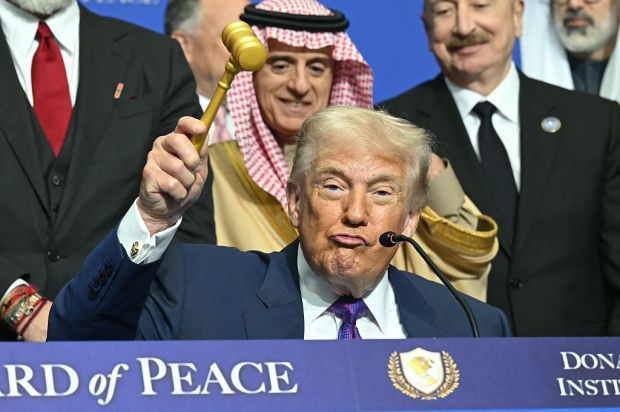
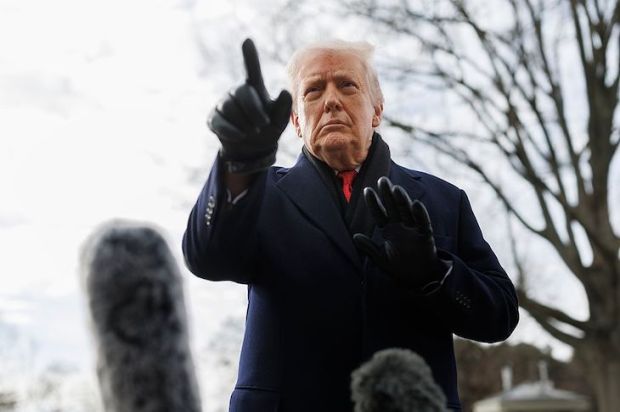
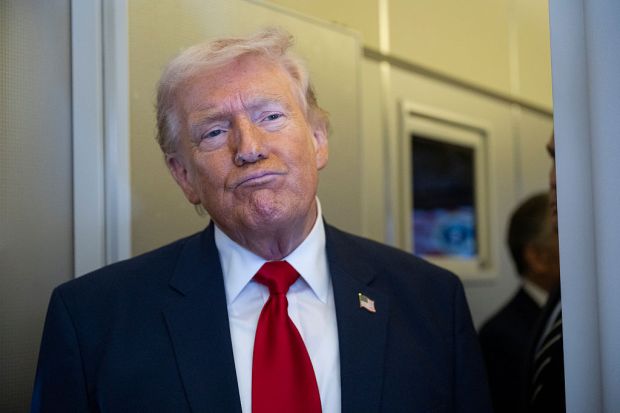
Regardless of all this, we now have the emerging reality of Trump’s ‘Peace Council’, followed by the ‘Board of Peace’, both taking shape as declarations of intent rather than instruments of genuine resolution. The draft charter, issued this week, was revealing less for what it included than for what it omitted. Gaza was absent. Palestinians were absent. Israel was absent. What remained were institutional mechanics: membership rules, voting procedures, permanence on the council available for purchase at $1 billion (£740 million). It also enshrines authority concentrated in a chairman empowered to interpret the document, dissolve the organisation, and appoint a successor. Who is the chairman? Trump himself.
It is less a reconstruction policy than an institutional assertion. Trump has never hidden his contempt for the existing international architecture, which today he seems happy to ride roughshod over. His hostility to the United Nations predates his presidency and continued through withdrawals from UN-affiliated bodies once in office. The Board of Peace does not reverse that instinct, it redirects it. Of course, he may not be wrong about the UN. Yet instead of rejecting multilateralism outright, Trump is attempting to reshape it around his own personal authority and the transactional loyalty of others. Participation becomes leverage. Alignment becomes optional.
The international response fractured immediately. Some states joined quickly, calculating access and goodwill. Others hesitated. France declined and was met with tariff threats – 200 per cent on wines. Sweden rejected the text outright. Britain wavered. These decisions seem to be led more by tactics than ideals. It is not only Donald Trump’s America that acts in pursuit of interests rather than ideology.
Europe’s broader conduct has followed the same line back in Israel. European states quietly reassessed their role in the civil-military coordination centre in Kiryat Gat, the US-led hub in southern Israel established to coordinate ceasefire monitoring, humanitarian access, and post-war stabilisation planning related to Gaza, citing limited progress on humanitarian access. Representatives failed to return after the Christmas break. While the language was humanitarian, the timing coincided with widening transatlantic strain. Europe remained vocally engaged on Gaza, conspicuously restrained on Iran, strategically vague on Syria, and angrily petulant on Greenland. Their moralising language belied their professed concern for Gaza, signalling disagreement with Washington as a higher priority than improving conditions on the ground for Palestinians and Israelis.
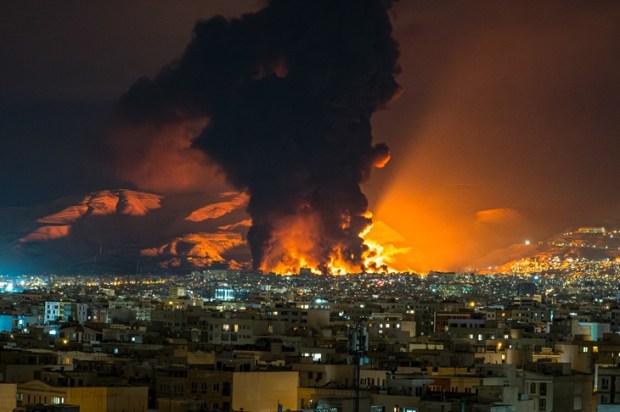
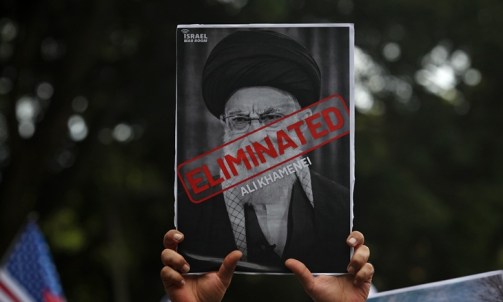
The tragic situation in Iran further exposes the consequences of this selectivity. Since October 7, international organisations, NGOs, and major media outlets have produced an immense volume of commentary condemning Israel, often in maximalist terms. Over the same period, Iran’s internal repression escalated into mass executions of protesters. A large-scale, data-driven analysis of more than 180,000 social media posts showed near silence from many of the same institutions. Only a small minority issued explicit criticism. The UN’s own human rights bodies delayed substantive response.
Universal human rights were asserted rhetorically but abandoned operationally. The Iranian people paid the cost, killed largely out of view while attention concentrated elsewhere.
Trump operates as a catalyst rather than an architect. He exploits uncertainty deliberately
Strategically, Iran was never an easy case. The Islamic Revolutionary Guard Corps remains deeply embedded in state institutions, acting ruthlessly and barbarically through its entrenched Shia political and religious structures. Instigating direct regime change risks prolonged civil conflict and the inheritance of responsibility by outside powers. Sanctions, nuclear disruption, and indirect containment may therefore be judged the least destabilising available option. Yet this caution now collides with a counterfactual that lingers uncomfortably.
During the twelve-day war, Israeli strikes generated momentum. Trump ordered them halted, dropping a few F bombs of his own. Maybe then there was the chance to finish off the tyrannical theocratic regime. Maybe not. But what followed is clearer: repression intensified, protesters were executed in large numbers, and the opportunity seems to have passed. There is still a chance Trump has a trick or two up his sleeve. He has repeatedly instructed his aides to prepare a ‘decisive’ plan against Iran, according to the Wall Street Journal.
Syria deepens the sense of drift. Its leader Ahmed al-Sharaa is increasingly described as a stabilising figure, a man who might consolidate authority after years of fragmentation. His political origins, tied to Hayat Tahrir al-Sham, complicate that assessment. Kurdish forces, semi-autonomous since 2012 and long aligned with American and Israeli objectives, were pushed back. Under a ceasefire, they relinquished control of eastern oil fields, weakening their financial base and strengthening al-Sharaa. It is minority groups the West once championed who are absorbing these shocks.
The precedent in Suwayda still hangs over the region. Large-scale attacks on Druze civilians near the Israeli border prompted Israeli airstrikes and a temporary de-escalation. The humanitarian damage remains unresolved. Stability was restored on paper, but vulnerability persists on the ground.
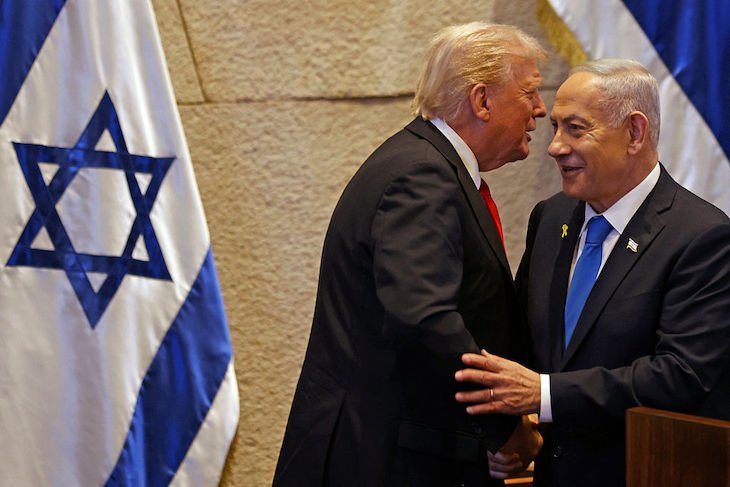
Israel’s position has become increasingly constrained. It maintains long-standing ties with the Druze and the Kurds. It faces a Gaza framework that privileges rehabilitation over disarmament, and seems to pave the way to Palestinian statehood as a direct result (and reward) for the brutality of October 7. Its prime minister, Benjamin Netanyahu, accepted a seat on Trump’s Board of Peace while stating openly that Turkish and Qatari soldiers would not enter Gaza and that disputes with Washington remain over advisory structures. Phase B, he told parliament, is straightforward: Hamas will be disarmed and Gaza demilitarised, the easy way or the hard way. The statement was blunt. The environment is anything but.
Trump operates as a catalyst rather than an architect. He exploits uncertainty deliberately. Pressure replaces persuasion. Disruption substitutes for consensus. American interests, as he defines them, come first, and allies are expected to adjust or absorb the cost. There is a certain honesty in this approach. It abandons the pretence that the international system still behaves consistently (some would argue it never did). It treats power as it is exercised, not as it is described.
The danger lies in what follows. Institutions designed around one individual are unlikely to outlive them, and if they do, who knows what they might become? Strategies designed around personal leverage can harden into personal necessity. Chaos, once instrumentalised, tends to expand beyond its intended bounds.
Across Gaza, Iran, and Syria, a pattern is emerging
Across Gaza, Iran, and Syria, a pattern is emerging. Moral language detached from consequence, strategy replaced by reaction, new institutions announced while coherence erodes. Gaza is to be managed without resolving force. Iran is to be condemned selectively, but rewarded for even slightly reeling in its bloodthirsty aggression to its own civilians. Syria is to be stabilised by empowering whoever can impose order fastest, all as part of a wider decision based on trade, energy and power games. Europe oscillates, America improvises, and the rest of us try to make sense of it all.
This moment is defined by power without responsibility. Trump did not create the fragmentation. He uses it. Whether that produces renewal or accelerates decay remains unresolved. What is already clear is that the Middle East is no longer shaped by a shared horizon. It is shaped by competing impulses, selective outrage, and strategies designed for the next move rather than the next decade. If Trump has a method to his ‘madness’, a strategy behind the chaos, then this might yet work out more good than bad. But to rely on that requires a massive dose of trust and faith, both of which are increasingly rare in the region if not the entire world. The costs are no longer abstract. The reckoning will be harder to postpone.