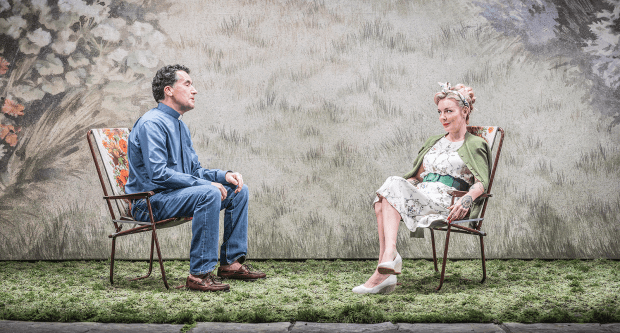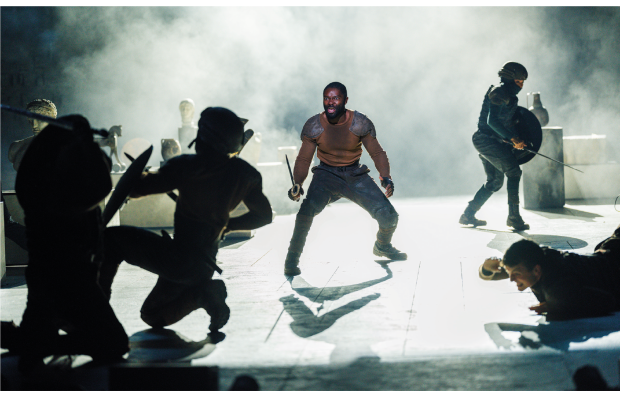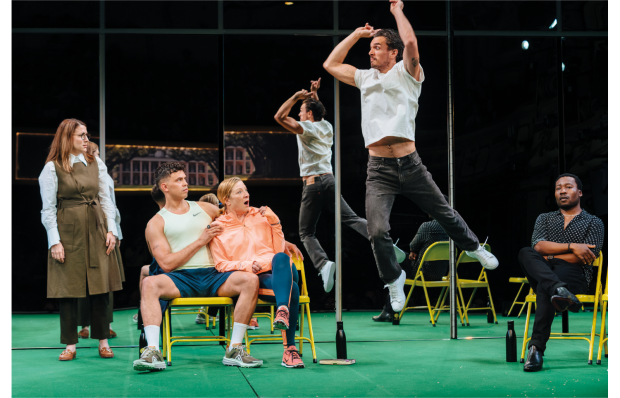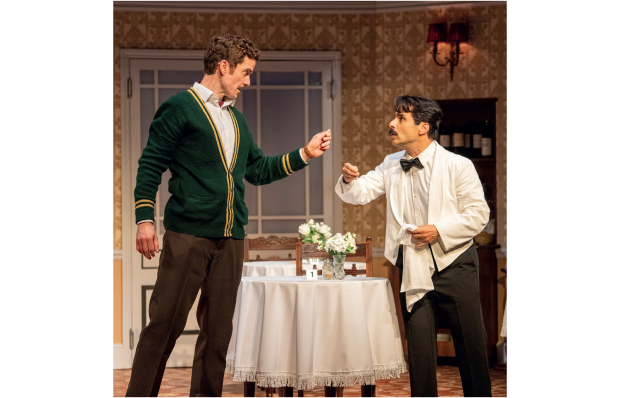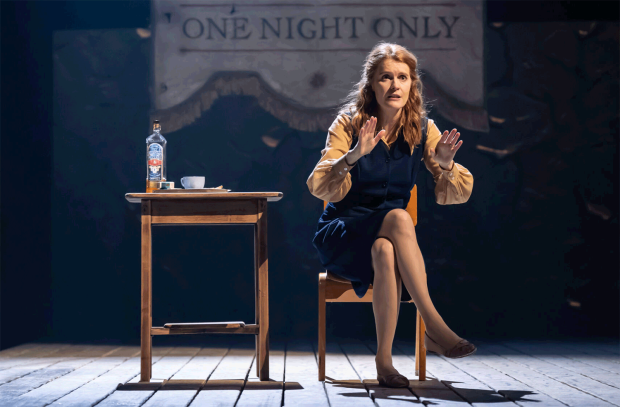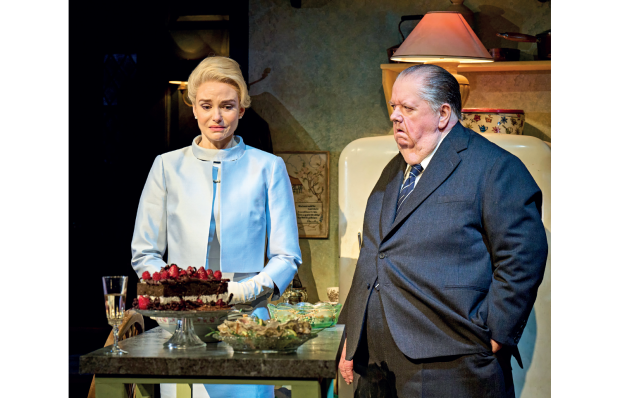
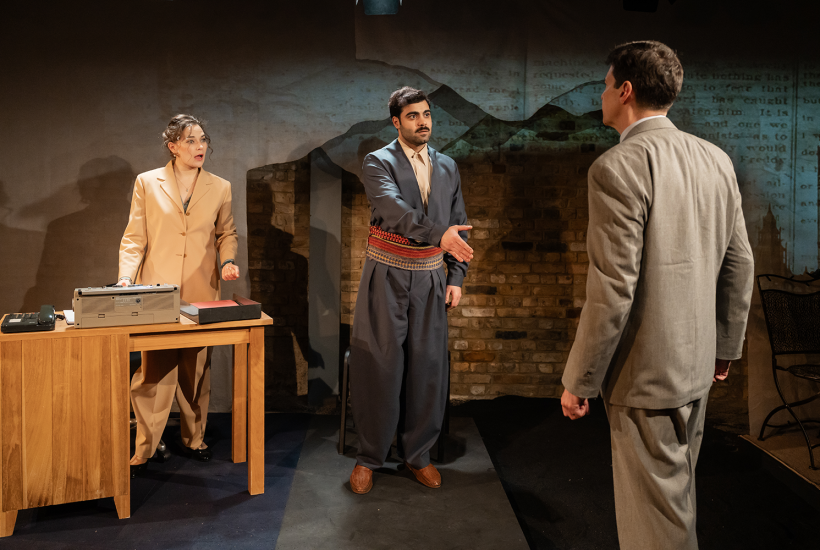
Safe Haven is a history play by Chris Bowers who worked for the Foreign Office and later for the UN as a human-rights activist. The two careers seem to be interchangeable. His drama follows an idealistic and oversensitive Oxford graduate, Catherine, who joins the diplomatic service during the first Gulf War in 1991.
Catherine believes that the Foreign Office exists to throw money at basket-case countries that lack the maturity to govern themselves. The entire department acts as a sort of puppy rescue service for dysfunctional nations overseas. All her colleagues accept the wisdom of this approach even though it has the same effect as casting diamonds into quicksand.
Catherine responds to historic events like a homeowner assessing a new lamp for the guest bedroom. ‘It doesn’t feel right,’ she says when asked about Britain’s military withdrawal after the fall of Saddam Hussein. She reacts to the plight of the Kurds by exclaiming: ‘What does this say about us?’ Sentimentality and fear of criticism are her over-riding concerns rather than Britain’s national interest.
And yet she’s a high-flyer at the Foreign Office where her career is being nurtured by a jingoistic technocrat named Clive. He speaks in cricketing metaphors that are evidently opaque to most Nato diplomats and to citizens from the permanent members of the UN security council. But Clive couldn’t care less and he treats everyone outside his personal orbit with ill-disguised contempt. His insularity and arrogance belong to the Victorian age when Whitehall governed a large chunk of the world’s population but Clive seems not to have noticed that Britain’s influence has waned during the 20th century. Clueless dolts like him were clearly in charge in 1991. Perhaps they still are.
When Clive returns home he’s confronted by his activist wife who berates him and forces him to adopt her prejudices when shaping Britain’s foreign policy. Clive complies instantly. It seems that anyone with a strident manner and a plausible sob story can form an alliance with the do-gooding wimps in Whitehall. A Kurdish activist, Dlawer Ala’Aldeen, telephones the recently retired prime minster, Margaret Thatcher, and convinces her to intervene on the Kurds’ behalf. And hey presto. John Major inaugurates ‘safe havens’ to protect Kurds from Iraqi militiamen. What an embarrassing episode. By applying pressure to the weakest part of the structure – an unemployed stateswoman in need of a cause – Ala’Aldeen was able to co-opt Britain’s military might and bend it to his will.
For dramatic purposes, the Kurds are shown as a united and peaceful people whose typical member is the saintly Najat, a pregnant refugee, who lacks any friends or relatives. Dressed in a thin but colourful ethnic shawl, Najat toils through the snowy mountain passes while Saddam’s henchmen execute defenceless Kurds in the valley below. The blizzards gather strength and Najat sings lullabies to herself while airborne stormtroopers pepper her with machine-gun fire. Every bullet misses, thank goodness. When the helicopter gunships depart, Najat hears the distressing cry of vultures circling overhead and preparing to eat her corpse. By a miracle she survives this menace too.
The play is an effective history lesson which covers a lot of ground in a rather clunky way. Viewers may feel that the script reinforces a current joke about our great departments of state. ‘The Foreign Office helps foreigners. The Home Office finds homes for migrants. And the Treasury shares treasure with criminals.’
Gerry and Sewell are a pair of golden-hearted scallywags living in Newcastle. They’re in need of £700 to buy a season ticket to St James’s Park and they don’t care how they raise the cash. First, they load a stolen supermarket trolley with junk salvaged from the Tyne and sell it door to door. No luck. They escalate their activities by stealing cars, breaking into homes and committing armed robberies with fake weapons. Still no success. Despite their taste for petty crime, they come across as warm and likeable characters whose misdeeds do little lasting damage. Sewell, the larger and hungrier of the two, is brilliantly played by Jack Robertson.
The show makes no visual concessions to the delicacies of West End audiences and it revels openly in the truth about Newcastle’s rancid housing stock. The stage is a grotty, incoherent mess full of discarded junk covered in graffiti. A few scaffolding poles and horizontal planks have been added to give the slum an optical frame. Quite revolting.
The lead actors are backed up by 20 energetic dancers who prance around in hooded outfits like a squad of paramilitary murderers. This, too, lowers the spirits. And the show’s disjointed structure starts to drag in the second half which lacks dramatic focus. You’ll be fidgeting by the end.
The good news is that the cast are upstaged by a loveable ginger puppet named Rusty the Dog. He’s made of fake fur and plastic limbs but he’s the star.
Got something to add? Join the discussion and comment below.
You might disagree with half of it, but you’ll enjoy reading all of it. Try your first month for free, then just $2 a week for the remainder of your first year.