In an age of friction – between cultures, institutions, and moral expectations – it is worth pausing to consider a quiet revolution that shaped the modern West.
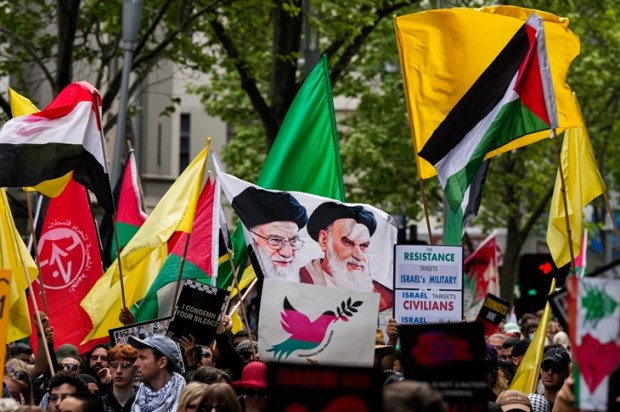
For much of human history, social order rested on honour: a system where reputation was publicly enforced, status vigilantly defended, and insults met with retaliation.
This was not mere custom; it was a moral framework, binding individuals to collective standing and demanding swift responses to perceived slights.
Yet something shifted in the early modern period, giving rise to a different ethic – one that relocated worth from relational reputation to inherent personhood, and deferred conflict to impersonal rules.
This dignity-based settlement, fragile as it is powerful, underpins liberal societies today. Understanding its origins, and why it remains so difficult to replicate elsewhere, clarifies not just historical anomalies but contemporary strains.
Honour systems are neither exotic nor extinct.
They have structured societies across eras and regions, from ancient clans to feudal hierarchies, and persist in various forms where group loyalty and reputational defence take precedence over abstract norms.
In such environments, moral worth is contingent and communal. An affront to one is a threat to all; silence invites escalation. This logic fosters intense social attunement – reading hierarchies, navigating alliances, performing dominance – but it also prioritises immediate emotional bonds over delayed reasoning. Shame and pride are not private feelings; they are public imperatives, often resolved through ritual or force rather than debate.
The emergence of dignity culture marked a departure from this pattern, though not an abrupt one.
It drew on deeper roots, including the Christian moral inheritance, but in a transformed guise. Medieval Christianity, with its sacred hierarchies and communal enforcements, shared elements of honour logic. What proved pivotal was its internal reordering: the Protestant emphasis on individual conscience, the stripping away of intermediary authority, and the slow subordination of faith to reason and law. This was less a repudiation of religion than its refinement into a framework compatible with personal autonomy.
By the 17th Century, thinkers like Locke were articulating rights as intrinsic, not bestowed by status or favour. Conflict, once a matter of personal redress, began migrating to courts and contracts – impersonal arenas where outcomes depended on procedure, not prestige.
At the heart of this shift was the Enlightenment’s psychological demand.
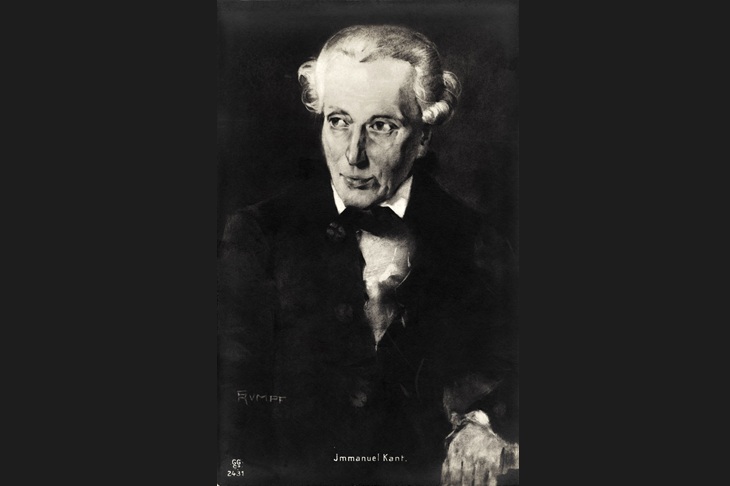
Immanuel Kant captured it crisply in his 1784 essay on Enlightenment: maturity lies not in greater intellect but in the courage to use one’s own reason, free from the ‘self-incurred tutelage’ of authority, emotion, or fear. For Kant, this immaturity was not primarily a failure of will but of imagination – the unchallenged assumption that independent thought was neither possible nor required.
This was no abstract ideal; it was a moral re-engineering. Dignity culture required individuals to withstand impulse and group pressure long enough for reflection to take hold. Restraint under provocation became a virtue, not a weakness; tolerance for uncertainty, a precondition for progress. Emotion was not suppressed but disciplined and channelled into argument rather than retaliation. From this perspective, honour systems appear not as morally alien but as structurally limiting – morally serious in their commitment to solidarity, yet constrained by the constant pull of relational demands.
This restraint proved catalytic.
Once judgment was internalised and cognition freed from perpetual social threat, human capacities began to compound.
Intelligence, long throttled by immediate loops of affect and authority, scaled through institutions. The scientific method emerged as a model of error correction without bloodshed; markets rewarded delayed gratification and impersonal exchange; legal systems abstracted justice from personal vendetta. Liberal rights – speech, assembly, due process – functioned as safeguards for dissent, turning potential fractures into sources of renewal.
The result was a stunning acceleration: from the Industrial Revolution to democratic governance, dignity culture created feedback loops where knowledge accumulated, cooperation expanded, and innovation compounded across generations.
Yet this bargain is delicate, historically rare, and far from inevitable.
It depended on preconditions – psychological, institutional, and cultural – that aligned in a specific time and place.
The West’s path was contingent, shaped by geographic fragmentation, intellectual ferment, and incremental reforms that eroded honour’s grip without chaos.
Attempts to export the outer forms without the inner settlement have often faltered. As realists like Henry Kissinger have observed in works on world order, political structures are rooted in deep historical conditions and cannot simply be transferred as if they were universal designs. Cognitive psychologists such as Richard Nisbett have echoed this, showing how thought patterns – holistic versus analytic, relational versus individualistic – are moulded by ecology and tradition. Transplanting democracy to Iraq, for instance, illustrated the gap: procedural elections without the underlying tolerance for ambiguity or restraint under loss produced brittle mimicry, not resilient institutions.
Where belief systems resist internal reordering – clinging to sacred hierarchies or communal enforcements – modern forms tend to remain performative or coercive. This is not a verdict on intelligence or worth, but a recognition of asymmetry.
Dignity culture demands a moral psychology that prioritises principle over impulse, allowing institutions to function as neutral arbiters. Without it, law risks becoming a tool of status defence; markets, a zero-sum arena; rights, a selective privilege. The result is not convergence but persistent friction, as differing expectations collide in shared spaces.
Contemporary tensions underscore this delicacy.
In an interconnected world, dignity’s assumptions – criticism as clarification, not humiliation; reform as duty, not betrayal – are increasingly tested. Globalisation has amplified encounters between moral logics, exposing how dignity’s ‘cold’ rationality can feel alienating to those attuned to warmer, relational bonds.
Meanwhile, within liberal societies, regressions into performative honour – identity grievances, cancel rituals, tribal signalling – erode the very restraint that enabled progress. Progressive discourse, in emphasising group status and collective harm, inadvertently heightens sensitivities it seeks to mitigate, making public reason harder to sustain.
Liberals, committed to dignity’s promise, must confront this without nostalgia or illusion. The bargain is not self-sustaining; it requires vigilant housekeeping. This means recommitting to impersonal norms: judging arguments on merit, not origin; fostering institutions that reward delay over drama; resisting the reduction of individuals to group avatars. It also means candour about dignity’s demands – its emotional costs, its cultural specificity – without descending into superiority. Only by practising this maturity can liberal societies preserve the compound miracles of their inheritance: open inquiry, peaceful correction, and scalable cooperation.
In the end, dignity is not a triumph but a hard-won equilibrium, vulnerable to both external pressures and internal drift. Recognising its origins reminds us why it matters – and why, in a world of competing moral systems, sustaining it calls for more than policy. It calls for the quiet courage Kant described: to think, endure, and wisely discern – conserving what endures, refining what falters, and fostering creative renewal.
Yet this discernment itself reflects dignity’s deeper gift: an evolutionary logic set in motion by the Enlightenment’s release of constraints.
Freed from honour’s rigid hierarchies and immediate imperatives, human ingenuity flourished through variation and selection – not in biological terms, but in the realm of ideas, laws, and institutions. Markets tested innovations against merit; science advanced through empirical trials; governance evolved via reasoned debate and incremental reform. The fittest forms stabilised not by decree or dominance, but by demonstrated worth, compounding into resilient systems.
In this sense, dignity’s miracle lies in its adaptive humility: progress as a process of intelligent trial, not an imposed blueprint.
Matt Brennan is a Sydney-based writer interested in liberal principles and social psychology