An X poster recently declared that he suffered from a mental delusion: that if he presented the salient facts on any issue, people would take note and adjust their opinions. Elon Musk reposted it, commenting, ‘Same.’
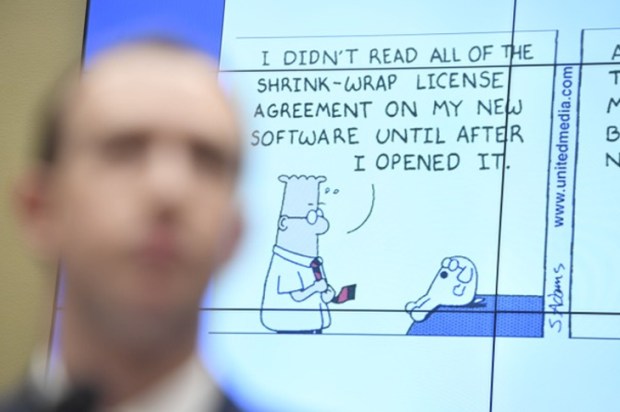
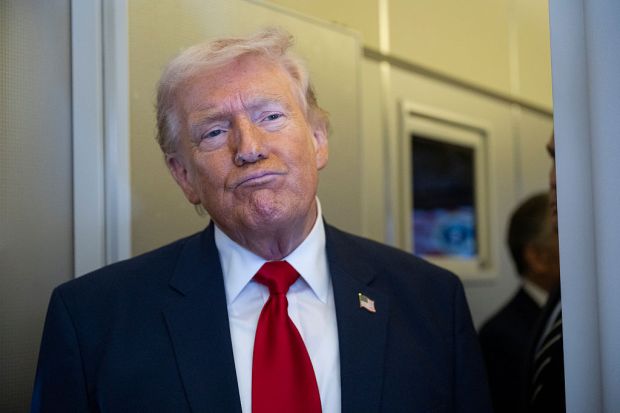
I, too, had laboured under the delusion that humans were rational beings and that facts mattered, only to be put right late in life by the recently departed ‘Dilbert’ cartoonist and writer Scott Adams, who argued humans are mostly irrational. The occasion was New York City in 2015, and I was struggling to understand how US presidential candidate Trump was winning and gaining traction despite breaking all the rules of political success. As the wife of a former conservative Liberal politician and ex-press gallery journalist for the Age, I knew only too well the eggshells right-wingers walked on, and had spent a lifetime watching careers cut down by the merest hint of stepping outside the Leftist-dominated Overton window of acceptable viewpoints. Yet here was Trump, a solo act with no machine backing him, skewering sacred cows such as immigration and refugees with brutal abandon, generating conflict and enemies willy-nilly, and emerging, Terminator-like, somehow stronger.
Alone among the US media landscape, Adams, a hypnotist and student of persuasion techniques, daily explained this high-wire act. He argued that Trump was a Master Persuader, with elite gifts in the art of influence. Trump didn’t bother with facts so much. His use of simple but deadly imagery destroyed political opponents – Jeb Bush never recovered from being ‘Low-Energy’, Elizabeth Warren is still Pocahontas, and Hillary Crooked.
Critics scoffed at Trump’s phrase Build a Wall to control illegal immigration, but he never argued the bricks and mortar of it, letting the image do the work. This was also an example of Pacing and Leading, a persuasion technique in which you establish rapport and common ground with people, making them more receptive to your later ideas. Trump’s supporters wanted the border controlled, and Build a Wall hit that spot. In the same way, Obama spoke about healing the planet and slowing the rise of the oceans, and Bob Hawke pledged that no child would live in poverty by 1990. Cue rapturous applause in all these cases. While critics, including me, scoffed at the self-evident impossibility of such sentiments, supporters saw these remarks as like-mindedness and rapport. Reporter Salena Zito said acutely of Trump: ‘… the press takes him literally, but not seriously; his supporters take him seriously, but not literally’.
When legacy media accused Trump of thousands of lies, Adams would reply that Trump was careless with detail but directionally true. His language was that of the brash and bumptious property developer – a hovel is a renovator’s opportunity. When Trump tweeted spelling errors, legacy media sneered, ensuring, as Adams pointed out, that his message was massively amplified. Journalists and lawyers are trained to be what Adams would describe as word-thinkers, weighing the veracity of every word, when what Trump wanted, and achieved, was impact.
Anyone who watches Trump rallies knows how frequently he comments about the size of the crowd, and orders cameras to show it. This is the persuasion tactic called Social Proof. People tend to follow the actions of others, and seeing so many like-minded people buttresses your opinion, especially in areas of uncertainty. For the same reason, the wise busker puts gold coins in his hat at the start of his act, making people more likely to donate because they know others like him too.
Scott Adams’ daily commentary, gently teasing out nuances of current affairs, became increasingly popular. He had 1.3 million followers on X at the time of his death. One listener was Fox News host Greg Gutfeld, who started out as a Trump critic in 2015 but became a supporter after listening to Adams. Gutfeld is now the ratings king of late-night TV in the US, and he says Adams ignited his career. Indeed, I would often listen to Adams’ podcast or read him on Twitter and then see his lines retailed that night on Gutfeld’s TV show. Gutfeld rates Trump, Musk and Adams as the three most influential Americans of the past decade.
Adams also worked at exposing the media hoaxes victimising Trump, gathering and documenting lists of them. He despised the Charlottesville fine people hoax, which wrongly painted Trump as a Nazi (check Snopes.com if you need convincing) and which Joe Biden claimed had made him run for president. Adams said it made violence acceptable – ‘how can it be wrong to stop Hitler?’
He ultimately paid a heavy price for his opinions. His cartoons were dumped from a reported 2,000 newspapers, his social life crumbled, his licensing business and book sales collapsed. ‘I sacrificed everything. I sacrificed my social life. I sacrificed my career. I sacrificed my reputation. I may have sacrificed my health. And I did that because I believed it was worth it,’ he said last year.
Apart from Trump Whispering, Adams contributed a lot of practical wisdom – his self-help books are now atop both Amazon and the New York Times bestseller lists. Ideas he popularised included the Talent Stack – it’s better to be good at a range of things than excellent in a narrow band – and Systems not Goals – don’t aim to run a marathon, just exercise and stay fit. It’s consistency that matters.
He also pointed out that fate tends to make the best storyline come true, worth remembering when your team is coming from behind in a sporting contest. And one aperçu that reverberates with me is an Adams reality test; if events unfold much as you expect, give or take, you’ve got a good grip on reality.
Adams also created the idea of two movies, where people observing the same events see different narratives. This is currently playing out in the ICE shooting in Minneapolis. Because everyone filters the action through their existing beliefs, the same tape fuels two opposite conclusions. We see what we want to see, ‘and there’s no fixing that,’ Adams says.
He didn’t get everything right, famously doing a U-turn on Covid vaccines and declaring the anti-vaxxers had won the day, their reflexive distrust of government defeating all his analytics. He also sat on the fence with climate hysteria for years, before concluding that the pro-global warming lobby evinced all the signs of a hoax, namely refusal to debate, ad hominem attacks and so on.
But the fallout from his death shows how many lives he influenced. Like Charlie Kirk, you don’t understand how effective someone is until you see their legacy. And Adams was a most useful man.
Got something to add? Join the discussion and comment below.
You might disagree with half of it, but you’ll enjoy reading all of it. Try your first month for free, then just $2 a week for the remainder of your first year.