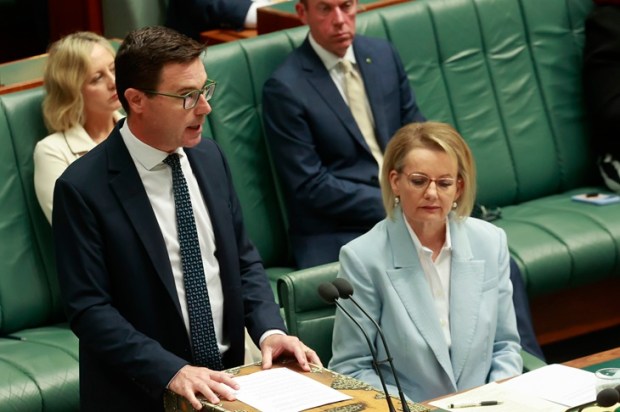
Prime Minister Anthony Albanese’s leadership has been exposed for what it truly is – all fluff and no substance. But the carefully stitched veneer has now come undone following his 2025 election victory.
This is no sudden revelation.
From May to September 2024, we warned that Albanese’s obsession with trendy domestic optics was dangerously undermining Australia’s national security, both at home and abroad. We highlighted how his preference for ‘de-escalation’ rhetoric in the face of repeated grey-zone provocations such as China’s People’s Liberation Army harassments of Australian Defence Force personnel was inviting escalation and eroding our credibility with key allies like the United States and Nato and across the region.
We criticised specific decisions, such as the scaling back of participation in Rim of the Pacific (RIMPAC) exercises, the snub of the Ukraine peace summit, and the tokenistic approach to countering Houthi attacks in the Red Sea. These were not mere oversights. They were signals of weakness that emboldened autocrats and left Australia exposed to hybrid threats.
Tragically, events since then have proven our warnings right and with devastating force.
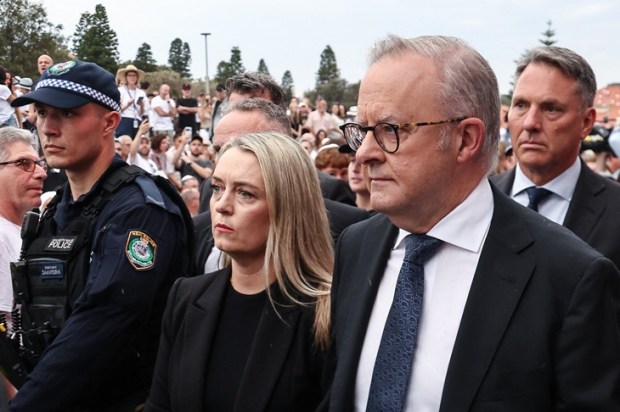
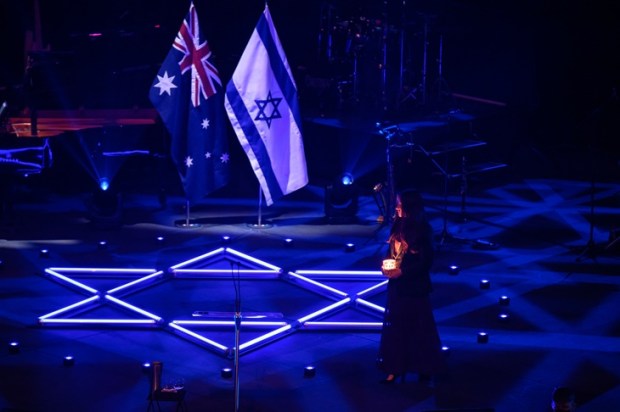
The Bondi Beach terror attack, a brazen antisemitic massacre during Hanukkah that claimed 15 innocent lives and wounded many more, stands as the starkest domestic manifestation of this dereliction of duty. The Bondi attack was not only an attack on Australia’s Jewish community but also a direct attack on our fabric as a diverse and socially cohesive nation.
Rather than demonstrating decisive leadership by cracking down on rising radical Islamist extremism, enhancing security protocols, or confronting radicalisation head-on, Albanese resorted to platitudes about ‘national cohesion’ and conspicuously avoided the scene, apparently fearing political backlash.
This hesitation mirrors precisely the grey-zone vulnerabilities we flagged in 2024 – the blending of online incitement, community infiltration, and low-level violence that enemies exploit without provoking a full-scale response. By failing to act robustly against domestic hybrid threats, the Prime Minister has allowed such dangers to fester, turning warning into tragedy.
The pattern extends to the international stage, where Albanese’s foreign policy remains disastrously myopic. His formal recognition of the State of Palestine in September 2025, a move welcomed by Hamas, prioritised performative diplomacy over the principled condemnation of terrorism. As noted in The Wrong Stuff!, his scripted responses to crises increasingly resemble copy-paste jobs, diluting Australia’s stance against Islamist aggression and weakening alliances needed to counter Iran-backed proxies like Hezbollah and the Houthis. Our earlier critique emphasised how such equivocation creates openings for adversaries.
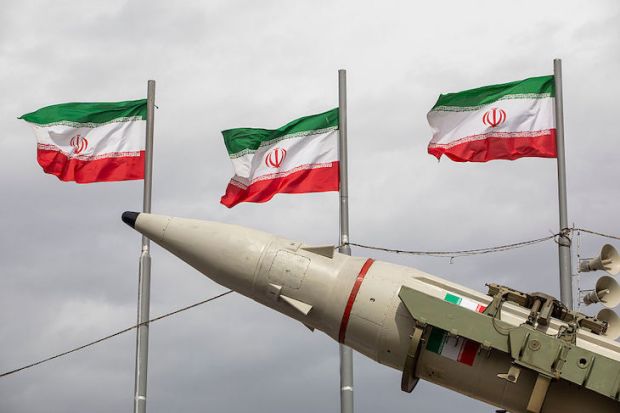
Reported state-actor involvement by the likes of Iran’s Islamic Revolutionary Guard Corps in antisemitic attacks in Australia prove this point.
In a multipolar world rife with grey-zone tactics such as economic coercion, disinformation, proxy conflicts, and cyber interference, such hesitation creates vacuums that both autocrats and radical extremists eagerly fill.
Since the Bondi massacre, the consequences of this leadership vacuum have become undeniable. What we described as a ‘dangerous message’ to our enemies has materialised in heightened vulnerabilities both at home and abroad. China’s influence over diaspora communities, Russia’s disinformation operations, and Islamist networks’ incitement of antisemitism all thrive in this environment of indecision. Australia, once a reliable and resolute partner in the Indo-Pacific, now risks isolation, with economic pressures only compounding the instability.
Albanese’s tenure is incompetence laid bare. Building on the prescient analyses we offered in 2024, it is clear that his dithering is far more than superficial fluff, it is a profound strategic liability. Australia needs leadership which confronts threats decisively, not one which does through inaction enable more of such tragedies to happen. Without urgent course correction, we are inviting our adversaries to exploit our inherent weaknesses of not countering such hybrid threats in the grey zone of war and peace even further.
Dr Michael de Percy @FlaneurPolitiq is the Spectator Australia’s Canberra Press Gallery Correspondent. If you would like to support his writing, or read more of Michael, please visit his website.
Professor Sascha-Dominik (Dov) Bachmann @SdBachman is Professor in Law and Co-Convener National Security Hub, University of Canberra, and a Research Fellow with the Security Institute for Governance and Leadership in Africa, Faculty of Military Science, Stellenbosch University. Sascha is an extraordinary Reader in War Studies with the Swedish Defence University. He was a Fellow with NATO SHAPE – ACO Office of Legal Affairs until 2025 where he worked on Hybrid Threats and Lawfare. All views and opinions are the author’s own and do not represent the views of the organisations the author is affiliated with.