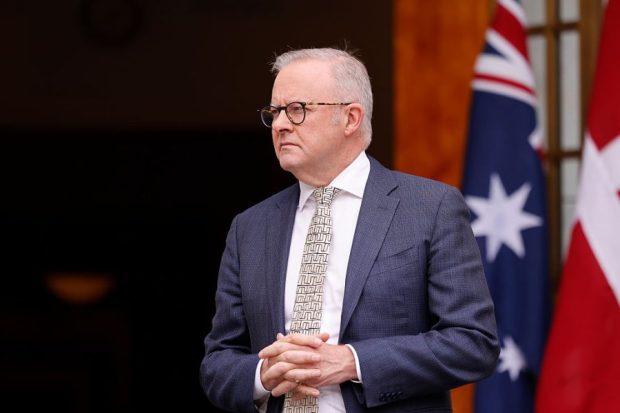
After four days of looking like a rabbit in the headlights, embattled Australian prime minister, Labor’s Anthony Albanese, finally started to act like a national leader willing to do what’s right. Yesterday, Albanese announced his government’s response to a plan to combat anti-Semitism proposed by his hand-picked special envoy on anti-Semitism, Jewish community leader Jillian Segal.
Albanese has had Segal’s report since July. His response yesterday, which effectively accepted the envoy’s 13 recommendations, was tardy but substantial. Most importantly, the Australian government accepted the International Holocaust Remembrance Alliance’s (IHRA) definition of anti-Semitism – a definition that boils down simply to hatred towards Jews, without qualification – as the basis of policy and legislation for federal and state governments.
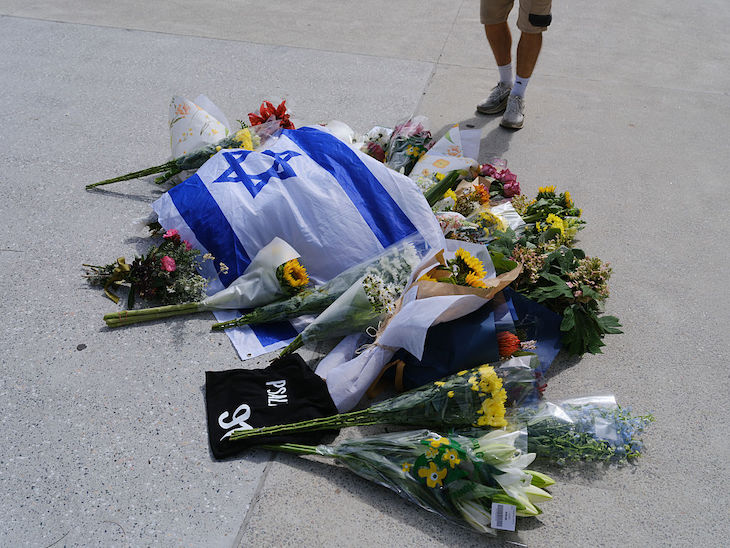
The prime minister also announced reinforcement of Australia’s hate speech laws to vilify and penalise hate speech promoting violence and aggravated penalties for preachers and leaders promoting violence. That includes online threats and harassment. Hopefully, all these measures will outlaw demands to ‘globalise the intifada’, as happened so barbarically in Bondi last weekend.
Albanese looked all at sea in struggling to read the anger of Australia’s Jews
Australians have looked on in astonishment recently as Britons are arrested and jailed for tweets and various hate speech laws – Lucy Connolly’s jailing was big news there – so, at first glance, these announcements are following in the UK’s footsteps.
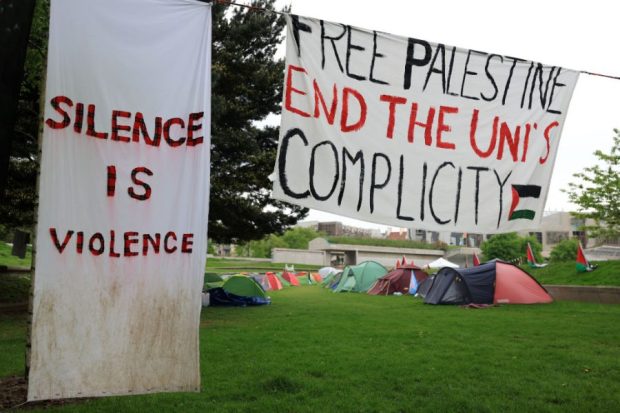
Segal also argues that anti-Semitism is rife in Australia’s universities and cultural institutions and needs to be rooted out. Albanese has also agreed to her recommendation that a high-profile taskforce should be established ‘to ensure the education system prevents, tackles and properly responds to anti-Semitism’. Given that Australia’s university campuses have been plagued with pro-Palestinian camps and violent protests, making Jewish students and staff fear for their safety, this is a major issue for Australia’s Jews.
Albanese lastly pledged to do more to proscribe organisations ‘whose leaders engage in hate speech and racial hatred’. It was hinted this includes the Hizb ut-Tahrir pan-Islamist group banned in Britain and other countries but still allowed to operate in Australia, and able to inculcate young Australian Muslim men in its radical and violent ideology.
The striking thing about the Australian government’s response to the Segal plan was that it actually was written and ready to go before last weekend – right down it being printed – with forewords by Albanese and the responsible minister. As the former Liberal deputy leader Josh Frydenberg said yesterday in his scathing critique of the government’s inaction on anti-Semitism, the report had been gathering dust. Reprehensibly, it took Bondi to change that.
Partly that was because most Australian Muslims live in Australian Labor party-held parliamentary seats. More than that though, the Labor support and fundraising base depends heavily on progressive radicals, intellectuals and luvvies for whom being pro-Palestine and viscerally anti-Israel and its government are articles of faith.
Just how much was demonstrated recently by the Labor branch in the federal seat covering Bondi Beach, a branch including the daughter of former Labor prime minister, Gough Whitlam. That branch voted to reject the Segal plan in full because it was claimed its adoption of the IHRA anti-Semitism definition would outlaw criticism of the Israeli government. It’s a sentiment shared widely across Albanese’s party, and by its parliamentary ally and key supplier of preferences under Australia’s single transferable vote electoral system, the Australian Greens.
Until this week, Albanese looked, and was, all at sea in struggling to read the anger not just of Australia’s Jews, but most of the wider Australian community. But yesterday he at least realised belatedly that being a national leader in time of crisis requires acting in ways that offend and anger one’s own key supporters in a higher interest. That is what his conservative predecessor John Howard had to do in 1996 after the notorious Port Arthur gun massacre. Howard had to face down his natural constituency, farmers and shooters, to make Australia’s gun laws the toughest in the Western world and keep Australia free of mass shootings – until last Sunday.
With Albanese’s proposals, he’ll need to emulate Howard in confronting his own supporters, while reassuring free speech champions on the right that his hate speech plan will not take Australia down the British thought police path.
Albanese made his announcement yesterday as the youngest victim of the Bondi massacre, a 10-year-old girl publicly named only as Matilda, was laid to rest. What he has committed to do will take time to implement: passing controversial legislation always does, especially in an upper house where Labor will depend on the far more radical – and keffiyeh-wearing – Greens to support it. There’s no guarantee that it will pass without being severely watered down. But it’s a start – of sorts.
The shame of it is not that it’s only happening after Bondi, or that it was finally announced almost six months after the Segal report was received. It’s that it has come over two years since anti-Semitism returned to prominence in Australia with the despicable Sydney Opera House ‘gas the Jews’ protest of 9 October 2023.
Matilda, and the other 14 victims whose lives were snuffed out on Sunday, cannot be brought back. But the survivors of the attack might take some small comfort in seeing a government which has, since the 7 October Hamas atrocities, been all talk and little action on combating anti-Semitism, finally admitting words alone will not even manage that moral cancer in the Australian community, let alone eradicate it.