When I first read Why Nations Fail, Australia certainly didn’t come to mind. Yet as our energy debate drifts further from engineering and economic fact, the book has taken on uncomfortable relevance.
If Acemoglu and Robinson ever released an updated edition, Australia would almost certainly be paired with Germany: two wealthy nations risking their future not through corruption or scarcity, but through institutional overconfidence and narratives that no longer match how energy systems actually work.
The authors describe a pattern they call the ‘vicious circle’: leaders become so invested in a narrative that they defend it long after evidence has turned against them.
Germany’s Energiewende is a textbook example – a prosperous nation clinging to a renewables-only vision even as prices rose, dependence on Russian gas deepened, and energy-intensive industries suffered.
Australia now shows similar traits: ignoring rising bills, growing curtailment, and slowing investment because acknowledging them would require challenging a political identity rather than adjusting a policy.
The book contrasts these failures with societies that ‘break the mould’ when circumstances demand it.
France, Japan, South Korea, the UK, and the Netherlands have all revised their energy strategies by reinforcing nuclear, securing gas, and strengthening firm capacity. Australia and Germany, by contrast, resemble cases where institutions become psychologically captive to their own storyline. The danger is not sudden collapse but steady erosion of competitiveness as nations choose narrative comfort over practical competence.
Governments rarely fail because information is unavailable – they fail because it’s inconvenient.
Australia’s insistence that an advanced industrial economy can be powered primarily by intermittent renewables within a decade has shifted from policy position to political identity. Evidence is treated as threat rather than guidance.
The pattern mirrors the years before the 2008 Global Financial Crisis, when economists and regulators warned that the US mortgage market was structurally unsound, yet leaders insisted everything was fine. The US Federal Reserve’s own historical account shows how explicit and ignored those warnings were. The result was a crisis as much psychological as financial – a system built on narratives too comforting to abandon.
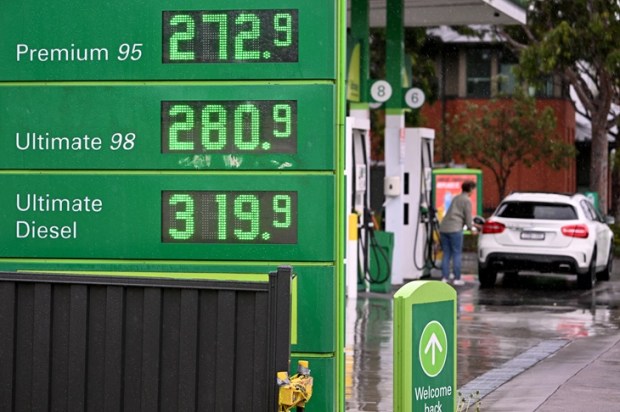
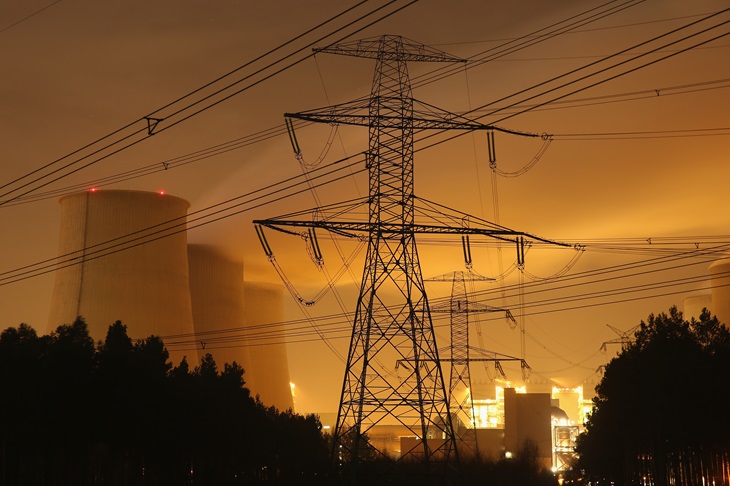
Today, warning signs flash across Australia’s energy system. Electricity prices have risen more than 30 per cent year-on-year once temporary rebates are removed, according to the Australian Bureau of Statistics. Investment in large-scale renewables has collapsed: the Clean Energy Council reports that only 1.1 gigawatts reached final investment decision in 2024, far short of the roughly 6 gigawatts required annually to meet the government’s 2030 target. Meanwhile, the Australian Energy Market Operator shows solar curtailment exceeds 20-25 per cent in parts of New South Wales and Victoria – vast amounts of clean energy the system cannot absorb.
In any functioning system, this would trigger immediate correction. Instead, the government insists the transition is ‘on track’. Understanding why requires examining three cognitive forces.
First is sunk-cost fallacy.
After a decade promising that renewables alone would deliver cheap, abundant electricity, reversing course means admitting misjudgement. For a government that ties its identity to climate credentials, this is politically excruciating.
Second is groupthink.
Australia’s energy debate is dominated by a tight ecosystem of advisers, NGOs, consultants, and sympathetic experts sharing the same assumptions. This creates an echo chamber in which dissenting voices – even those grounded in engineering or economics – are dismissed as obstacles.
Third is moral licensing.
Because the government views its intentions as virtuous, it feels psychologically insulated from policy failure. When motivations are framed as noble, outcomes become easier to excuse.
A decade ago, leaders might have claimed ignorance. Today, globalisation and real-time information remove that excuse.
Around the world, advanced economies treat energy as strategic infrastructure – the foundation of economic competitiveness and national sovereignty. Crucially, they are adjusting course where reality demands it.
Germany is the most striking example. Once the global champion of renewables-first strategy, Germany now faces some of the highest electricity prices in the OECD and is being forced to strengthen gas and capacity mechanisms to stabilise the grid. Germany is the future Australia is walking toward – only Australia still has time to change direction.
Other countries have already shifted. France is investing €52 billion to expand nuclear capacity and secure long-term competitiveness. South Korea reinstated nuclear expansion after its phase-out weakened energy security and threatened heavy industry. Japan is restarting reactors and locking in long-term LNG supply because its economy cannot function without firm power. The United Kingdom is investing in both large reactors and small modular reactors to ensure future baseload. The United States is approving record LNG export infrastructure to support allies and domestic industry, while revitalising nuclear through production tax credits.
The pattern is clear: nations that secure affordable, firm, reliable energy prosper; nations that treat energy as ideology decline.
Energy policy is destiny.
It determines which nations manufacture, innovate and attract investment, and which lose industries, competitiveness and geopolitical autonomy. It shapes household living standards, regional cohesion, national budgets and strategic security.
Australia is not doomed to failure. But it is drifting – and the drift is psychological, not technological. A refusal to re-examine assumptions, even as evidence accumulates, is precisely the dynamic Why Nations Fail describes: institutions that stop learning.
The warnings are clear. The global lessons are visible. The data is unambiguous. The only question is whether Australia’s leaders can overcome the inertia and self-protective instincts that have undone other nations, and act before the correction becomes severe.
Cristina Talacko is the CEO of GLOW Strategies, a global advisory firm focused on energy and sustainability, and founder of the environmental charity Coalition for Conservation.