It was Parliament House 1992 and Prime Minister Keating was asked by then Opposition Leader John Hewson why he refused to call an early election. Keating replied, ‘Because I want to do you slowly.’
Even today, it remains one of the greatest political ‘burns’ of all time. More to the point, it was a great example of the chicanery that can occur during federal parliamentary Question Time.
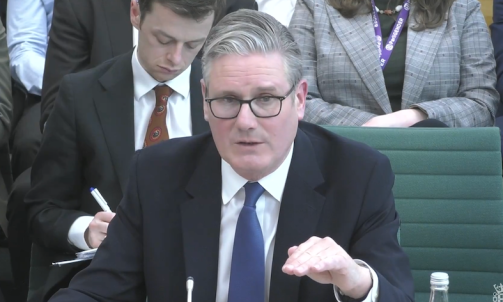
In the last week of Parliament for 2025, Member for Wentworth, Allegra Spender, asked the Prime Minister if he would consider reforming federal parliamentary Question Time so that Ministers were required to provide more transparent and fulsome answers.
The Prime Minister’s response was that Australia is ‘the most accountable Parliament in the world’, rattling off several comparable democracies where members of the government are less accountable.
However, at the heart of Ms Spender’s question was the inference that Question Time is not serving the purpose for which it was intended.
As the name implies, Question Time is meant to be an hour set aside for direct questions to be asked of the government and straightforward answers provided.
The reality could not be further from this intent. Question Time is more akin to Cirque du Soleil – lots of stunts, lots of colour and movement, with little in the way of substance or detailed narrative. There’s also the obvious parallels that both have their fair share of clowns, contortionists, and tumblers, though some may wish there were a few more mimes.
Obviously, like the Member for Wentworth, some argue that Question Time should return to its foundational objective; a time for asking serious questions and receiving transparent answers.
I would argue that over the years, Question Time has become something more valuable. A single hour during a parliamentary sitting day that provides Australians with an insight into the skill and leadership qualities of our politicians.
It’s a chance for the public to see how our government leaders perform under pressure. Over the years, this has revealed the verbal pugilistic prowess of leaders like Howard, Hawke, and Gillard, able to stand and deliver a response from the dispatch box based on their wit and the measure to which they were across key portfolio issues.
Question Time is also one of the only ‘live’ opportunities for politicians to square-off with their opponents to try and land some palpable hits. Nowhere else in the theatre of modern politics are our politicians placed in such close proximity and forced into verbal hand-to-hand combat on a daily basis.
Question Time also provides a measure of how well the opposition is ‘cutting through’. It allows us to make an assessment as to the quality of the alternate government and ascertain if they are a viable option. Among other factors, it was Keven Rudd’s initial Question Time performance opposite Prime Minister Howard that helped him capture the imagination of the nation, for a time at least.
It’s also a chance for the government to promote its policy agenda as being the best for the nation. This necessarily reveals the opposition’s attack strategy on various issues.
During the great tax reform debate in 1999 and 2000, Question Time was dominated by ‘dixer’ questions from Coalition backbenchers to Prime Minister Howard and Treasurer Costello on how the introduction of a GST and the removal of a range of other taxes would benefit the economy.
Labor’s response was to fire question after question picking apart the intricacies of the GST in an attempt to make it look as confusing as possible to punters.
Estimates, censure motions, and even the fourth estate are far more effective tools for holding our elected representatives to account.
In fact, if Question Time were to revert to a time when Ministers provide overly detailed, technical answers to complex questions, not only would Question Time become utterly unwatchable, we would miss out on the precious nuggets that have become cemented in our political history.
The aforementioned Keating came back to Hewson’s question. Former Prime Minister Howard thundering from the dispatch box at Labor under Kim Beazley, calling for an Opposition with some ‘guts’ or even Peter Costello’s attempt to emulate then Member for Kingsford Smith, Peter Garrett’s, famous dance style as frontman for Midnight Oil.
Question Time should be left as is. A time to see how our politicians stand up under the blowtorch of verbal combat. It’s these performances that show us the mettle of those who would seek to lead and shape our nation.
Brad Emery is a freelance writer and former Howard Government staffer