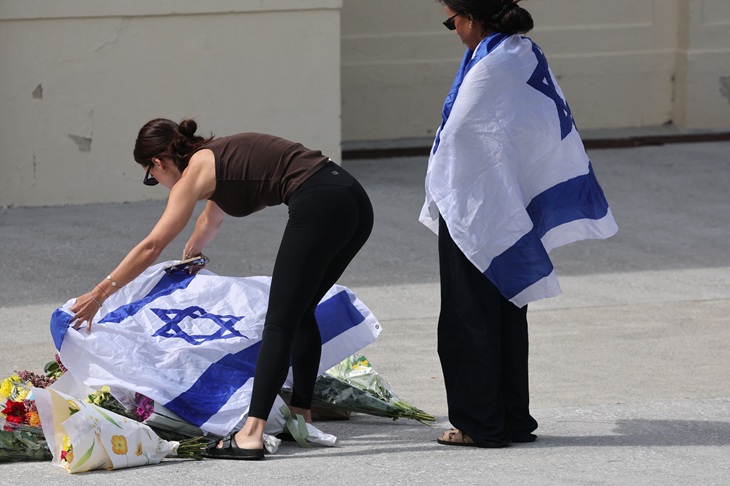
On 15 December, I witnessed horrific news footage of a massacre at Bondi, a nation reeling, not from an unforeseeable shock, but from the predictable consequences of an unrestrained ideology of hate tolerated in the name of multiculturalism.
What confronts us is a failure of governance and civic courage so profound that it defies comprehension and unless it is confronted directly, it will recur.
This, right now, is the point at which multiculturalism must be redefined, not abandoned. Tolerance cannot extend to those who preach violence, elimination, or hatred. Extremism must be identified early, confronted openly, and removed decisively. That task demands political will, unapologetic enforcement of the law, and police action commensurate with the seriousness of the threat.
The choice is no longer theoretical. Either Australia asserts its civic boundaries and preserves a shared public order, or, the unthinkable, which continues to excuse what should be dismantled and accepts consequences far more severe than those already endured.
Diversity, by itself, is not a strength. Harmony within diversity is. Where diversity becomes adversarial, where it is weaponised against the safety, dignity, and cohesion of others, it ceases to enrich society and becomes a sociological cancer. Australia has lived with that cancer for too long.
Curing the cancer will not be prevented by symbolic diversions or micro-regulatory changes. It will be prevented only through public correction and decisive, lawful action: the firm enforcement of existing laws, the suppression of extremist ideology at its point of emergence, and the unequivocal assertion of civic boundaries. That responsibility rests first and foremost with those closest to the source of the radicalisation and ultimately with a state that must choose whether it governs or merely observes.
Public safety in a multicultural and egalitarian society is not solely a function of policing; it is a shared civic responsibility. Multiculturalism is not the absence of standards, but the coexistence of differences within a single legal and moral framework. That framework requires that cultural, religious, and ethnic communities actively reject violence, intimidation, and eliminationist ideology from within. Where communities fail to do so, the state must intervene, not to punish identity, but to dismantle the structures, networks, and authorities that allow extremism to persist.
Where members of a community tolerate, excuse, or shield extremist conduct, integration fails. Multiculturalism cannot survive if internal norms within a group are incompatible with the equal dignity, safety, and rights of others. Cultural pluralism is sustainable only where loyalty to the civic order overrides loyalty to sectarian ideology.
This does not justify collective blame or punishment. Responsibility attaches to individuals and institutions, not ethnic identity. But where individuals or organised groups demonstrate persistent rejection of Australia’s legal and civic foundations, through advocacy of violence, participation in extremist movements, or refusal to abide by the rule of law, they forfeit any claim to the protections of that system. Continued participation in a democratic society is conditional upon adherence to its laws and values, enforced through lawful means including prosecution, deregistration, exclusion from positions of influence, and, where applicable, removal under existing legal powers.
Stop saying antisemitism, it is extremist Islamic hate
Australia is not a society characterised by antisemitism. The overwhelming majority of Australians, across all ethnic, religious, and cultural backgrounds, harbour no hostility toward Jewish Australians. Jewish communities have long been integrated into, protected by, and respected within Australia’s civic and institutional life. To describe Australia as broadly antisemitic is therefore inaccurate and obscures the real and present danger.
The threat confronting Australia is not multiculturalism, nor generalised prejudice, but a specific strain of ideological extremism associated with jihadist violence, an ideology that explicitly targets Jews, Western civic institutions, and pluralist societies more broadly. This distinction matters. Misdiagnosing the problem leads to the wrong remedies and shields the true source of the threat from scrutiny.
It is equally important to be precise and fair. Conflating extremist ideology with Muslim Australians as a whole is inaccurate and unjust. The vast majority of Australian Muslims reject extremism, embrace peaceful coexistence, and participate fully in Australia’s multicultural society as law-abiding citizens. They are not responsible for the actions or beliefs of extremists.
However, this truth does not absolve community leadership and institutions of responsibility. Where individuals or factions within a community advocate hatred, glorify violence, or call for the destruction of others, silence from within that community is not neutrality, it is failure. A serious and troubling deficiency has been the unwillingness or inability of some community leaders to actively confront, expose, and report those who preach hatred or violence, including where such rhetoric is delivered from positions of religious authority.
Where preachers or organisers are permitted to operate unchecked, promoting eliminationist language, justifying violence, or normalising hostility toward Jews, the issue is no longer one of free expression or religious belief. It is a failure of institutional responsibility and a breakdown of civic duty. Incitement delivered under the cover of theology is no less dangerous than incitement delivered in the street; indeed, it is often more so, because it cloaks hatred in moral authority and grants it legitimacy.
Muslim community leadership has a particular responsibility to confront and eradicate this conduct from within. Silence in the face of incitement is not neutrality; it is acquiescence. Where leaders fail to identify, discipline, expel, and report those who preach hatred or violence, they abandon their civic obligations and forfeit any claim to moral leadership. Extremist actors cannot be allowed to shelter behind community structures, religious institutions, or claims of cultural sensitivity.
Individuals and organisations that advocate violence, endorse eliminationist ideology, or refuse to abide by the rule of law must be removed from positions of influence, stripped of institutional protection, and dealt with through the full force of existing law including prosecution, deregistration, deportation where lawful, and permanent exclusion from public life.
Multiculturalism, properly understood, cannot coexist with extremism. A pluralist society rests on a non-negotiable civic foundation: the rule of law, the equal dignity and safety of all citizens, and the absolute prohibition on violence or incitement to violence against others. Extremism is not a cultural expression or a political grievance; it is a rejection of the civic order itself.
Hatred spreads like cancer in our midst
A defining moment in Australia’s recent failure to enforce this civic baseline occurred during the public demonstration at the Sydney Opera House on October 9, 2023, just 48 hours after the October 7 massacre in Israel, the most lethal attack on Jews since the Holocaust.
At a time when the scale and brutality of the atrocities were already known and still unfolding, chants explicitly calling for harm to Jews were broadcast nationally and internationally from one of the country’s most iconic public spaces. That such conduct occurred so immediately after mass murder, in a location symbolising Australia itself, in full view of law enforcement, and without immediate or decisive legal consequence, represents not merely a lapse in judgment but a profound moral, civic, and institutional failure.
That failure was compounded by the repeated tolerance of openly eliminationist slogans at weekly marches, including ‘from the river to the sea’, ‘intifada now’, and ‘death to the IDF’ chanted without restraint at rallies and marches through Australia’s most prominent civic spaces and national monuments. These were not ambiguous expressions of political dissent; they were explicit calls for violence or erasure, delivered publicly, repeatedly, and with impunity.
The consequences were immediate and unmistakable. Jewish Australians were advised to avoid university campuses. Public events were cancelled across the country. Schools, synagogues, and social gatherings were forced to engage private security at their own expense to protect children and families. When a minority community must retreat from public life and assume responsibility for its own physical safety, the civic order has already failed.
At that point, claims that Australia remains a functioning multicultural society become untenable. Multiculturalism does not collapse when difference exists; it collapses when the state selectively withdraws protection from one group and tolerates intimidation directed at it. The government did not merely fail to respond, it normalised fear, ceded public space to extremism, and allowed a malignant ideology to embed itself unchecked.
Claims that governments and police lack the legal authority to intervene are demonstrably false. Australian law already provides ample and well-settled powers to prevent and punish incitement to violence, extremist advocacy, public vilification, and material or rhetorical support for terrorist organisations. These powers are neither novel nor untested; they have been repeatedly invoked in other contexts with speed and severity.
The failure, therefore, is not legal but political. It is not an absence of authority, but a refusal to exercise it. Decisions were made, consciously and at senior levels, to tolerate conduct that would have triggered immediate enforcement had it been directed at any other group or occurred in any other political context.
A further corrosive factor cannot be ignored. In electorates where electoral outcomes are finely balanced, governments face a persistent temptation to substitute appeasement for enforcement. When ministers of the Crown permit fear of electoral backlash to override their duty to apply the law equally and without favour, democratic accountability is lost. The rule of law becomes contingent, not principled.
Responsible government does not permit elected officials to calibrate law enforcement according to voting blocs or communal sensitivities. Ministers do not govern as delegates of sectional interests; they govern as custodians of the state’s legal and civic order. Their duty is to lead from the front, to confront, condemn, and dismantle violence and hate, not to avert their gaze or retreat into silence. When political survival becomes contingent on acquiescence in the face of extremism, the result is not social harmony but democratic decay.
The Bondi attack did not emerge from the unknown. It was the foreseeable culmination of years of tolerated extremism, rhetoric that festered in plain sight, echoed in public forums and community spaces, and went unanswered by those with the authority to intervene. This occurred within electorates represented at the highest levels of government only underscores how visible and how avoidable the warning signs were.
Appeasement of intimidation, whether driven by ideological sympathy or electoral arithmetic, does not preserve cohesion. It corrodes legitimacy, signals weakness, and invites further escalation. A state that hesitates to enforce its laws out of fear of backlash ceases to govern in any meaningful sense. It abdicates authority and with it, the trust upon which democracy depends.
Responsibility for this failure rests squarely with the Labor Prime Minister Albanese and the Labor Premier Minns. They command the executive machinery of the state. They set enforcement priorities. They oversee and direct the police forces entrusted with maintaining public order and enforcing the law without fear or favour. To pretend otherwise is to deny the basic structure of responsible government.
The government response has been spectacularly inadequate. Attempts now to divert attention toward firearm regulation are a category error: they misdiagnose the threat and evade the central issue, which is the failure to confront violent ideology and the refusal to enforce existing law. The danger did not arise from the absence of regulatory power, but from the absence of political will.
Jewish representative bodies repeatedly warned governments and police of escalating threats, radicalisation, and intimidation. Those warnings were explicit, contemporaneous, and credible. When such warnings are received and no effective action follows, responsibility for the foreseeable consequences cannot be disclaimed. In a system of responsible government, inaction in the face of known risk is itself a form of decision-making.
Ending extremism does not require abandoning multiculturalism. It requires enforcing its preconditions. Multiculturalism is not the toleration of intimidation, incitement, or eliminationist ideology; it is the equal protection of all citizens under a single legal order. Where the state permits extremist conduct to flourish unchecked, multiculturalism does not survive, it collapses into selective enforcement and communal fear.
That preaching the death of an entire people can be made publicly, repeatedly, and without prosecution in a modern democratic state is not merely astonishing: it is an indictment of enforcement failure and a repudiation of the rule of law.
No democratic society can outsource the policing of public order to communities themselves, nor can it excuse lawlessness on the basis of cultural sensitivity or political risk. The duty to act rests with the state alone. When police are constrained by political hesitation, and when governments respond with silence or deflection, grotesque behaviour is not merely tolerated, it is normalised.
A democratic state therefore has only one choice. It must enforce its laws without fear or favour, suppress extremist ideology early, directly, and lawfully, and remove incitement and intimidation wherever they arise. There is no alternative path.
In failing to do so, the government failed the Jewish community and it failed the innocent lives that were lost. That failure has imposed a permanent moral reckoning, one that will mark this nation with sorrow forever.