From Munich: German Christmas markets are the best in the world. There’s something about Germany that makes Christmas feel more like Christmas than anywhere else. The focus is on food, drink, and good cheer, just as the Santa of my childhood represented. Back then, Christmas was special. It was a celebration of the birth of Jesus Christ. It was a time where everyone said Merry Christmas to each other, and it was the most special time of year.
In light of recent events in Australia, I think the Christmas spirit, much like chivalry and civility, is not dead. It has just been hiding in a closet, biding its time. The good news is that that time has come. And Germany, for all its faults, has reminded me of all that is great about the Christmas spirit.
Political opinions aside, in Germany the excitement and magical awe of the Christmases of my childhood remain palpable. It really is the heartland of Santa Claus. There is some contention about the historical origins of Santa and Christmas. Non-Christians and über-Christians will point out the pagan basis of the tradition to suit their own ends. But an experience years ago reconciled the dichotomy in the practice of Christian faith and the celebration of Christmas.
I remember the whitest of white Salvation Army officers (as in the washed in the Blood of the Lamb and cleansed in the Fire of the Holy Spirit kind of white) asking kids what Santa had brought them. This was a time when green ideology was beginning to be viewed as the newest religion. It was also a time when the Charismatic Christians I knew felt that Merry Christmas was more appropriately considered ‘Merry Capitalism’. (While I think such criticism is misguided and often unnecessary, I will be the first to whinge about hot cross buns being available on Boxing Day.)
It was the first example of a dichotomy that was easily resolved by this rather pious Salvation Army officer who was a dedicated Christian who didn’t need to run around telling everyone how to practice the traditions of Christmas. Hers was a kind of ‘relaxed and comfortable’ Christmas where one could practice one’s faith while still embracing and enjoying the pageantry of Christmas. I have learnt much about the approach this year spending the entire Christmas season in Germany.
From my perspective, there are some fundamental elements that make a German Christmas. The first is Glühwein, or mulled wine. While there are various definitions of why ‘glow’ wine is so named, I agree with the idea that after you’ve had a Glühwein or three (or Eierpunsch if you like eggnog, or both), you begin to feel the glow of your surroundings. There are variants such as adding rum or amaretto to your drink or even the more expensive Glüh Gin which packs a punch.
Germany has no hang-ups about alcohol. You can buy it anywhere, drink it almost anywhere, at any time, and it is reasonably priced, especially beer. In Australia, it is like Mrs Jessop from the Sullivans has taken over as the Minister for How You Live. Germany is the opposite, a place where Paul Hogan’s ‘Perce the Drunk’ is in charge but he’s somehow classy and doesn’t stumble about.
Having a prosecco breakfast each morning in Hamburg has been one of the highlights of the trip. When in Rome, as they say. Oh, how I long to bring Rome home!
Next is pork. If you want to complete your German Christmas glow, a belly full of pork washed down with a top or bottom fermented beer or a Rhine Riesling, and then later with a Glühwein, and your cheeks are guaranteed to light up a room. Add to this the tinge of redness from the cold and your Santa look is complete. It is glorious!
Then, and most importantly, churches. I naturally prefer the Protestant churches. Given Germany is the birthplace of Protestantism, I was surprised to learn that Catholicism is the largest denomination. It is only to the north where the Protestants dominate, but while Christianity has been in general decline (at least officially), church bells ring all day in the German cities I have visited. Many ring for a full five minutes before signalling midday.
It is difficult not to be a Christian when one hears the bells, or I suppose to stop oneself from combusting if one insists on remaining an atheist when, as Pink Floyd sang, ‘the tolling of the iron bell brings the faithful to their knees to hear the softly spoken magic spell’.
On a day trip to Salzburg in Austria, the birthplace of Mozart, the Salzburg Cathedral has ‘Musik zum Mittag’ (Music at Midday) where one of the priests plays Bach, Mozart, and other composers on four of the seven organs in the cathedral. The spectacular event lasts for at least half an hour. The different sounds of the organs brought me goosebumps. The priest MCing the event stated that the organ was the natural instrument of the Church. I didn’t doubt his word.
Then there is Santa Claus.
Germany played a key role in shaping Santa Claus through folklore figures like the Weihnachtsmann (Father Christmas) and Belsnickel, a fur-clad companion to Saint Nicholas who rewarded or punished children. German immigrants brought these traditions to America in the nineteenth century, where they evolved into the modern Santa, popularised by cartoonist and German immigrant, Thomas Nast.
Further, Germany’s festive innovations extend beyond folklore to profound historical contributions that underpin modern Western values, like those from the Treaty of Westphalia.
The Treaty of Westphalia was signed in Germany in 1648. This period heralded the beginnings of the Western nation-state as we know it today. While this may seem a foreign entity to anti-colonialists, the Westphalian system has delivered numerous benefits leading to the separation of church and state and the surety of national borders drawn on a map rather than based on religion. Of course, Germany as we know it today was a latecomer to the nation-state party.
As a result, much like when we talk about things Australia is famous for where we say something is ‘the biggest in the Southern Hemisphere’, Germans often speak of things being bigger or better ‘than anything else north of the Alps’. I daresay it is difficult to compete with Ancient Greece and Rome on many things. But Germany was once part of the Holy Roman Empire, hence its southern Catholicism but also its regional cultural ties. And while it is also the birthplace of Protestantism, the celebration of Christmas seems, to an outsider at least, to be a shared cultural experience.
Germany is also the birthplace of the modern concept of the fairy tale as popularised by the Grimm brothers. This year, we will spend Christmas Day with some Australian friends in the quaint and historic village of Hann. Münden, near the Grimm brothers’ old stomping grounds.
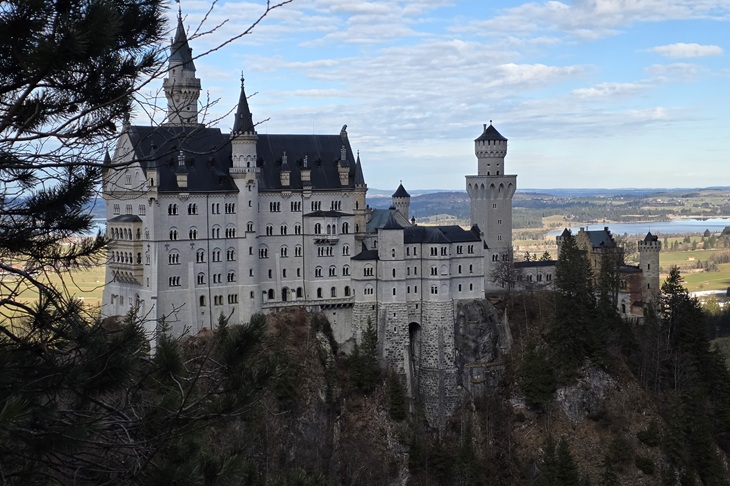
But easily the most amazing experience I have had so far is visiting the Neuschwanstein Castle. This is the actual castle that most of us would be familiar with through Disney’s depiction, or otherwise as the backdrop in the classic movie, Chitty Chitty Bang Bang. It was difficult not to be happy when visiting such a place, even though it is the concoction of a nutter Bavarian king in the 19th Century. Thank God for rich nutters, I say.
Back here in Munich today, the midday church bells were accompanied by the cacophony of the Glockenspiel in the tower of the Neo-Gothic New Town Hall constructed in the 19th Century. Standing in the middle of the Christmas Markets in Marienplatz surrounded by such Christmas cheer and Christian symbolism really brought a smile to my face.
I thought for a moment that if only I could relive one of my Christmases as a young boy when I received a brilliant toy soldier set and waiting in the loungeroom was a minibike. (In the 1970s, minibikes were popular small, fat-tyred single-speed, petrol-engined motorbikes. The best present a boy could have back then.)
But then I think of the intervening years from then until now and I readily resolve my childhood reflections. I wouldn’t go through all that again for quids.
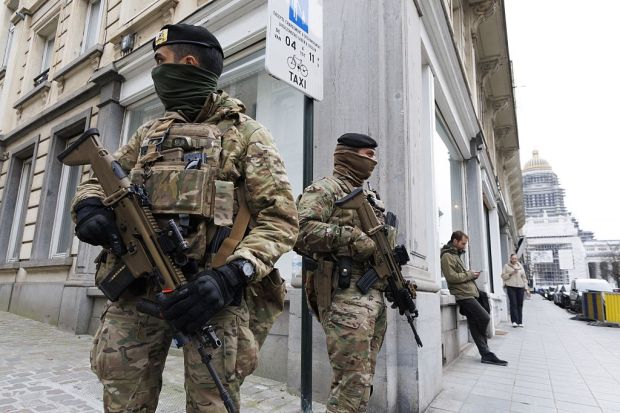
Yet here in Germany, with the Christmas Market barriers (dressed up in Christmas livery) and the security guards to protect me against Islamic terrorists, one might be forgiven for feeling that all is well with the world. If anything, this Christmas is more special than any I have experienced before, as if heralding a renaissance of all that is right with the world.
We’ll be returning via a lucky first-class upgrade for the long flight and I have a new motorbike waiting for me at home (the optimal number of motorbikes is n+1, where n is the number of motorbikes you own now). For the first time ever I am not dreading the trip home. Sitting here with my Glühwein and pork glow, I feel like all my Christmases have come at once. Given that Christmas has come under attack for the last several years, I’ll take that as a relaxed and comfortable victory.
Thank you for your feedback and support over the last year. God bless you all and I wish you Merry Christmas and a Happy New Year.
Dr Michael de Percy @FlaneurPolitiq is the Spectator Australia’s Canberra Press Gallery Correspondent. If you would like to support his writing, or read more of Michael, please visit his website.