With the smoke of war now lifting from Gaza, a troubling question comes into focus: Why has Egypt’s role been so conspicuously ignored?
While Cairo has cast itself as mediator and moral critic, its long-standing posture toward Gaza – before the war and throughout it – raises uncomfortable questions about responsibility, enforcement, and accountability.
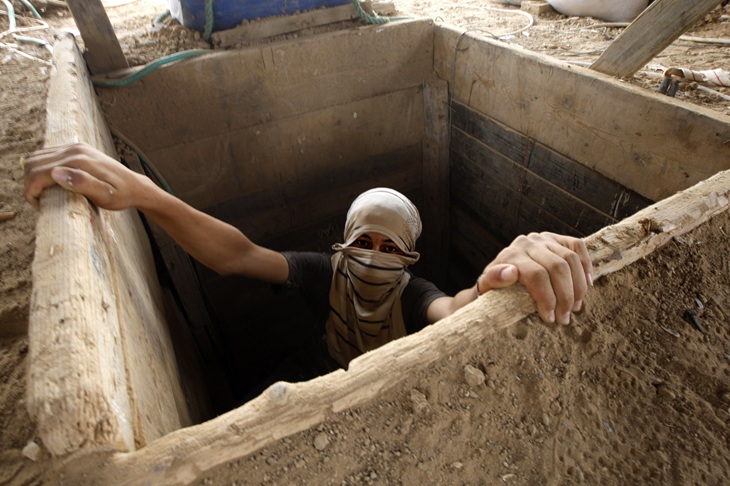
For months, attention has focused almost exclusively on Hamas’ atrocities and Israel’s military response. Far less scrutiny has been applied to Egypt, despite the fact that Gaza’s only non-Israeli border runs through Egyptian territory, and despite years of warnings about what flowed beneath it. The exposure of an extensive tunnel network along the Rafah border has now made clear that Gaza’s militarisation did not occur in isolation. It was enabled by a permissive environment that Egypt, whether through neglect, calculation, or quiet accommodation, allowed to persist.
The Philadelphi Corridor was never meant to become a logistics artery for a jihadist army. Under the post-Camp David security framework, the Gaza-Egypt border was assumed to be monitored, enforceable, and resistant to sustained militarised smuggling. In practice, that assumption collapsed long ago. Over time, tunnels evolved from crude smuggling routes into industrial-scale infrastructure capable of moving weapons, explosives, cash, and trained operatives. This was not a sudden failure but a systemic one, documented repeatedly over many years.
To be sure, Egypt periodically acted against the tunnels. At various points it flooded them, destroyed entrances, and announced crackdowns. Yet these efforts were episodic rather than decisive, and they never dismantled the underlying system. The result was a pattern of disruption without elimination – sufficient to preserve diplomatic cover, but insufficient to prevent Hamas’ long-term military build-up.
This dual posture – selective enforcement paired with strategic tolerance – reflected Egypt’s own interests. Cairo sought to contain jihadist spillover into Sinai, preserve leverage over Hamas, and maintain its status as indispensable mediator. What it did not do was treat Gaza’s militarisation as a strategic red line demanding sustained interdiction. That choice had consequences.
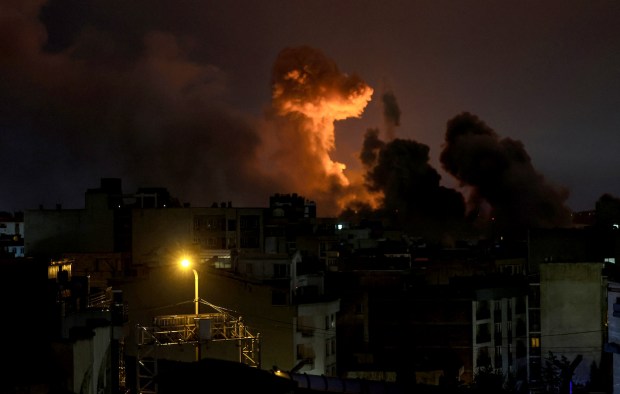
The implications became starkly visible after October 7. As Israel sought to dismantle Hamas’ military infrastructure, Egypt once again presented itself as a humanitarian broker, urging restraint while condemning Israeli operations. Yet at the same time, Cairo largely refused to allow civilians fleeing the fighting to cross into Egypt, even temporarily. With few exceptions for medical cases and foreign passport holders, Rafah remained closed to mass civilian movement.
Egypt has argued that opening the border would risk permanent displacement and destabilisation. That concern is not frivolous. But the practical effect of Cairo’s policy was to seal Gaza’s only non-Israeli exit during an active war, while publicly castigating Israel for the humanitarian consequences of a conflict Egypt had helped shape. At minimum, this posture exposed a striking gap between Egypt’s moral rhetoric and its willingness to share responsibility.
That contradiction is sharpened by history. Gaza’s relationship with Egypt is not incidental or distant. The territory was administered by Egypt from 1948 to 1967, and for centuries before that it was economically and demographically intertwined with the Nile Delta and the Sinai. Population movement across what is now a hardened border was once routine. Gaza’s isolation today is not a natural condition but a political construction – one Egypt has insisted upon even as it positions itself as Gaza’s indispensable interlocutor.
All of this points to a broader problem: the gradual hollowing out of the security logic that once underpinned regional stability. Camp David produced peace, but it also rested on enforceable assumptions – about demilitarisation, border control, and mutual responsibility. Over time, those assumptions were treated as static, even as realities on the ground changed. Peace endured on paper while enforcement eroded in practice.
Western policymakers, particularly in Washington, have been slow to adjust. Egypt has long been treated as a pillar of regional stability, insulated from serious scrutiny by its diplomatic status and strategic value. That indulgence encouraged a dangerous complacency: so long as the treaty held formally, deviations beneath the surface were tolerated. The Rafah tunnels reveal the cost of that complacency.
None of this suggests that Egypt sought war or welcomed Hamas’ actions. It does suggest, however, that Cairo made a series of calculated choices that prioritised leverage and insulation over accountability. Those choices materially shaped Gaza’s trajectory and constrained Israel’s options once war came.
As the region moves into a post-conflict phase, the temptation will be to restore familiar narratives: Egypt as mediator, Gaza as anomaly, the border as manageable. That would be a mistake. The exposure of Rafah’s underground infrastructure has stripped away plausible deniability. It has shown that peace without enforcement is not stability but postponement.
If there is to be any serious reassessment of Gaza’s future, it must include an honest appraisal of Egypt’s role – not as villain or saviour, but as a strategic actor whose decisions matter. Ignoring that reality may be comfortable. It is no longer defensible.
Aaron Shuster is an award-winning filmmaker and writer whose essays explore history, geopolitics, and the enduring moral frameworks that shape civilisation.