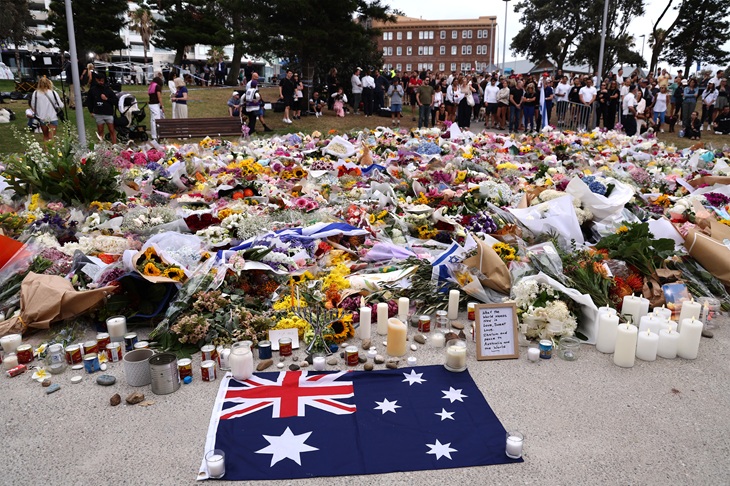
In the wake of the Bondi Beach shooting, when terrorists targeted a Hanukkah celebration, killing at least 15 people, including a ten-year-old child, and injuring many more in an antisemitic terrorist attack, Australia confronts a harsh reality: this atrocity was not an aberration, but the inevitable culmination of ignored warnings, policy missteps, and deepening societal divisions.
The history of modern terrorism, particularly the rise of violent Islamic extremism, makes clear that the seeds of such violence were sown long ago.
The attack, echoing tactics pioneered by Palestinian terror groups, underscores how international terrorism has permeated the modern world, and how Australia’s complacency has allowed it to reach our shores.
The roots of this trace back to 1968, when the Popular Front for the Liberation of Palestine (PFLP) hijacked El Al Flight 426 from Rome to Tel Aviv, marking the internationalisation of terrorism. As detailed in Bruce Hoffman’s seminal Inside Terrorism, this act transformed terrorism from localised insurgency into a global spectacle, deliberately targeting civilians to amplify political grievances on the world stage. Palestinian groups such as Black September followed in the 1970s, most infamously with the 1972 Munich Olympics massacre, in which 11 Israeli athletes were murdered before a global audience.
Yasser Arafat, then leader of the PLO, encapsulated this strategy in a chilling declaration:
‘We plan to eliminate the state of Israel and establish a purely Palestinian state. We will make life unbearable for Jews by psychological warfare and population explosion.’
This era birthed the modern playbook for asymmetric warfare, inspiring terrorist networks from al-Qaeda to ISIS. Since then, international terrorism has become a grim fixture of global life, with the Global Terrorism Index reporting over 200,000 deaths from terrorism since 1970, many of them linked to jihadist violence.
The Bondi gunmen, whose motives remain under investigation but are alleged by police to be related to antisemitism and ISIS, exemplify how these tactics, which meld ideology with high-visibility violence, have evolved into lethal operations.
Terror, whether coordinated by organised networks or carried out by unhinged individuals such as Man Haron Monis during the 2014 Lindt Café siege, have been a been a consistent threat for years.
Australia has received repeated warnings, yet their significance has been systematically ignored. The Bali bombings, carried out by Jemaah Islamiyah, should have been a national wake-up call. Al-Qaeda claimed the attacks were retribution for Australia’s role in East Timor’s independence and the war in Afghanistan, making clear that Australians were targeted as part of a broader jihad against Western nations.
The 2014 Lindt Café attack, during which Monis, a self-proclaimed ISIS supporter, held hostages in Sydney and killed two, was another stark warning of homegrown radicalisation. Subsequent inquiries exposed intelligence failures and lax monitoring of known extremists. Yet lessons went unlearned. More recently, the Albanese government’s decision to allow the repatriation of individuals who left Australia to join ISIS has raised serious alarms among security experts. ASIO warned that individuals exposed to jihadist indoctrination posed significant reintegration risks, yet the policy proceeded under humanitarian justifications.
In October, I warned of these dangers, writing: ‘These women weren’t brides in a fairy tale; they were cogs in a death cult. To repatriate them blindly means Australia courts the ghosts of Raqqa on our own soil. The stakes are too high for naivety, and our safety demands vigilance.’
With ISIS, Hamas, Hezbollah, and other radical ideologies still fuelling attacks, Australia’s approach has proven dangerously naive. The Bondi attack, tied to rising antisemitism, demonstrates how unaddressed radicalisation metastasises. Successive governments have ignored radical Islam’s ‘love of death’ ideology, as enshrined in jihadist manifestos like those of al-Qaeda and ISIS, one that prioritises martyrdom over life and renders traditional deterrence ineffective, leaving Australia’s counter-terror framework porous and ill-prepared.
Under Labor, Australia has become increasingly divided, exacerbating these vulnerabilities. The 2023 Voice to Parliament referendum, intended to enshrine Indigenous recognition, instead polarised the nation along racial and cultural lines. Counter-terrorism scholarship consistently shows that radical ideologies exploit societal fractures. Worse still has been the government’s tepid response to the surge in antisemitism following Hamas’s October 7, 2023 attacks. Synagogues were vandalised, Jewish schools targeted, and communities intimidated. The Executive Council of Australian Jewry has documented spikes of up to 738 per cent in antisemitic incidents during 2023-24, with levels in 2025 still nearly five times higher than pre-October 7 figures. Yet federal action has been minimal, while pro-Palestinian protests have frequently crossed into open hate speech without sufficient consequences. This tolerance signals weakness and invites radicalisation.
Labor has softened Australia’s stance on Hamas and committed to recognising a Palestinian state. In response, a senior Hamas official praised the government for ‘political courage’, while Hamas itself claimed such recognition vindicated the October 7 attacks. Given the internationalisation of terrorism, it should have been obvious that emboldening terrorists abroad would encourage their sympathisers at home.
In short, the Australian government’s leniency toward terror sympathisers ignored repeated warnings about the ideological spread of extremism, fostering an environment in which anti-Israel rhetoric has metastasised into antisemitism and violence.
Australia cannot afford further bloodshed. To prevent future atrocities, we must radically overhaul immigration and security policy: implement stricter vetting of high-risk entrants, mandate deradicalisation programs for repatriates, and pause admissions from jihadist hotspots until security can be assured. Equally vital is a change of government. Labor’s ideological blind spots have failed the nation. A coalition committed to unity, robust intelligence, and the unapologetic defence of democratic values is essential. Terrorism thrives on apathy; only decisive action can reclaim our safety.
We now face the urgent question:
Will Australia awaken before the next Hanukkah candle flickers?