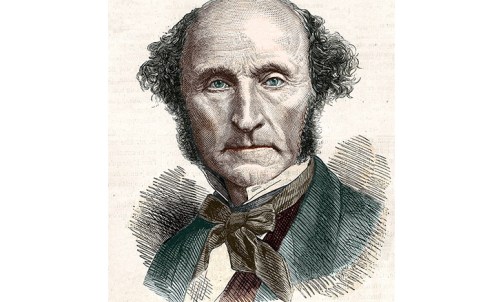
In 1829, Simón Bolívar, the ‘liberator of the Americas’ wrote, ‘The US seems destined to plague the Americas with misery in the name of Liberty.’
Bolívar was writing at the onset of the era of geoeconomics, of mercantile trade, of Empire, of the idea that foreign policy was a ‘zero-sum game’, and of winners and losers. South and Central America was always a mixed bag sitting somewhere between revolution and realism. It was the land of Che Guevara, Márquez, and Pinochet. The 19th Century brought the US concept of the ‘Monroe Doctrine’ in 1823.
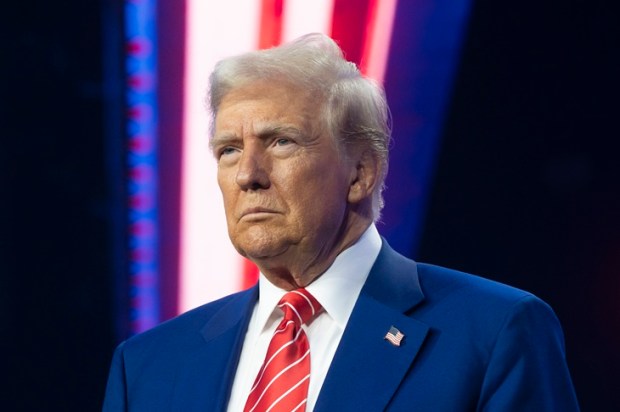
This set out that the Americas is the dominion of the US, and that Europeans should concern themselves with all things French. Yet a lesser-known ‘corollary’ is the ‘The Roosevelt Corollary’ of 1904. Expanding on Monroe it asserted the US’s right to intervene in Latin America to stabilise the region. The Trumpian philosophy is a convergence of both of these doctrines.
In the 20th Century of total war, we had the NeoCon philosophy of policing the globe. This sprang from the idea that empire and ‘democracy’ need be exported. It had little concern about the self-determination of other cultures. Still today, some in the closeted world of the EU and the UN have the blinkered idea of the liberal ‘rules-based order’ regarding International Law. They still adhere to the inherent correctness of liberal democracy, despite its growing sickness. Yet most Geopolitics, whether US or Chinese or Russian, has now accepted ‘realpolitik’ and geo-economics as the new ‘Trump Doctrine’.
No surprise then that the continuation of resource-driven foreign policy reflects the new world order which Trump underwrote. In recent years, tensions around Venezuela have risen sharply. The country’s vast oil wealth, military developments, and regional alliances point to the possibility of conflict in the Americas. The legacy of Simón Bolívar remains highly relevant in Venezuela. In a letter late in his life he wrote:
‘America is ungovernable, for us; those who serve a revolution plough the sea.’
These apposite words reflect Bolívar’s critique of the challenges facing new republics in Latin America. He warned of ‘tyrants of every colour and race’ filling the vacuum.
In Venezuela the term ‘Bolivarian’ has been used explicitly by successive governments; by former leader Chavez and his Asymmetric (4th Generation War) war model. Domestic and international observers see this as part of a larger ideological frame which holds that Venezuela has a special role in resisting external (especially US) influence. Chavez, who ruled Venezuela until 2013, was succeeded by the present leader Maduro. Chavez’s legacy however was a collapsing economy and hyperinflation. Oil constitutes 90 per cent of Venezuelan income; however, due to sanctions and mismanagement, the Venezuelan economy has collapsed. Maduro himself has claimed a 100 per cent reduction in oil revenue because of US sanctions. Due to this contraction, the social reforms under Chavez have evaporated. Free health care (Barrio Adentro Clinics) and housing (Mision Vivienda) were dependent on sustained oil prices and production. The new realities are external sanctions and Trump’s resurrection of the Roosevelt Corollary.
The US maintains that Maduro facilitates the ‘Cartel of the Suns’, using drugs and gang violence as a proxy war against the US. However, it is not so much about Venezuela, than Guyana, its oil-led neighbour. So much so that the US began the mobilisation of a destroyer fleet in August to sit like the Sword of Damocles along the Venezuelan cost. It came with a warning to Maduro to leave the oil giants be. The region is dominated by two oil giants; one is a long-term incumbent in Venezuela; the other in Guyana. Maduro called one of these ‘an enemy of the Venezuelan people’ for drilling in disputed regions of Guyana. However, who is right and who is wrong, depends on which think tank you read, and where they get their donations from. It’s a murky, crude world, so to speak…
One oil giant lost 10 billion USD when Venezuela nationalised the oil fields. They turned to drilling in Guyana and Maduro threatened to invade in 2023. Hence the current impasse.
A 2025 article in The Guardian suggested that the US naval buildup in the Caribbean would allow quick insertion of forces into Venezuela – but added that they did not believe a full-scale invasion was imminently committed. It serves to highlight the Trump Doctrine, however, with a shift away from Europe to the Americas.
The broader knock-on effects for the region could be bloody, in Cuba and elsewhere. Venezuela is at a dangerous tipping point and could disintegrate into violence and chaos – with serious implications for the hemisphere. A regional interstate war remains plausible in a contested border area for example, the dispute over the Essequibo region with Guyana raises the possibility of cross-border conflict, especially if major oil finds are involved. The involvement of external actors (Russia, China, Iran) in Venezuela increases the stakes and transforms any local conflict into a broader geostrategic contest.
Therefore, the construction of a narrative for intervention against Venezuela begins. The usual trajectory will inevitably play out. In the new world of realpolitik, it is not ‘who’ you know … but which think tank and oil company you know. ‘Those who serve a revolution, plough the sea,’ said Bolívar. It is hard to harvest the cruel sea, unless you have the backing of oil giants; a lesson playing out for Maduro.
Brian Patrick Bolger LSE, University of Liverpool. He has taught International Law and Political Philosophy at Universities in Europe. His articles have appeared in leading magazines and journals worldwide in the US, the UK, Italy, Canada, etc. His new book: ‘Nowhere Fast: Democracy and Identity in the Twenty First Century’ is published now by Ethics International Press. He is an adviser to several think tanks and Corporates on Geopolitical Issues.