My great friend Reg Hamilton has offered a full-throated promotion of democracy.
Who could oppose the notion that freedom is far superior to tyranny? And that democratic institutions, notwithstanding their persecution of Donald Trump, George Pell, and many others, generally perform better than those without the oversight of a free press and constitutional restraints on the Executive?
Reg says, with regret, that, ‘They [the early Australian constitutionalists] settled for the less democratic Upper Houses in each colony and electorates weighted to the country regions.’
The concerns that democracy could jeopardise individuals’ property rights were at the core of Magna Carta and other documents that rulers were forced to sign. In those days, the predator was the monarch, and the concerned citizens were landowners and wealthy merchants.
Such anxieties were evident in the US’s debates surrounding independence.
The US Constitution, through the Fifth and Fourteenth Amendments, required due process and just compensation for government takings. Although the concerns were ostensibly directed against the monarch (‘No taxation without representation!’) the US founding fathers were well-studied in the classics and in the merits and shortcomings of different political systems.
As well as the tyranny of monarchs, they understood the tyranny of direct democracy, as exemplified in the decisions and deliberations in the Athenian Agora.
Already in 1789, although property thresholds were in place, some 60 per cent of free adult males had voting rights. Accordingly, the prosperous men driving the Revolution were keen to protect individual property from the soon-to-become majority of less well-off.
One irony of the current ‘No Kings’ campaign against President Trump is that of the two superpowers at the time of the American Revolution, Britain had a king who was under Parliamentary control while France had a king who could not raise new taxes.
There was, of course, a second irony in that new taxes were needed to pay for France’s assistance to the American revolutionaries. To raise taxes, Louis XVI had to recall the Estates General in 1789. That did not go well for him…
Like the US, Australia’s constitution contained some buttresses against mob rule, though they were less forceful, perhaps because socialistic notions were already becoming embedded.
In Australia’s constitution, the key provision could be found in Section 51(xxxi). This gives the Commonwealth Parliament power to make laws for the ‘acquisition of property on just terms from any state or person for any purpose in respect of which the Parliament has power to make laws’.
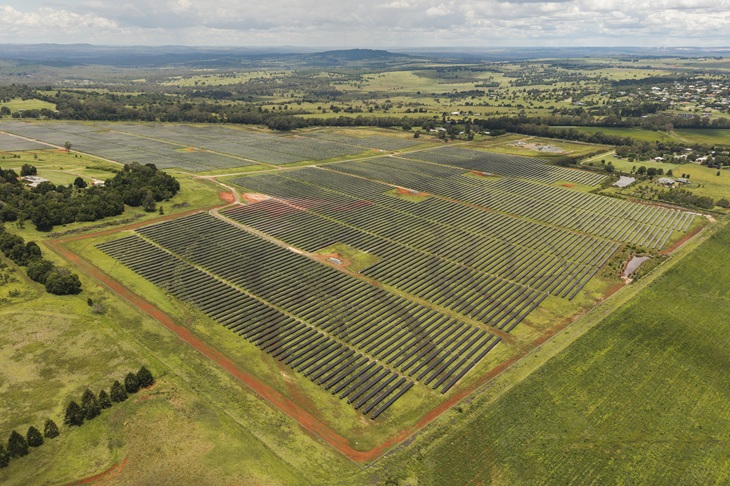
The just terms provision does not (as landowners have come to understand) apply to state government seizures. That caveat was used by the Commonwealth to effectively acquire land, without compensation, and prevent its productive use, in order to further other policies. In particular, the Howard government prevailed upon (all too willing) Labor governments in Queensland and NSW to allow Australia to meet its ‘commitments’ under the Kyoto climate change treaty by sterilising land from productive activity while avoiding the need to provide compensation.
The 7.2 million hectares of Australian agricultural land excised from productive use to allow the nation to claim to be meeting its greenhouse gas abatement goals might be a small percentage of the nation’s agricultural land. But it is considerably in excess of the total such land in Japan and almost a third of France’s agricultural land.
Though flawed, democracies almost certainly provide greater freedoms than authoritarian regimes. They cannot be said to bring greater prosperity.
Since 1990, the 71 world economies with populations greater than 15 million have seen average annual per capita growth of about 1.4 per cent. Four of these (Afghanistan, Iraq, Syria, Yemen, and Ukraine) are war-torn/failed states and have seen barely any average growth. The same is also true of North Korea and Venezuela – the only two authoritarian state communist nations (Cuba’s population is under 15 million).
Seventeen other states have authoritarian governments with fairly secure property rights and have seen average per capita growth of 1.7 per cent. They include China and Vietnam with over 5 per cent growth as well as some, like Congo, Russia, Saudi Arabia, and Sudan, which have seen growth below one per cent.
Forty-eight of the world economies with populations greater than 15 million are democracies and have seen a similar average growth rate (1.5 per cent) to the non-communist authoritarian states. Several of these (India, Sri Lanka, the Philippines, and Romania) have experienced average growth over or close to 3 per cent. This is also true of two (low tax) economies, Singapore and Ireland, which have the world’s highest per capita incomes but have less than 15 million people.
Other democracies (Colombia, Japan, Mexico, Nigeria, Pakistan, Somalia, and South Africa) have seen an average annual growth rate of under 0.2 per cent.
Democracy per se is no guarantee of prosperity. Only secure property rights, the rule of law, and the absence of wars can achieve that, especially if accompanied by a more limited role for government in the economy.
The fragility of the constitutional provisions limiting an expansive government, with the associated taxes falling most heavily on the better-off, is evident in the massive expansion of government.
In little more than a century, the share of democratic governments’ GDP has risen to 40-50 per cent from 10-20 per cent.
This was largely due to representatives’ feigning compassion for the less advantaged and constructing a vast system of income seizure and redistribution to fund an ever-expanding notion of the needy. It is unlikely that even history’s cautious objectors to untethered democracy would have envisaged this expansion. Nor would they have thought that the representatives the people elected would make the sorts of decisions that:
- Decide that people needed government to protect them from information other than lies and other calumnies that might cause them to think or act badly.
- Spend 5 per cent more than they collect in taxes, leaving the bill to posterity.
- Raid pension savings in superannuation funds which they had declared inviolable to pay for their profligacy.
- Tickle up notions that commercial decisions between employer and employee, energy supplier and customer, landowner and his land needed to be managed ‘holistically’ and centrally in order to correct supposed failures of market discipline, property rights.
- Wipe out student debt, leaving the non-beneficiaries to pay