The assassination of Charlie Kirk has sparked an unforeseen reaction across the Western world that cannot be ignored.
Thousands are flooding the streets of major cities in peaceful candlelight vigils or gathering at parks for memorials. Spontaneous prayer and worship events are springing up at university campuses. Multitudes are taking to social media testifying that they have opened a Bible, gone to church or become a Christian.
Last week, more than a thousand Melburnians gathered at Treasury Gardens to remember Charlie Kirk. Critics and cynics scoff at how this young American who debated on college campuses could be worthy of such an outpouring of international public honour. I believe the answer can be seen in the millions of people across the world wearing white T-shirts with the words, ‘I am Charlie Kirk.’
Those who hold traditional values and conservative views have been living under the intimidation of Left-wing political extremism for too long. We have felt the sting of cancel culture and sadly, many are not surprised that it has escalated to bloodshed.
People have lost jobs, businesses, reputations and personal safety for expressing an opinion outside the established narrative on any given issue. Large-scale boycotts, cancelled events and campaigns have even brought corporations to their knees with grovelling apologies and endorsements in a desperate attempt to salvage what is left of their bottom line.
In every instance, commentators and politicians clamber over each other – not to remind the public that we live in a pluralistic society where opposing points of view will exist – but in an hysterical effort to slap extremist labels on the guilty. The words homophobe, racist, bigot, hateful, and abhorrent are the overused descriptors that pour fuel on the fire. This type of punishment sends a chilling message to the rest of us – you’ll be next if you disagree.
So you would think a bullet through Charlie Kirk – the ultimate end point of cancel culture – would cement this fear; but it has done the opposite. It has triggered a movement of people sending a clear message: We are sick of living on our knees. We want our freedom back.
Over the past two decades, there has been an undeniable decline in the West. We stopped debating and started cancelling. We stopped analysing the issue and started attacking the person. We lost our intellectual rigour and exalted our feelings as the arbiter of truth. It was Charlie Kirk’s vision to restore that great Western tradition to engage with one another and discuss ideas. To a large extent, he achieved his goal.
But when a radicalised college student allegedly assassinated him, it felt as if the West had not just lost its intellect, it had lost its soul.
In the immediate aftermath, some justified this brutality, defamed Kirk as an extremist and attempted moral equivalences that don’t exist to this scale. This great civilisation of progress, peace and prosperity felt like it was descending into the barbarism of mob rule and bloodshed.
Then came a turning point.
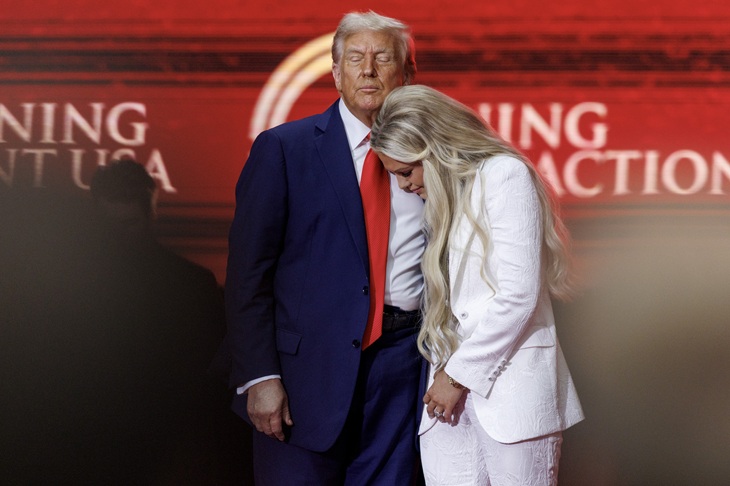
His widow, Erika Kirk, said those unfathomable, hallowed words ‘I forgive’ and in doing so, she pointed the West back to its soul.
Intellectual rigour alone is not enough to restore our civilisation, we need to rediscover our soul. The great traditions of the West – democracy, rule of law, human rights and freedoms and the separation of powers – find their origins in the ethos of Christianity. It weaves a tapestry of values – forgiveness, compassion, justice, truth, and the sanctity of individual dignity – that has shaped our laws, institutions, and culture. From the Magna Carta to the abolition of slavery, Christian principles have anchored the West.
In this moment of crisis, we are witnessing the search for our collective soul. One widow’s act of radical forgiveness has sparked a personal search of a faith long-forgotten. It has the potential not only to transform lives, but to revive the soul of our civilisation.
This spiritual transformation can be seen in the history of Melbourne. This city is currently ravaged by crime, bloodshed, and division; but there was a time where pubs and brothels were empty, crime plummeted, and citizens pooled their resources to lift the poor and underprivileged. The great Melbourne Revival at the turn of the century changed the spiritual and social landscape. It came at a time when Melbourne was enjoying the material spoils of the goldrush, but its streets were plagued by crime and its people enslaved by alcoholism, gambling, and rising poverty.
In 1902, The Argus reported that 214 denominations had come together in a prayer movement that resulted in a widespread spiritual awakening*. More than 8,000 people packed the Exhibition Building every night while tens of thousands more attended the 50 gatherings taking place simultaneously across the city for months, reportedly drawing in a total of 250,000 people.
Newspapers reported extensively on this revival and its social impacts. A policeman was quoted saying officers ‘had practically nothing to do’. Pubs and brothels were all but empty as people turned away from alcoholism and prostitution and towards family and charity. Melburnians generously donated to local orphanages, hospitals, and missions. Churches ran soup kitchens, home visits, aid for the sick, mentoring youth, assisting immigrants, and education for children from poor, working-class suburbs. In short, Melbourne found its soul.
If this city could be transformed by a movement of faith that spilled from churches into streets, workplaces and homes – it can happen again. Charlie Kirk’s death exposed the brutal reality of social and political division gone too far, but his widow’s forgiveness has pointed us towards a pathway of restoration.
Our nations cannot be rebuilt on outrage, extremism, or ruthless takedowns. It is built on ordinary men and women rediscovering the soul of our civilisation and the values that give us our strength – forgiveness over fury, conviction over compromise and faith over fear.
Then perhaps the blood spilled on a college campus will not mark the end of the West, but the beginning of its renewal.
Trove, The Argus, April 12, 1902 “The Simultaneous Mission, Great Religious Revival, Appeal to the Man in the Street”
Heidi McIvor is a former journalist and political advisor, currently serving as a pastor at City Builders Church. She has written and spoken publicly on issues of faith, culture and civic life in Australia.