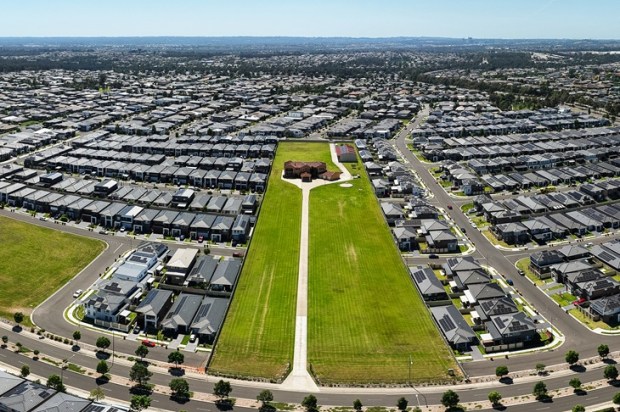
The so-called housing crisis is a self-inflicted or manufactured problem resulting from the government’s rampant appetite for population growth and years of policy neglect in key areas of tax, planning, and infrastructure.
The state and federal governments’ supply-side responses will never match demand, at least in the short to medium term. We are chasing our tail and strangely panicking about building more houses for people who aren’t even in the country and will arrive at some indeterminate time in the future.
Why do we need a ‘big Australia’ and why isn’t that question being asked with more rigour?
The economic and other arguments that are relied upon need a much closer and more exacting examination. Rational debate also continues to be hijacked with very unhelpful racial overtones.
I wrote a Flat White piece a while back on the need for a population policy and a federal population commission or agency. It’s surprising to me we don’t have an independent apolitical body to develop and administer a population policy in a holistic way.
One doesn’t need to venture far to experience the real-world impacts of an overcrowded Sydney and inadequate planning and infrastructure.
The idea that we should turn Bondi Junction into a megalopolis or cram thousands of apartments into Woollahra is frankly ridiculous.
The Eastern Suburbs have already the highest density rate in Australia and the narrative that the wealthy enclaves need to ‘play their part’ is facile and reeks of class envy.
For every 1000 sq metre mansion in Bellevue Hill there a two dozen multi-story apartments bursting at the seams throughout the East. In any case, there should not be a competition between postcodes as to who should bear the most apartment blocks. Geography, demography, and other factors need to be considered.
Also, let’s start with examining why we need more high-density housing in the first place…
The East is bordered by Sydney Harbour and the beaches making it a highly desirable but also very narrow and crowded peninsula. Arterial roads like Old South Head Road, New South Head Road, and Bondi Road-Campbell Parade- Military Road are often gridlocked as there is no capacity for traffic cross flow.
Yesterday it took me 30 minutes to get from my son’s home in Dover Heights to Double Bay on a Sunday at 12:30pm. I can hear the howls of derision directed to me being fortunate enough to live in the East, but that is not the point. We can’t expect to overload an already crowded area with yet more housing and cars and not expect serious social and environmental pressures to arise.
Residents of the Inner West and lower North Shore experience similar gridlocks. Areas around Paramatta, Concord, and Auburn are also gridlocked most days. School, sport, travel, and shopping expeditions become two-hour exercises, wiping out a big chunk of your weekend. A trip to any beach from Maroubra to Watsons Bay is an exercise in abject frustration.
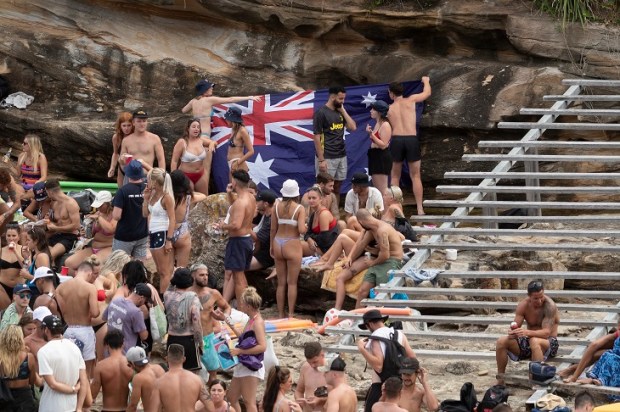
Getting there is only the start of the challenge. Finding a parking spot then becomes a lottery and the usurious parking fees make the experience highly stressful. Then you need to find an unoccupied patch of sand.
Why are we trying to make this bad experience even worse through a ballooning population? Isn’t it better to have a city that offers an 8 of 10 experience for 4 million people rather than a 5 out of 10 experience for 6 million people?
Australia’s character is shaped by our vast space and open access, but we also have unsustainably high urbanisation and coastal concentration. As AD Hope put it so brilliantly in his poem, Australia:
And her five cities like five teeming sores,
Each drains her: a vast parasite robber-state
Where second-hand Europeans pullulate
Timidly on the edge of alien shores.
These ‘teeming sores’ are only getting larger and more ulcerous with traffic congestion, environmental degradation and urban pressures. Who says we need a bigger economy and more people to thrive as a nation? This is surely contestable. We don’t know the longer-term impacts of technology and artificial intelligence and how it will shape our markets, economies, work practices, and population needs but we already well know the unpleasant feelings of overcrowding, urban density and environmental degradation.
Before rushing headlong into turning Sydney into Los Angeles or Melbourne into Chicago let’s hit the pause button and take a cautious and holistic approach to what we want and need our nation to look like and offer to its citizens fifty and a hundred years from now.
Our politicians might also choose to self-drive around their electorates in peak hour more regularly and see how much they enjoy it.
Andrew Christopher is a lawyer and writer