Last weekend I was stopped by an evangelical missionary on Swanston Street in Melbourne.
He was only 18 years old, from Utah, who had just arrived on a two-year mission to Victoria to spread the word about his church.
I asked him what his impressions were of Australia, and he was blunt.
He told me he thought he had arrived in Hong Kong.
He said the Australia he found was not the one he had been led to believe from movies and TV and that I was the first person he’d met with an Australian accent.
Indeed, he isn’t the only one noticing the impact of our free-for-all all immigration policy.
Recent polling has revealed more than half of Australians support a ‘significant reduction in immigration’, yet any attempt to seriously discuss the topic in public discourse is quickly labelled as ‘racist’ or ‘far-right’.
The reality is that Australians of European descent, the demographic majority since colonisation, are projected to become a minority in the coming decades.
This demographic transformation is an inevitable outcome of globalisation.
Whether this is positive or negative depends on how we manage it, because avoiding the debate is itself a choice to maintain the inertia of the ‘business as usual’ scenario that risks us losing our sense of national identity.
While decades of immigration have enriched Australia with new ideas and perspectives, the pace and scale of change now risks overwhelming our capacity to integrate newcomers successfully.
Some argue we should simply adapt to demographic change as we would adapt to climate change rather than mitigate it.
But immigration policy, unlike global temperatures, is something we directly control.
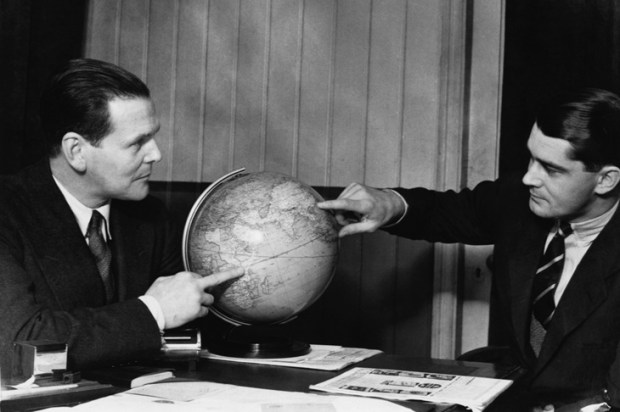
Consider a thought experiment: if half of Japan’s population were suddenly replaced by Irish immigrants, would it still be Japan?
Japan’s essence, its traditions, values, and identity, would undoubtedly transform. For the better? Who can say? But it raises the deeper question: is a country more than just the land it sits on?
In Australia, our elites on one hand condemn the historical white colonisation of the 1700s while championing rapid demographic transformation in the 2020s as unquestionably progressive.
They dismiss the many Australians, including first and second generation migrants, who increasingly worry that our laid-back, larrikin ethos, the ‘Steve Irwin’ identity, which drew so many to migrate here, is being lost to mythology.
Additional recent polling shows a new trend of foreign-born voters leaning conservative, perhaps worried the Australia they migrated to is beginning to resemble the very country they left for a better life.
Much of Australia’s immigration is unskilled, with even ‘skilled migration’ including dubious professions like real estate agents, doing nothing to address critical shortages.
Does this country really need any more real estate agents?
Nearly nine out of every ten permanent visas are going to people who will not directly fill Australia’s desperate workforce shortages.
More than 60 per cent are going to family members of skilled migrants, double what the government officially claims.
Such unchecked population growth fuels our cost-of-living crisis, inflating housing prices and making it nearly impossible for young families to buy homes or start out.
Fertility rates plummet in a slow-motion civilisational suicide.
In Victoria, the worst-performing economy in the country, crime is rising, community trust is eroding, and respect for the rule of law is crumbling.
Visit any Group of Eight universities, and you’ll find yourself a minority among international students in lecture theatres and yet to make this observation in polite company is considered bigoted.
We need to be able to debate how many people we can realistically support, what type of economy we want, and what skills are genuinely needed, rather than just growing the GDP pie while leaving people with smaller slices.
As we are seeing in the UK, there is a threshold at which the pace of demographic change outstrips a society’s capacity to integrate newcomers, leading to social fragmentation.
It’s reflected in research that suggests in the short-term rapid immigration can reduce social cohesion.
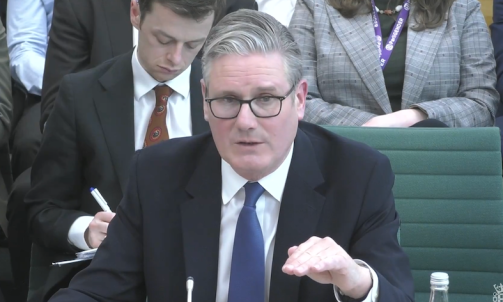
British Prime Minister Keir Starmer recently warned that without strong migration rules, the UK risks becoming ‘an island of strangers’.
Indeed, in England, major cities like London and Birmingham have undergone unprecedented demographic transformation within a single generation.
The next federal election should be an election on immigration policy, because to date, it has been dictated by unelected bureaucrats with bipartisan support from the major parties to prop up economic growth.
As my new American friend observed, Australia is indeed beginning to feel like an experiment in failed multiculturalism, not a united country.