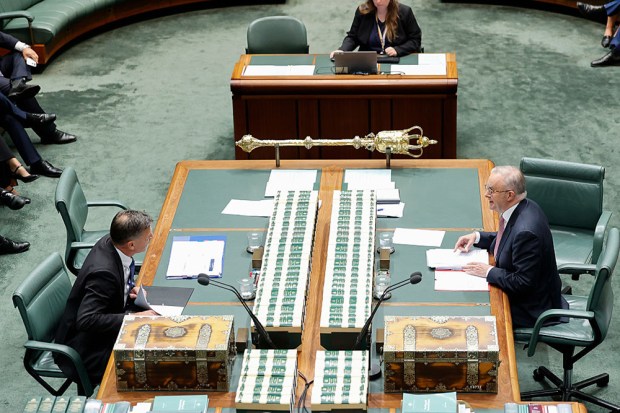
Things are getting serious. Australia’s Prime Minister, Anthony Albanese, and Minister for Climate Change and Energy, Chris Bowen, have told us so.
According to a National Climate Risk Assessment released this week: ‘Australia currently experiences compounding and cascading hazards, and this is going to increase. Concurrent events, and reduced time between severe events will become more common.’
Compounding and cascading concurrent catastrophes. Scary!
The report softens the blow of Australia’s new 2035 emissions reduction target, doubles down on Net Zero by 2050, and pre-empts any arguments about the obvious and mounting costs of trying to reduce emissions.
The Labor government stance is that it doesn’t matter if you can’t afford your energy bills or if we lose any remaining manufacturing capabilities. It doesn’t matter if your taxes are constantly going up and if we’re putting your children and grandchildren into debt to subsidise billionaires and their pet projects. It doesn’t matter if you never voted for it. We’re avoiding compounding and cascading concurrent catastrophes, see!
Besides the rhetoric, a survey of events in the real world shows how seriously this threat is being taken.
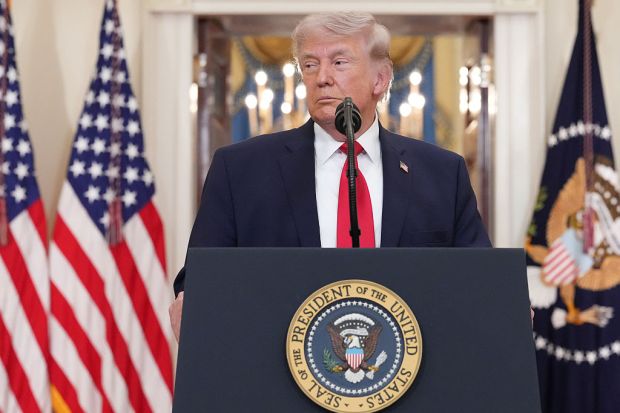
In early September, the United States’ Environment Protection Agency announced that it wants to stop large industrial facilities from reporting their carbon emissions. That came shortly after the Department of Treasury’s Stability Oversight Council voted to rescind their Climate-related Financial Risk Committee and Climate-related Financial Risk Advisory Committee.
Around this time, the United Kingdom’s Prime Minister intervened to prevent a major hydrogen project from proceeding. The very same day, the International Energy Agency cut its forecast of 2030 hydrogen production by 25 per cent, stating that the much-hyped gas has been ‘held back by high costs, uncertain demand and regulatory environments, and slow infrastructure development’.
Global mining giant BHP announced that it had abandoned a planned renewable energy investment which was going to decarbonise its operations in Western Australia’s Pilbara region. That cancelled project alone, according to one climate change think tank, ‘…makes the government’s emissions reduction trajectory extremely difficult to deliver on.’
‘Since 2022, Australia has made important progress when it comes to cutting emissions and acting on climate change,’ Minister Bowen claimed, when launching the National Climate Risk Assessment.
In the real world, in exchange for around $9 billion of annual identifiable federal government spending on climate change policies (not to mention legislative and regulatory intervention and state government spending), there has been no shift in Australia’s actual carbon emissions, which are estimated to be 110.7Mt in the June 2025 quarter up from 107Mt in the March 2022 quarter, and the share of energy consumption provided by coal, oil and gas has declined from 91.2 per cent in 2021-22 to 90.7 per cent in 2023-24.
To the extent that emissions have declined in certain sectors of the economy outside of electricity generation, it is as a result of less production, not a green dream of decarbonisation and electrification.
Here are some quotes taken directly from Minister Bowen’s department:
- ‘Energy use in the chemicals sector fell the most in absolute terms with a 15 per cent (26 petajoule) decrease. This decline was largely the result of several significant facilities winding down operations across the reference period.’
- ‘Petroleum refining also had a large fall in absolute terms [down 15.9 PJ], as well as the largest percentage fall [down 29.8 per cent]. This reflects the continuing trend of the decline in the refining sector in Australia driven by refinery closures, rising imports competition, high operating costs, reduced local crude production and aging assets.’
- ‘Alumina production decreased for a third successive year in 2023-24 … resulting in the decline in energy consumption in the sector.’
- ‘Steel production decreased for a second year in 2023-24, by 10 per cent, which resulted in a 12 per cent drop in energy use in the ferrous metals sector.’
We are supposed to ignore the fact that Australia is losing its remaining manufacturing capacity in real time. We are supposed to ignore the fact that our total emissions are not going down and that we still need coal, oil, and gas for more than 90 per cent of our energy needs. We are supposed to ignore the fact that our electricity prices have gone up as more solar and wind have entered the grid. We are supposed to ignore the fact that everywhere else around the world, politicians are backing away from Net Zero.
Look over here! There are impending compounding and cascading concurrent catastrophes, which will surely be prevented if Australia (whose annual emissions are exceeded by China every two weeks) doubles down on Net Zero no matter the cost.
Seriously.