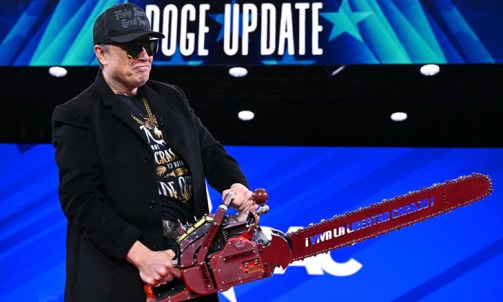
This former leftie and unrepentant feminist spent last weekend at CPAC (Conservative Political Action Conference).
It was my second time at the event, and I went to meet my friends in the dissident feminist movement and to try to talk to conservatives about women’s rights. Needless to say, I needed a lie down afterwards.
Following the conference, I have found myself reflective on my own place in politics, and not at all out of advice for the Australian Liberal National Party.
I call myself a classic liberal, a feminist, and a ‘former leftie’ because these are things that are dyed in my wool. I don’t use the term ‘leftie’ to access virtue, or spark tension. I was on the left because that’s where I was born and raised. The older I get, the more I realise how powerful the values are that we are given, over those we choose.
I was born into generational poverty, and that’s what the left used to be. Like so many people my age, I take the claim of being the first in my family to gain a tertiary education. I’ve been on ancestry.com and I am from generation after generation of dirt poor, including many convicts.
My family was very political, as many working-class families were, and I was handed beliefs about my position in society and how the improvement of my own position was tied to a political solidarity that should never be abandoned.
I was born on Gough Whitlam’s birthday. I knew that I could go to university thanks to Gough, even though my mother constantly guarded her praise of Whitlam, with his one irredeemable fault; he was ‘middle-class’. It was my mother, Audrey, who told me that the middle-class would destroy the Australian Labor Party. So, it has come to pass, and I did abandon, with actual tears, the Australian Labor Party.
People who lived off the labour of their own bodies, like my parents did, knew that their political interests could only be represented by people who knew what it was like to have only your physical strength between yourself and destruction.
The labour movements around the world are a victim of their own success, and I have thanked them for their service and departed from them.
All the infrastructure that was placed around protecting people from generational poverty is now controlled by the middle-class, as my mother predicted, and those institutions claim the political capital of all former left-wing movements under the broad concept of ‘progressivism’.
Under the political capital of the progressives is the labour movement, civil rights struggles, Indigenous people’s struggle, former slave populations’ victories, the women’s movement, gay rights movement, the environmental movement, migrant populations, the disabled, and those who are very fat. Progressivism is The Borg, just not as honest.
In reality, the government itself has taken over all of the institutions that grass-roots social justice movements built, and they have purchased these institutions with taxpayer money. The government pays these institutions with your money to provide themselves with advice it pays for; this advice is used to bypass democratic accountability and to lecture populations about perfect morality with unpalatable smugness.
Even though the left in Australia have learned how to win through institutional capture, they have abandoned the genuine interests of those they claim to represent. Women, for instance, have been completely erased as a class, and there has been no clear progress in the health and well-being of Indigenous populations under new left policies. Law and order is in a shambles and lower income people can’t buy a house. Many voters are up for the taking.
John Howard was the first to see this, starting to sell the right as a place of refuge for battlers. At CPAC there was a lot of cheer from speakers who talked about the importance of young people buying a house and controlling migration to a level that is more sustainable. There was a lot of concern about power bills, and there was a little bit of concern, but not enough, for women’s rights. All these issues were once situated on the other side of politics.
But the biggest concern across all issues, sometimes not spoken but ever present, was who will bring these popular talking points to political leadership in Australia?
The left currently has the right in Australia like a kangaroo in headlights. There they are, sitting in the middle of the road, ready to be run over in another election, without anyone to stand up and say, ‘You are in the middle of the road, you stupid dickheads.’
The right does have to take an anti-establishment position, but it doesn’t have to be reactionary. There will be no salvation for the LNP in what is called moderate or centrist positions, and the reason for this is very simple. Moderates position themselves in relation to other people’s beliefs.
Moderates, like the Liberal Leader Sussan Ley, don’t appear to believe in anything but winning, and everyone can see it. This is not an attractive vision for such a great nation as Australia, and it places the LNP in a loop of losing.
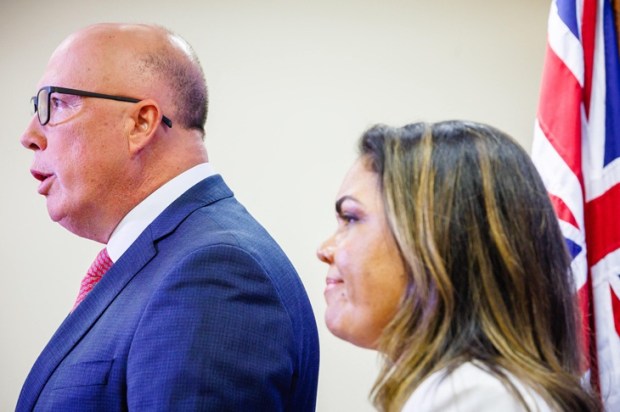
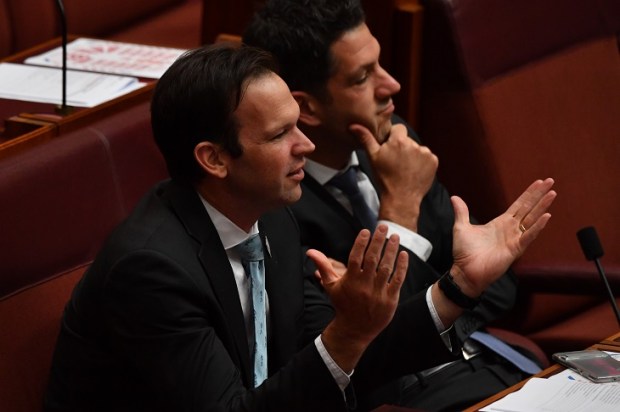
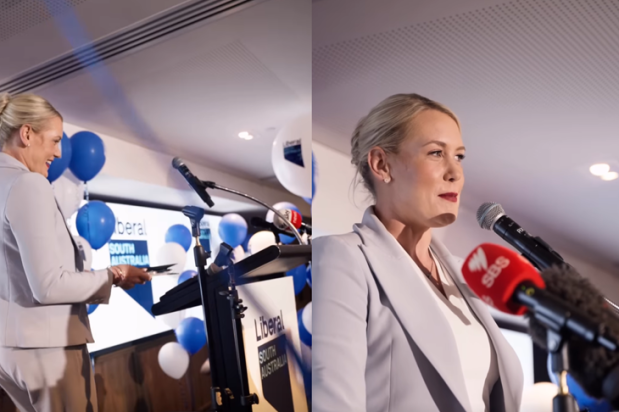
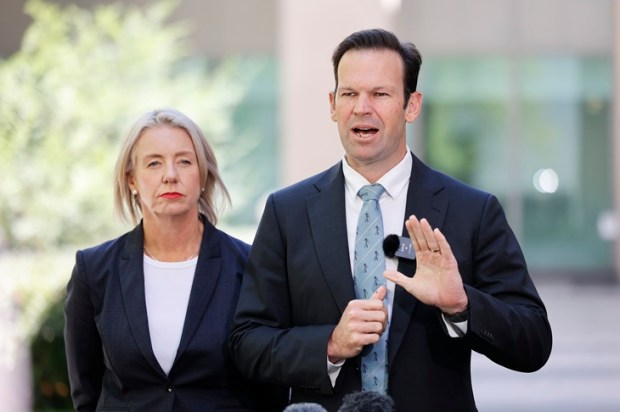
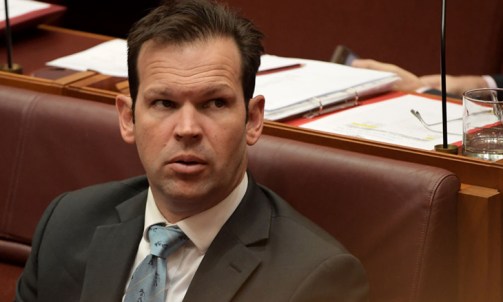
The reason Jacinta Nampijinpa Price, Matt Canavan, Moira Deeming, and Alex Antic were the LNP representatives with the most cheers at the conservative conference is not because they are particularly conservative; it is that they genuinely believe in what they say and do not say things just because they think those things are popular. Again, everyone can see this.
Centrist or moderate are not real places in politics; they are descriptions of places where they are not.
When a husband and wife can’t decide on a holiday between Port Douglas and Byron Bay, they don’t settle on Rockhampton, because it’s in the middle. Nobody wants to go on a holiday to Rockhampton.
People like me, people from the left, people who are disaffected with government corruption and unmourned from our political institutions, still believe in things. We didn’t come from a background of having a vision for Australia, and a belief about our place in it, and then decide we’d like to go to political Rockhampton.
Politics is a dirty game but it needs a beautiful vision. For those seeking a party, we don’t need perfection; we need a view, we want to look out and see the horizon, we want to imagine the beautiful things that Australia can be. We are not going to follow a political party that positions itself halfway between two groups that believe in things.
Edie Wyatt has a BA Hons from the Institute of Cultural Policy Studies and writes on culture, politics and feminism. She tweets at @msediewyatt and blogs on substack