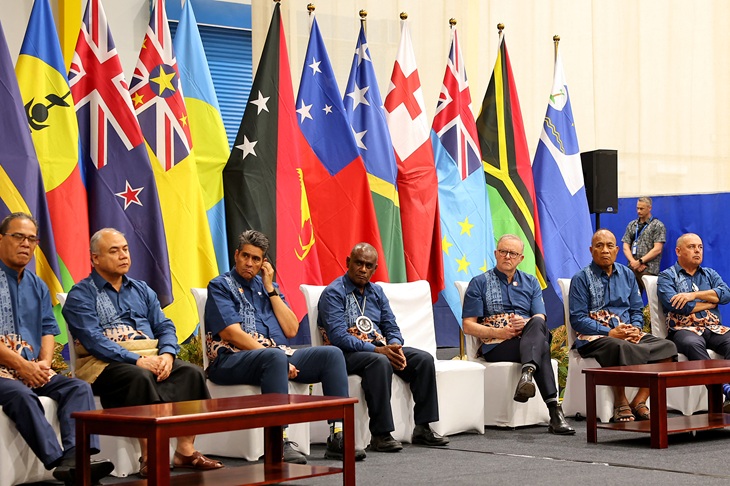
East Sepik Governor Allan Bird belled the cat on Canberra’s latest brain fart for a multi-billion-dollar defence treaty with PNG when he declared their motive was based on the fact that Australia cannot trust PNG politicians. He went on to say:
‘If we look at Australia’s aid in PNG over the last 15 years and particularly over the last six years, the money has been spent largely for political rather than development purposes. The money is spent on keeping government ministers happy. This is bad for Australia and PNG.
‘This defence treaty is all about trying to give Australia some comfort that PNG politicians will not play all sides like this government has been doing quite successfully for some time.
‘Australia should not give in to blackmail from corrupt PNG politicians. It needs to stand its ground. I am certain Australia could have a constructive relationship with China just like PNG can.
‘Australia should ignore the PNG politicians and focus on giving PNG citizens greater access to Australian opportunities, just like it does for other Pacific countries.’
Governor Bird is on the money. Australia has dropped the ball with our Pacific neighbours which form the Melanesian island chain to our immediate north.
Melanesia, for the uninitiated, is a Greek term for dark islands which include West Papua, Papua New Guinea, the Solomons, Fiji, Vanuatu, and New Caledonia. Their closest point to us is less than four kilometres from the north Queensland coast.
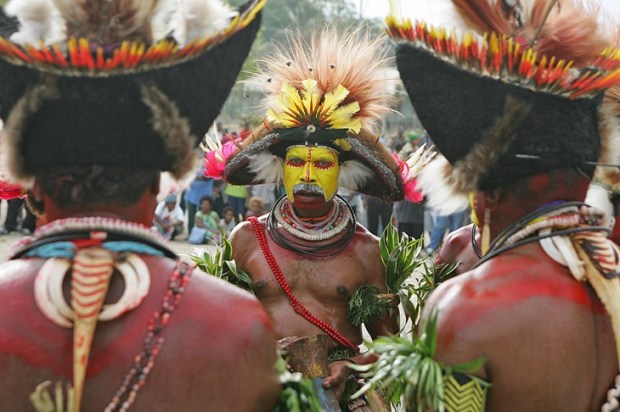
They are inhabited by around 900 tribes, each with their own language and culture.
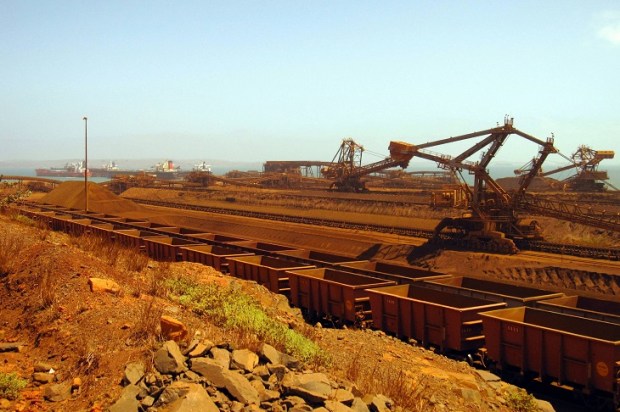
They have an abundance of natural resources – gold, silver, copper, oil, and gas along with enormous potential for the development of agriculture and adventure-cultural tourism.
They also occupy a strategic position in the battle for influence among the major powers in the Indo-Pacific region.
Our closest neighbour, Papua New Guinea, was a former Australian territory which we helped transform from a Stone Age tribal society to a democratic nation by establishing an Australian School of Pacific Administration (ASOPA) in Mosman which trained 1,400 young Australians in Tok Pisin, anthropology, map reading, government history, and law over a 12-month period.
They were then dispatched to PNG to work as patrol officers, known as Kiaps, working for District Governors responsible to the Department of External Territories.
Kiaps were Australia’s version of Indiana Jones as they led patrols into unexplored areas to make contact with primitive tribes who had been at war with each other for centuries. They brought order to their lives, built airfields, roads, and bridges to open up the country and introduced rudimentary administration along with law and justice.
They married PNG women and raised mixed-race families which were well-schooled.
When independence came some remained and took out PNG citizenship – they had an empathetic understanding of the Melanesian mind in a land which, according to author Brett Caldwell, was a paradox, ‘…where arse-grass and penis gourds mix with Hugo Boss suits and Rolex watches; where some men mine the hearts of volcanoes for gold, while others worship the spirits of ancestral crocodiles. It is a place where ferociously decorated warriors battle over women, land and pigs, with stout bows and homemade shotguns; where Asian loggers plunder ancient forests alongside Christian missionaries harvesting souls, and where Australian government bureaucrats try to impose their antipodean canons upon a culture where blood and bribery are thicker than holy water.’
The Kiaps nation-building era came to a premature end with the election of Gough Whitlam, who was sensitive to the stigma of colonialism championed by the United Nations in the 1970s. Whitlam led the charge to hasten independence while disparaging the contributions of the Kiaps.
He had no idea of the challenges they faced in weaving a nation from such a disparate group of tribes in one of the world’s wildest and most inhospitable frontiers.
He ignored the constitutional requirements that require a referendum before independence can be granted to an Australian territory and drove his ideological agenda with the support of a compliant media.
Since then, many have argued it was too early for the fledgling new nation while others believe that Australia had left it too late to start the process of preparing PNG leaders and civil administrators for independence.
Canberra then dropped the ball and replaced people-to-people relationships with buckets of aid money without any strings attached to avoid the stigma of colonialism.
During the 1990s distinguished academics, Professors Helen Hughes and Allan Patience, wrote extensively on the misuse of aid money and the risk of PNG becoming a failed state.
In December 2004, the Australian Strategic Policy Institute (ASPI) reported that ‘PNG is one of our three top-priority foreign policy challenges, along with China-US relations and the future of Indonesia’. They advised that ‘any Australian policy program for PNG that does not address the underlying weakness of the PNG state and nation has no reasonable chance of reversing the negative trends of much of the past thirty years.
The report concluded ‘if Australia does not take the lead in offering that help, no one else will’.
China has since put paid to that prediction!
However, it’s not too late for Canberra to seek advice from surviving Kiaps and Australians who have long-term experiences working in business and remote areas of PNG – they understand the Melanesian mind better than government bureaucrats and their consultants ever will.
There would be consensus among this cohort that Canberra needs to play the long game and appoint a Minister for Melanesia, introduce Melanesian studies into our education systems, and open our borders for PNG citizens seeking to study, visit relatives, or do business in Australia.
They need to acknowledge that Chinese-owned businesses are part of the fabric of PNG society.
Governor Bird reported, ‘Right now Chinese businesses are popping up all over the country. I have had more visits from Chinese companies looking to invest than from anywhere else in the world. In fact, 99.9 per cent of investors I have met are Chinese. No one else is interested to invest in PNG apart from the Chinese.’
The governor suggested, ‘The relationship between Australia and PNG would be much better if there were more people-to-people relationships than just politicians getting together and trying to stitch deals that look bad for Australia and PNG.’
Perhaps those billions of dollars could now be diverted towards developing a modern adaption of ASOPA in Port Moresby to school Australian and PNG post-graduate students in Melanesian history, geography, culture, language, and politics.
They could then look at introducing a ‘Melanesian Kiap Scheme’ to provide an opportunity for ASOPA graduates to work together in villages with local teachers, health workers and missionaries on two-year contracts.
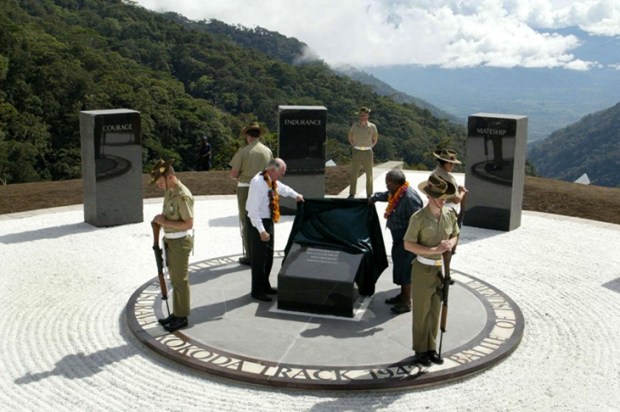
In the shorter term we should focus on our support for a PNG NRL team and the development of wartime tourism to enhance our people-to-people relationships as suggested by Governor Bird.
Hon Charlie Lynn OAM OL (PNG)