There is a consensus that cheap and reliable energy is indispensable to modern living standards, but the preferred means of delivering that outcome has been conditioned by fears that emissions of CO2 will cause climate change.
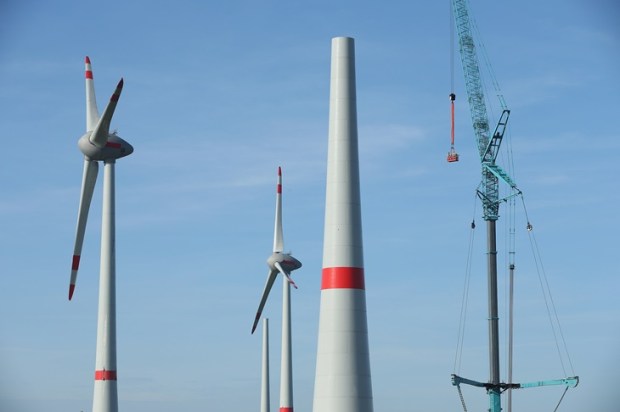
This has brought many politicians to make a radical call for replacing the energy sources (fossil fuels and nuclear) on which modern affluence has been built. Some claim wind and solar will be eventually be cheaper sources of energy but nowhere do they find market success without government subsidies, and wherever governments have insisted upon their installation, they have brought higher energy costs.
In Australia, the latest energy policy iteration is the 2035 climate target, which requires 90 per cent of electricity to be supplied by renewables. Two decades ago, renewables comprised only hydro and supplied about 7 per cent of the nation’s electricity, with almost all the rest generated by coal.
Over the past 20 years, the ALP and the Turnbull-inspired Liberals have replaced the energy expertise that headed the regulatory and advisory agencies with people whose mindset reflects their vision of an energy sector dominated by wind and solar and a future prospect of green hydrogen. The leading bureaucrats in Treasury and the alphabet soup of acronyms involved in energy have been appointed because they share the ideological fervour of politicians who want to revolutionise the Australian economy by eradicating coal, gas, and oil.
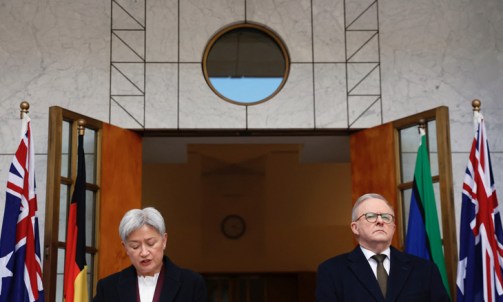
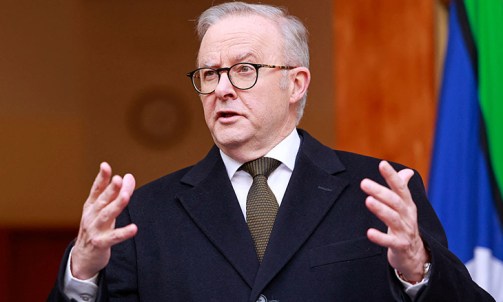
The outcome is that there is no longer any energy expertise to advise on the practicality of decisions on which economic prosperity can be maintained. We have instead focus group tested sound bites that are demonstrably false. Only this week the Prime Minister told us, ‘I can guarantee that the cheapest form of new energy is renewables.’ At least this time around he refused to endorse forecasts of falling prices like the Australian Energy Market Commission’s impossible prediction of a ‘20 per cent reduction in household energy prices within the decade, or $1,000 annually’.
To achieve its 2035 goal of having 90 per cent of electricity supplied by wind, solar and green hydrogen, the Albanese government’s latest energy plan adds an extra $7 billion for the sector. This is on top of the $16 billion annual cost already being imposed to replace coal and gas. All these costs, far from increasing productivity, undermine it by forcing the replacement of commercial energy supplies (chiefly coal and gas) with high-cost, unreliable wind and solar.
So, not only is the nation suffering as a result of government policies bringing about a reduction in private non-dwelling investment from 16 to 12 per cent of GDP but an increasing share of the expenditure categorised as investment is to renewables.
Because of its intermittent supply, wind and solar requires either storage back-up or a duplication of the system with a stand-by coal, gas (or nuclear) plant. The existing ‘legacy’ coal and gas facilities are becoming more akin to stand-by as their operations are being dictated by the availability of wind and solar. But that cannot be a permanent solution unless the existing power stations are rebuilt to operate as reserve suppliers – something that nobody is suggesting.
Some recognition of the fragility of an electricity system increasingly powered by weather-dependent intermittent energy supplies is seen in the government’s priority for battery storage. But while batteries are useful, even essential, for short-term balancing, nowhere in the world are they being used for the longer-term storage necessary with a weather-dependent electricity supply.
There are very good cost reasons why this is the case.
Battery costs are coming down but not as fast as the 90 per cent decline that we saw 2010-23. Future costs (2035) estimated by the US National Renewable Energy Laboratory (NREL) are projected to be $375,000 per MWh, about half of which is balancing, permitting and other costs. If ancillary costs could be avoided, another source puts the cost at $222,000 per MWh (which is 600 times the cost of storing energy in the form of gas).
AEMO forecasts that the eastern Australian grid (excluding rooftop) will need to supply 229 TWh of electricity for 2035. Of this, the projection is that only 10 per cent will be gas and with perhaps another 6 per cent hydro, wind/solar will need to provide 192 TWh. That means 527 GWh per day.
Fekete et al put the storage requirement for intermittent energy at 25 per cent of supply (90 days) to ensure the sort of reliability assured by dispatchable plant that is not dependent on weather conditions. Even if we can make do with 20 days of storage, the system would need 110 GWh or 110,000 MWh of batteries (current installations amount to 825 MWh).
The cost of this is $4.1 trillion on the basis of current estimates or $2.4 trillion (about the same as Australia’s GDP) using a different set of estimates using the batteries alone. These batteries would need to be replaced every 10-12 years and also require massive additional costs of transmission to service wind and solar’s low density and intermittent power, as well as balancing costs.
Unfortunately, having replaced the expertise previously heading electricity supply, Australia is also plagued by a troika of economics ministers (Albanese, Chalmers, and Bowen) of uncommonly high hubris and low IQ. This is compounding the effect of it denying itself a capability to test the reality of politically preferred positions. The outcome is already evident with soaring electricity costs undermining industry competitiveness. That cost competitiveness can only further deteriorate as a result of the new measures being introduced.
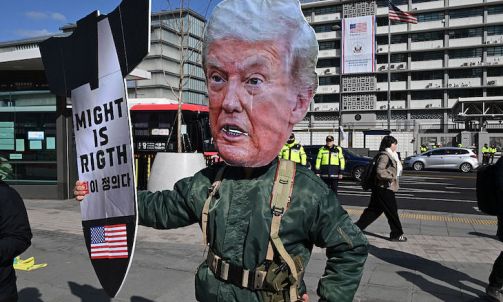
Some have suggested that when Mr Albanese meets with Donald Trump, he will persuade the President that a renewables policy is the best and cheapest way forward. This is fantasy. Not only because the meeting seems unlikely to happen.
In London this week Trump, who spent considerable political capital revoking wind and solar subsidies, said, ‘We don’t do wind because wind is a disaster. It’s a very expensive joke, frankly.’
Hopefully, Australia will follow the lead of the US. But in any event, Albanese would be wise to avoid talking energy matters and certainly not canvas the popular notion of a carbon tariff on imports