‘It’s been 84 years,’ echoing the words of the elderly Rose at the end of Titanic, has become a meme representing an inordinate wait. The UK General Election last summer came 84 years after Winston Churchill first became Prime Minister. Notwithstanding Margaret Thatcher’s attempts to lead a party divided on Europe and social issues, for many British conservatives, it feels like we have been waiting that long for a genuine conservative movement.
The Conservative Party’s crushing defeat last year demonstrated that patience had finally run out.
I wrote immediately after the election about the challenges the result left genuine conservatives. UK conservatism remained split between a rump of actual conservatives in the nominal Conservative Party and those who had jumped ship to Nigel Farage’s Reform UK. So where are we one year on?
On the positive side, Labour’s collapse in the polls arrived sooner than expected. Elizabeth Taylor’s honeymoon periods lasted longer than the current government’s. In its first year, Labour succeeded in alienating the elderly – scrapping the winter fuel allowance – the aspirational middle class – imposing VAT on school fees – and its core voters – with its controversial welfare reforms. In doing so, the government has also alienated many of its own MPs. On top of that, Labour has made the UK a global embarrassment on issues of free speech and equality before the law – two-tier policing has led to two-tier justice.
One might think all this is fertile ground for a conservative revival. And yet, as long as UK conservatives remain divided, there is no guarantee the damage Labour is inflicting will be limited to one term. Indeed, neither party of the right seems quite able to get its act together.
For the Tories, the election in November of Kemi Badenoch as Rishi Sunak’s successor was project continuity. Badenoch had often positioned herself as from the right of the party, and is not devoid of moral courage, but became the candidate of its ‘One Nation’ centrist caucus, largely responsible for its General Election defeat, in its attempt to stop Robert Jenrick, the candidate of the right, from assuming the leadership.
Badenoch’s response was, Jenrick aside, to appoint a shadow Cabinet tilted towards liberal progressives rather than social conservatives, a balance reinforced by her recent reshuffle, the appointment of the able Neil O’Brien to a policy role as an exception. In other words, the Tories have carried on in the same vein that led to its worst ever election defeat. I remarked last summer that the only way a new leader could succeed, given the make-up of the parliamentary party, was to take an explicitly conservative position, perhaps pledging to leave the ECHR, and allow dissenters to leave amicably. Seeking to lead a divided party effectively is impossible, which may explain the lack of policy offers from Badenoch so far – any such offering would alienate one wing of the party, something she has thus far seemed unwilling to do.
The upshot of all this is the Tories have slumped to third place in the polls, averaging around 17 per cent, and Badenoch already appears on borrowed time. There remains a suspicion that the Tory brand is irreversibly tarnished.
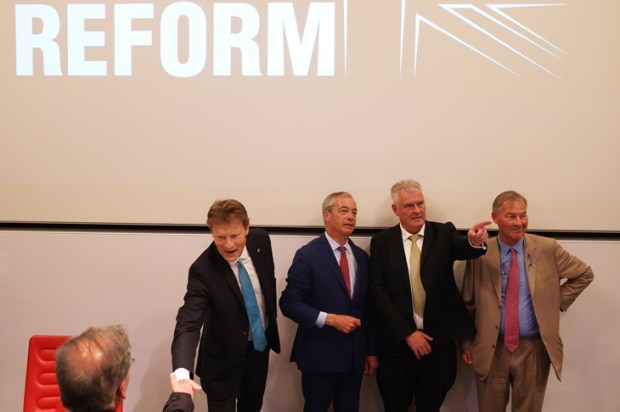
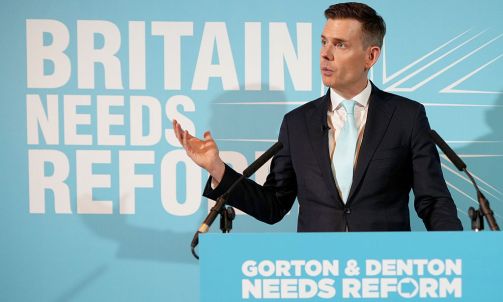
Reform UK has been the main beneficiary of the Labour collapse and ongoing Conservative malaise, consistently leading opinion polls and winning a previously safe Labour seat in a by-election in May. But there have been signs that Nigel Farage’s party may be facing the same problems that afflicted the Tories for years – divisions of both personality and policy.
Personality-wise, Rupert Lowe, one of Reform’s original five MPs publicly questioned Farage’s leadership and was expelled from the party in March. Another of the party’s MPs lost the whip earlier this month after allegations of financial impropriety. Zia Yusuf also resigned as Chairman but remains both an influential and a divisive figure. Every time the party begins to inspire confidence that it is becoming professional and disciplined, it seemingly shoots itself in the foot.
Then there is also the question of political ideology. This was best exemplified by how Reform MPs voted on the assisted suicide Bill, which passed the House of Commons last month. Two of Reform’s five MPs voted in favour of the Bill, although all five were steadfastly opposed to the abhorrent amendment that passed three days later to remove any legal deterrent against self-induced abortions up to birth (the Tories were largely also opposed, but the fact their Shadow Education Minister voted for the amendment as well as assisted suicide demonstrates social liberalism is still too widely accepted in the party).
The fear is that Reform will end up, as the Tories did, split between socially liberal, globalist libertarians and traditional social conservatives. The appointment of Dr James Orr to lead a Reform-aligned policy unit offers some hope and Farage seems to understand his support base will not tolerate progressive policies – after all, many abandoned the Tories precisely for this reason.
So, if the Conservative Party remains on life support, and Reform does not yet appear to have acquired the professionalism required for government, where does this leave the ordinary small ‘c’ conservative voter who cares little for tribalism and simply wants a party reliably to represent them?
I mooted the idea last July that a new movement might be necessary, perhaps the ‘Reformed Conservatives’. The path to such a movement is laden with obstacles. The conventional wisdom is that while some on the Tory right may wish to jump into bed with Farage formally or informally, it is not in his interests to do so. After all, why align yourself with a damaged brand when you lead in the polls?
But the events of recent months may give Farage pause for thought. There are decent conservatives left in the party that bears its name who may offer the experience and professionalism he currently lacks. It is also doubtful the Tories will completely collapse; if Reform wants to win the next election with a healthy majority, an alliance with those conservatives who remain in the Tory party may be necessary. Farage may have ruled out a pact or merger with the Tories, but what if he were to propose the Reformed Conservatives as a new entity, and admit those Tories who do share his views?
I commented a year ago that, ‘For such a project to succeed, past grievances, present egos, and future ambitions will need to be put aside.’ For the likes of Robert Jenrick, who has largely assuaged doubts about the sincerity of his conversion to conservative thinking, the national interest may require swallowing pride and submitting to a Farage-led Party. Farage won’t be around forever and such a prospect ought to be more palatable than marginalisation in a party that is only nominally conservative.
For Farage, such an alliance may make more sense than many commentators recognise. He understands that the quadrant of the political axis represented by the typical voter – socially conservative but not averse to appropriate state intervention – remains largely disenfranchised. Reform’s slogan ‘Family, Community, Country’ appeals to such voters.
On economics, Trump’s brand of patriotic protectionism may have influenced Farage’s views. This neither entails socialism nor a big state, but balancing an appropriate role for the state alongside other social units, as recognised by Reform’s slogan. Classical conservatives used to understand all this.
On many issues, Farage seems closest to the ‘New Conservatives’ grouping in the last Parliament (whose slogan he adopted), led by Danny Kruger and Miriam Cates. With the exception of Kruger, almost all lost their seats at the last election. Kruger has been the stand-out star of the past year – first, in running Jenrick’s leadership campaign and then in his masterful leadership of opposition to the assisted suicide Bill. Watching his contributions made one wonder whether the days of old Etonians running the country were not so bad after all!
Kruger is also willing to espouse an underlying political ideology that gives foundations to his conservative principles. One recent such speech in the House of Commons has now been viewed almost 4 million times – a Christian renewal seems to be accompanying the conservative revitalisation in the UK and Kruger, along with Cates (who might help solve Reform’s problem with female voters if Farage were to court her), embodies this perfectly.
Those of us who are conservatives but not tribal just want both sides to get their heads together and offer us what we have lacked for too long. Reform currently appears the most popular and malleable vehicle for this but there are excellent conservatives in the Tory Party, advisors as well as current and former MPs, who ought to be inside the tent. One year on, we seem no closer to such an alliance. If we get it, the next General Election may just bring an unparalleled opportunity for classical conservatism to flourish. Surely that is a prize worth brokering?
The author is an anonymous conservative withholding their name for professional reasons that require neutrality on party political matters.