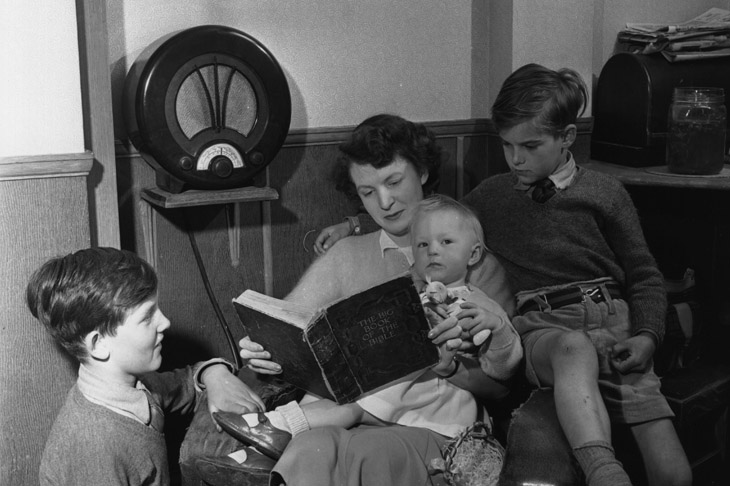
It was Happy Unpaid Domestic Worker Day on the weekend, or as the rest of the world calls it, Mother’s Day.
Which means we had to endure the jargon that reduces women and mothers to ‘unpaid domestic workers’. ‘Unpaid domestic workers’ sounds like a rejected column from an economist’s spreadsheet that is supposed to strike economic, social, and familial fears into the hearts of people. When in reality, it only strikes fear in the heart of those people who view themselves in such reductionist ways. After all, nothing screams, ‘You are valued and loved!’ more than reducing a lifetime of love to services rendered yet unpaid.
Yet, questions remain unanswered. Who has employed these so-called ‘unpaid domestic workers’? What are the contractual obligations? Where is the job description? Where does one apply to be an unpaid domestic worker? Where is the HR Department to deal with the toddler who doesn’t sleep or the spouse who doesn’t put away his dirty dishes? Can one fire an ‘unpaid domestic worker’ for failure to clean the kitchen properly? Can the unpaid domestic worker simply not clean the toilet, as there is no contractual obligation?
Perhaps an ‘Unpaid Domestic Worker’ Union can be established for the rights of all unpaid domestic workers? The first order of business: demand payment for services rendered. But who’s footing the bill? The government? They’re too busy funnelling childcare subsidies to get the unpaid domestic workers out of houses and into ‘real’ jobs that boost GDP.
Maybe the kids should pay up. Picture it: an itemised invoice handed to your 18-year-old. ‘Bum wiped: $2. Baths given: $5. Emotional support for teenage angst: $500. Adjusted for inflation, you owe me $47,392. Cash, Card, or Direct Transfer?’
Spouses aren’t off the hook either. Every dirty sock and pair of undies left on the bathroom floor? That’s five cents per sock, seven for a matching pair.
Don’t forget transportation. That playdate with the Joneses 10 km away? $8.80, please. Keep a logbook because the Australian Bureau of Statistics is obsessed with tallying this invisible labour. Maybe the government could toss a few bucks your way for the privilege of tracking your every mop stroke.
The phrase ‘unpaid domestic work’ implies that if you’re not generating income for the family, yourself, or the sacred GDP, you’re worthless. Forget the fact that without this ‘unpaid’ labour, society would grind to a halt. No meals cooked, no clothes washed, no kids ferried to soccer. Yet, we’re still stuck with a term that frames mothers as economic leeches rather than the glue holding it all together.
So, here’s to the ‘unpaid domestic workers’, the unsung heroes who deserve more than a patronising label and a Mother’s Day card. Let’s rewrite the script: call it Household CEO, Caregiving Maestro, or just plain Hero. Because if we’re going to fight for equality, let’s start by ditching the jargon that makes love and labour sound like a line item in a budget no one’s balancing.
To my wife.