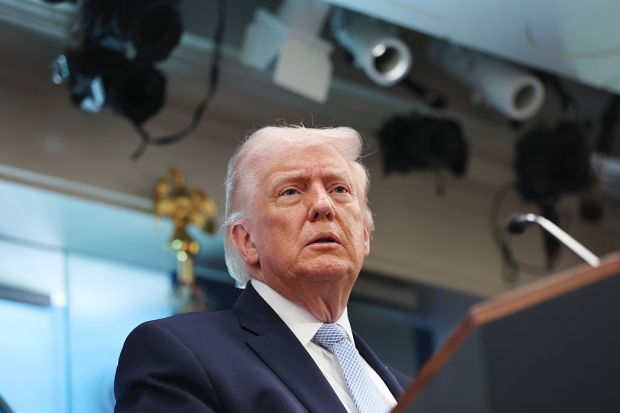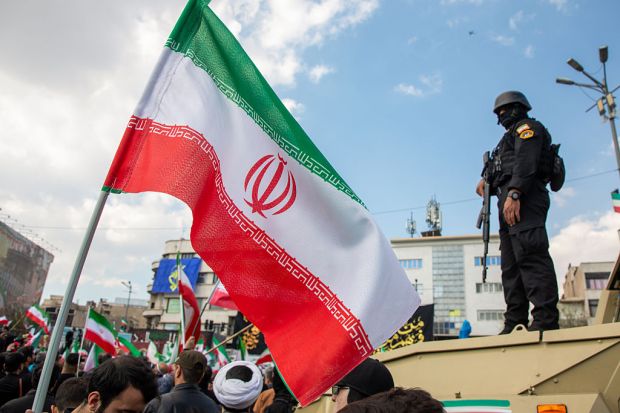
When Churchill, Stalin, and Roosevelt met at Yalta in 1945, they proceeded to carve up Europe into spheres of influence. It was what Stalin and Churchill called a Percentages Agreement: a percentage of the spoils. Now, as Trump calls Putin to discuss Ukraine, the same dynamic takes centre stage: Yalta 2.0.
When the Russian Emperor Alexander arrived for his meeting with Napoleon in Tilsit in 1807, he had literally ‘no cards’. Alexander had joined the Hapsburg Monarchy and Britain in an alliance against France in 1805. However, defeats for both Austria at Austerlitz and Prussia at Jena Auerstadt had left Alexander facing the French army just shy of the River Neman.
Diplomatic meetings from the Middle Ages onwards were full of symbolism. A fundamental aspect was the appearance of ‘equality’. Meetings were held in the middle, somewhere equidistant between the two parties, showing that the Princes were equals. This was particularly salient at the time of the Holy Roman Empire as Princes were asserting themselves. Abraham de Wicquefort wrote his ‘L’ambassadeur, ses fonctions’ (two volumes, 1682) and noted that it was a faux pas for a Prince to enter another’s kingdom. Although Bony had stamped all over Europe the niceties of chivalrous diplomacy were kept at Tilsit. A special opulent raft was constructed in the middle of the Neman with fine wines and cheese. Alexander arrived to meet Napoleon and immediately hugged him and rubbished the British dogs, much to Bony’s joy. Whilst they dined and carved up Europe into spheres of influence, the Prussian King Frederick William III was left like a gooseberry on the bank of the river.
The modern period ushered in diplomacy by envoy. More often diplomats, rather than Princes, were initially summoned, and then, if necessary, leaders would meet. Although the Russians have lost any semblance of diplomatic niceties, they are aware of the importance of symbolism. In fact, they are the masters of it. It was Stalin who left Churchill skulking at Yalta, accommodated miles away so the Red Tsar could manipulate the ailing American President. This debacle and the arrival of Nato was a disaster for Europe. A brilliant Soviet ploy. Europe has never recovered. In fact, the post-second world war conference at Yalta in 1945 is the archetype of Russian diplomacy. Held amongst the grand Tsarist palaces of Vorontsov, Yusopov, and Livadia, and based in the Crimea, it followed on the power play of diplomacy as symbolic presence. Churchill had flown to Moscow to meet Stalin in 1944 and Yalta was again in the Soviet sphere. The French leader joined the Gooseberry list at the Big Boys conference. The piggy in the middle between Stalin and Churchill was Roosevelt who believed Stalin to be sincere. William Bullitt had lamented the naivety of Roosevelt’s comments when it came to the Soviets:
‘I just have a hunch that Stalin is not that kind of a man… I think that if I give him everything I possibly can and ask for nothing from him in return, “noblesse oblige”, he won’t try to annex anything and will work with me for a world of democracy and peace.’
Churchill also commented that:
‘Poor Neville Chamberlain believed he could trust Hitler. He was wrong. But I don’t think I am wrong about Stalin…’
Churchill and Stalin had a secret document sketched at the Moscow meeting in 1944-what became infamously known as The Percentages Agreement, where Eastern Europe was divided into spheres of influence. Yet later Stalin took no time to carve up Eastern and Central Europe for himself, under his satellite states, regardless of agreement. Hence the liberated countries that were promised liberty were incorporated by the Soviets, despite their assurances to the Poles, for example.
The eternal return of history has come back and we stand at the same dangerous abyss. Hence dealing with the Russians is not about shuttle diplomacy and is certainly not about handing them the cards in advance. The lack of historic awareness and diplomatic largesse are lost on the current crop of American leaders. The days of Kissinger are long gone. The Russians desire to exhaust their opponents, to equivocate. Angry that they are not really Europeans and not treated as equals, especially due to the Soviet era, they gain traction through what Nietzsche called ‘resentiment’ and deception. This is a deep aspect of the Russian psyche; it is one of inferiority. This is a far more powerful motivator for the likes of Putin, than peace.
Yet Russia has always been highly paranoid about affairs in Central Europe. It was Bismarck who noted that ‘to control Bohemia is to control the world’. Russian security works in a historical ‘buffer zone’, up to and including Poland. Napoleon usurped Alexander’s security when he created the Duchy of Warsaw, an autonomous Polish entity on Russia’s borders. Although this historical realpolitik has to be accepted there is no place for naivety in dealing with Russia. Alexander, having arrived in Tilsit with no cards, departed with the majority of his spheres intact. Napoleon underestimated the importance of the Russian mystical landscape, the endless steppe and its buffer zone. It will not cede influence in Ukraine. Whilst Starmer and Lammy believe they will put troops on the ground in Ukraine, I would recommend some reading. Liz Truss thought the ‘Suwalki Gap’ to be near Watford. Lammy believes Libya to be next to Syria. You can’t send these people to meet Lavrov. You can’t send Witkoff, a real estate agent.
Diplomacy today is also a Percentages Agreement. It is not about a liberal world order, of human rights agreements, however much we would like it to be. The liberal world order, the end of history, good and evil, are Western conceits no longer relevant, if they ever were. They exist only in the cloistered monastery of the liberal mind. The world is motivated by Geoeconomics. Geopolitical strength is underpinned by Geoeconomic wealth. Geoeconomic wealth is achieved through brutal hegemony, by Chinese soft power, by military dominance. We now live in what Oswald Spengler called the ‘Faustian Age’, the decline of the Western world. The US is in retreat. With a 34 trillion dollar debt the US is casting Europe adrift. It is the antithesis of colonialism, payback time for the Global South. It is Captain Kurtz, in Conrad’s story The Heart of Darkness, on a riverboat down the Congo River, that parody of the colonial myth. The European trader, Kurtz, surrounded by skulls, touched by madness, crying in the end, ‘The Horror, The Horror.’
Brian Patrick Bolger LSE, University of Liverpool. He has taught political philosophy and applied linguistics in universities across Europe. His articles have appeared in the US, the UK, Italy, Canada etc. His new book: ‘Nowhere Fast: Democracy and Identity in the Twenty First Century’ is published now by Ethics International Press. He is an adviser to several Think Tanks and Corporates on Geopolitical Issues.