For centuries the Irish in this country had been subject to mockery, derision and discrimination – even though there is little evidence that there were signs outside hostels bearing the specific combination of words ‘No blacks, No Irish, No dogs’. And even though levels of historical and contemporary anti-Irishness have in recent history been overplayed by the left, the Irish in Britain were a self-conscious lot. As Tim Pat Coogan wrote in his 2002 book Wherever Green Is Worn: The Story of the Irish Diaspora, many Irish in Britain did experience outright hostility after the Birmingham bombing of 1974. But that was, for the most part, an exceptional experience – the year in which the Troubles reached their nadir.
When I was living in Manchester in 1996, a Belfast housemate was met with the casual greeting ‘hello bomber’ the day after the explosion went off in that city. That typified an English attitude that could certainly be ignorant, thoughtless and callous, but not necessarily one grounded in hatred or ‘racism’. My mother, like Henry Kelly, also a native Dubliner, recalls London cabbies noticing her accent in the 1970s and 1980s, but mostly in order to mock it with their own faux-Irish imitation. Again, this was crass, but hardly cruel. It was at once complimentary and idiotic.
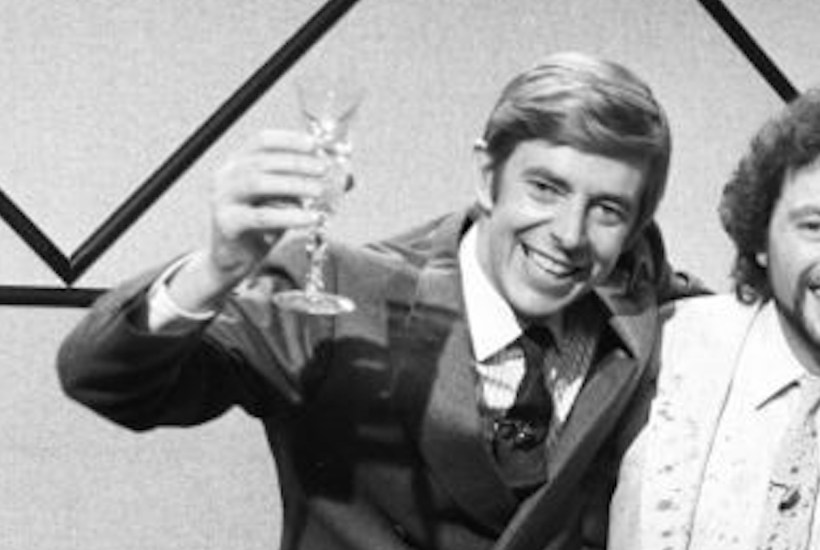
This is how stereotypes work: they have their malevolent and benign aspects, with each reflecting the other, with each often seeping into the other. Henry Kelly is remembered as ‘ebullient’, which all seasoned obituary readers will recognise as code for ‘too fond of the drink’. But even if the Irish have been disdained as a bit too partial to the ‘ebullient’ stuff, they have been simultaneously envied for their cheery, Bacchanalian ways. This stereotype was the motor behind the explosion of Irish theme-pubs in the 1990s. It’s why, whenever Ireland win at rugby or football, the English commentator will conclude breathlessly at the final whistle: ‘they’ll be celebrating with a few pints of the black stuff back in Dublin tonight!’
Caricatures of the Irish are grounded in ambivalence, one that goes back to Shakespeare’s Captain MacMorris, the amiable buffoon from Henry V. For every Irishman portrayed as a drunkard, there has been a fun-loving Irishman who enjoys the ‘craic’. For every joke about ‘thick Paddies’ there have been jokes made by Irishmen themselves – a people the English regard as intrinsically funny. Henry Kelly appealed to a long-standing, Janus-faced apprehension. As we read this week, he was ‘cheesy’, and resembled a ‘smoothie confidence trickster’, but that taint of tackiness lent him a cosy and unpretentious air, too.
The 1990s television series Father Ted continued to embody this ambivalence, and its popularity to this day – it was copiously repeated by Channel 4 over Christmas – reflects its persistence. The comedy had three Irish characters that our English forebears would have recognised instantly: the drunken Irishman, the simpleton Irishman and the shifty Irishman. But these characters worked and failed to cause offence, partly because by the 1990s the benevolent Irish stereotype had not only survived the trials of the 1970s and 1980s – it had triumphed.
Henry Kelly is remembered fondly in Britain because, for all its awful failings past and present, this country has never stopped regarding the Irish, in general, with affection.