Like many, I have long believed that calling one culture superior to another – especially in discussions on immigration – is, at best, politically incorrect and, at worst, offensive. This reflects what many people in academia, the media, and politics think – that every culture has its own worth and saying that some are better than others might seem bigoted. But now, as more conservative ideas come into play and criticism of overly politically correct views grows, it makes me wonder: Are all cultures really equal and if they are not, is it wrong to say so?
When we look at how cultures affect human rights, personal freedom, and the overall quality of life, it’s hard not to notice big differences between Judeo-Christian societies and those in many Muslim-majority countries. These differences are seen in several areas, including the treatment of women, the LGBTQ community, minorities, and freedom of expression.
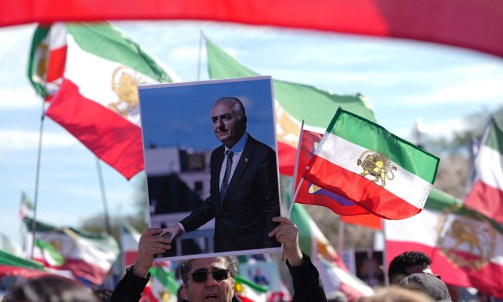
Consider the status of women. In many Muslim countries, gender inequality is not just a social issue but a legal one. Saudi women were only granted the right to drive in 2018 and still live under male guardianship laws that limit their independence. In Afghanistan, the Taliban has barred girls from secondary education and forced women out of most jobs, effectively erasing them from public life. In September 2022, Mahsa Amini, a 22-year-old Iranian woman was arrested by Iran’s morality police for not wearing her hijab ‘properly’. She was detained in Tehran and died in custody after being severely beaten.
Honour killings remain a brutal reality in parts of the Muslim world, where women can be murdered by their own relatives for bringing shame to the family. Pakistan reported nearly 500 honour killings in 2021, though the true number is likely much higher due to under-reporting. In contrast, Judeo-Christian societies have long rejected such practices, establishing legal protections for women and criminalising domestic violence and honour-based crimes.
Many people in the West would be concerned about the widespread acceptance of child brides in many Muslim countries. In places like Yemen, Iran, and Afghanistan, girls as young as ten are forced into marriage, often to much older men. In some cases, these marriages are sanctioned by religious leaders and protected under Sharia law. The consequences for these girls are devastating – early pregnancies, lack of education, and a lifetime of servitude. In stark contrast, Judeo-Christian societies have almost universally outlawed child marriage, recognising it as a violation of fundamental human rights.
The treatment of LGBTQ individuals is another stark example. In Iran, homosexuality is punishable by death. In countries such as Saudi Arabia and Afghanistan, those suspected of being gay live in fear of imprisonment, flogging, or worse. Even in more ‘moderate’ Muslim nations, LGBTQ people face discrimination, violence, and a lack of legal protection. Contrast this with the West, where gay rights have advanced dramatically in recent decades. Most Judeo-Christian societies now recognise same-sex marriage and have anti-discrimination laws in place. While cultural resistance remains among some religious conservatives, LGBTQ people in the West do not fear state-sanctioned execution or imprisonment for their identity.
Antisemitism is another deeply ingrained issue in many parts of the Muslim world. While Western societies have made a concerted effort to confront and combat antisemitism – particularly in the wake of the Holocaust and, more recently October 7, state-sponsored antisemitism remains common in Muslim-majority nations. In Iran, school textbooks promote conspiracy theories about Jews, and in Egypt and Turkey, government-controlled media frequently spread antisemitic propaganda. By contrast, Western nations have implemented education initiatives and hate crime laws to address antisemitism.
Racism also persists in the Muslim countries in ways that often go unchallenged. In Mauritania and Sudan, slavery persisted well into the late 20th Century, disproportionately affecting black Africans. Migrant workers in the Gulf states, particularly those from South Asia and Africa, often endure horrific conditions under the Kafala system under which employment is tied to a specific employer, and workers cannot change jobs or leave the country without the sponsor’s permission. This effectively binds them to their employers and denies them basic rights. Western societies still struggle with racism, but they have taken meaningful steps to address it through civil rights movements and anti-discrimination laws, something much of the Muslim world has yet to do.
Freedom of expression is another major dividing line. In many Muslim-majority nations, blasphemy and apostasy laws severely restrict free thought. Pakistan, for example, imposes the death penalty for blasphemy, and mere accusations have led to violent mob killings. In 2015, twelve journalists were massacred at Paris-based Charlie Hebdo for publishing a cartoon satirising the Prophet Muhammad. In Saudi Arabia and Iran, leaving Islam is punishable by death. These laws not only stifle free speech but also create an atmosphere of fear, where questioning religious doctrine can have fatal consequences.
Judeo-Christian societies, by contrast, have fostered an environment where people are free to criticise religious institutions without fear of state-sanctioned punishment. While cancel culture and political correctness have, at times, threatened open debate in the West, the consequences for dissenting opinions remain far less severe than in the Muslim world.
While many insist on respecting all cultures equally, a society that champions human rights, freedom, and equality should not be viewed as equivalent to one that stifles dissent, mistreats women, and persecutes minorities. The crucial issue is not merely recognising these differences, but determining how we respond to them.