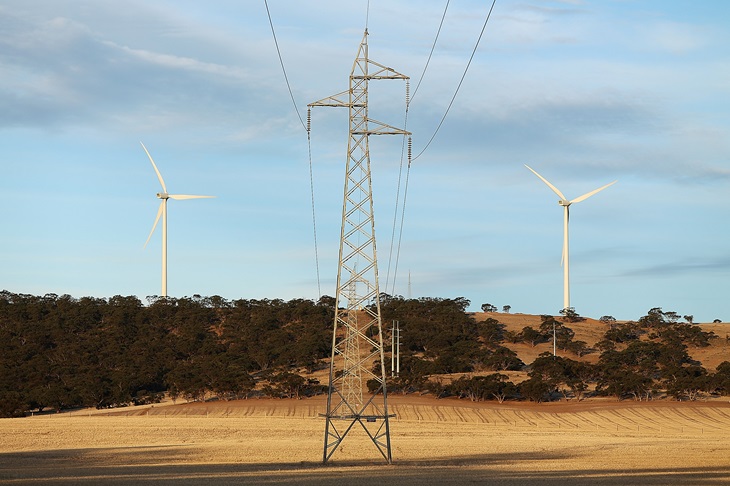
Time for another review of the electricity market…? Commonwealth and state ministers have established a new four-person commission, the NEM Wholesale Market Settings Review Panel, to advise on how better to administer an electricity market that endless subsidies and regulatory meddling has transformed from a world beater to among the developed world’s highest cost and unreliable supply.
Creating a new review panel means politicians think there are insufficient resources in the thousands of people employed at taxpayer or electricity consumer expense in the burgeoning market-oversight agencies, including the three main market regulators, the CSIRO and the Commonwealth and state departments. All of these advise politicians, administer producers or set prices rather than actually produce electricity. In doing so they demonstrate little understanding about the nature of firming supply with generation sources that can be dispatched as needed rather than being dependent on the sun and wind.
As well as being supported by a secretariat from the Commonwealth Climate Change and Energy Department (the order of functions shows to which arm the government allocates greater importance) the panel will be recruiting widely for additional help.
Help is, indeed, urgently required to fix a market undermined by the political assault on coal, especially since that assault is actually being intensified. Policy is now dominated by the Capacity Investment Scheme (CIS), which funds the potential capacity of (almost totally non-dispatchable) supply and not actual quantities of electricity. Government contracts under the CIS are intended to election-proof the current choices by locking them in.
But help to fix an electricity market battered by regulatory measures is not the kind of help the government has in mind.
The panel members have all demonstrated an alignment with the need to accelerate the ‘transition’ to renewables. Although they all have experience in the national market, they have signed off on an opening statement that contains canards like:
‘To overcome (the lack of long-term contracts), in the early 2000s governments created a range of certificated schemes such as the NSW Greenhouse Gas Abatement Scheme and the Renewable Energy Target (RET). It was the interaction between these schemes, forward derivative markets and the “energy-only” spot market that drove investment in energy and capacity to keep the system reliable.’
It was, in fact, those interventions and others that polluted a market that had previously been able to bring about new capacity when needed – notwithstanding that the NEM and privatisation had unlocked previously underutilised capacity, placing downward pressure on prices.
The Panel’s scenario-setting continues with this inaccurate statement:
The existing ‘energy-only’ spot market is very efficient at delivering pricing signals for realtime operation. However, it was never intended on its own to be a pricing signal for investment in long-lived firmed renewable generation and storage.
The NEM was actually based on the UK/ Pennsylvania, Jersey, Maryland (PJM) market where spot prices match demand with supply and, with entrepreneurs’ assessments of demand, signal the need for and type of future investment. The public servants behind the initial consultation statement have no conception that markets can and do bring about new investment far more successfully than government planners.
Whether or not it survives a change of government, the newly appointed panel has an ambitious task. It has to devise changes to a market that politicians say must be increasingly supplied by expensively unreliable generation sources and to find a way of doing this at low-cost. The task is made all the more impossible since the Trump administration will abrogate as much of the Biden renewable energy policy as it can, thereby further undermining the cost-competitiveness of any remaining countries that follow the Paris Agreement’s renewable energy blueprint.
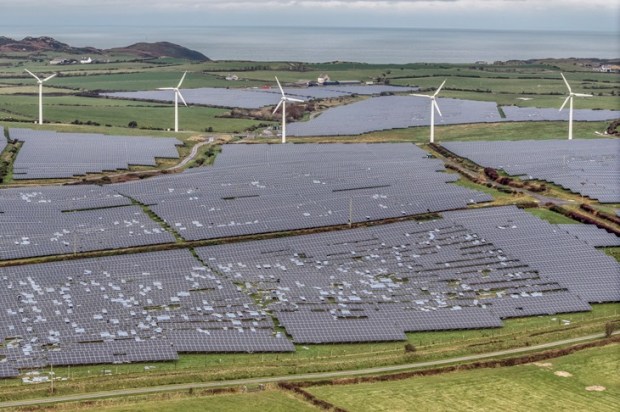
The panel’s mission entails navigating the irreconcilable shoals of low-carbon emitting electricity, while avoiding the cost excesses of renewables. The renewables excessive costs include the turbines and panels themselves, what the Australian Energy Regulator called a ‘wall of capex’ costs for additional poles and wires, and extremely high storage costs (while a few hours storage for renewable energy costs billions of dollars, most coal generators have years of free storage on their doorstep).
Some leeway may however be in prospect. Confronted by the dead coal mine canary that was the collapse of the renewables-dominated Broken Hill electricity supply, ministers are rushing to reverse their previous keenness to eradicate the ‘dinosaur’ coal plants. Hot on the heels of signing a $14 billion renewables and storage package, Minister Bowen and his Victorian counterpart Lily D’Ambrosio, along with other energy ministers are now formally subsidising their owners to keep coal generators open. They have agreed rules for an ‘Orderly Exit Management Framework’, which is code for delaying the closure of coal plants caused by the subsidies to wind and solar.
Suddenly, confronted by the political death that will accompany power losses, even the climate fanatics are having doubts about the effect of their policies.
Alan Moran was the senior Victorian representative on the committee that devised the original National Energy Market.