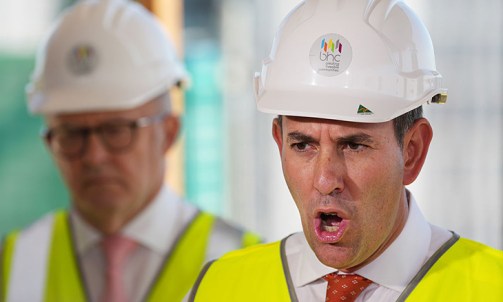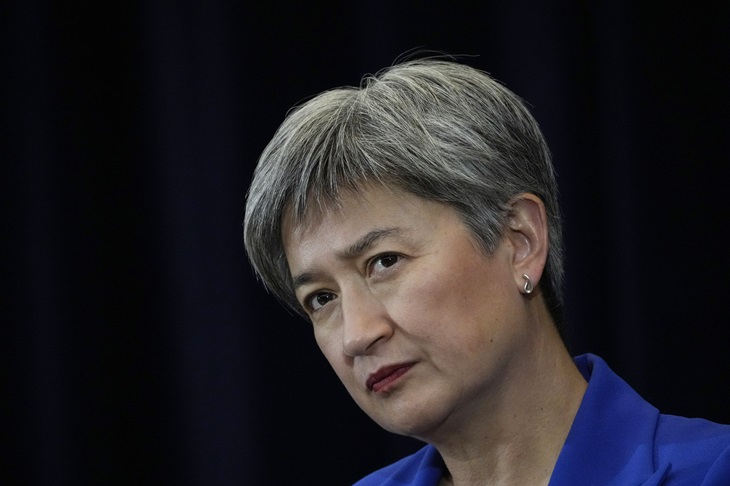
Foreign Minister Penny Wong’s call to her Tehran counterpart urging Iran to promote stability in the Middle East is indicative of Labor’s ineptitude on Middle East policy.
On Friday, April 12, Wong posted two messages on X (formerly Twitter) saying that, via Iran’s Foreign Minister, she had urged ‘Iran to use its influence in the region to promote stability, not contribute to escalation’. She added:
‘Australia will continue working with partners who have influence in the region to stop the conflict from spreading.’
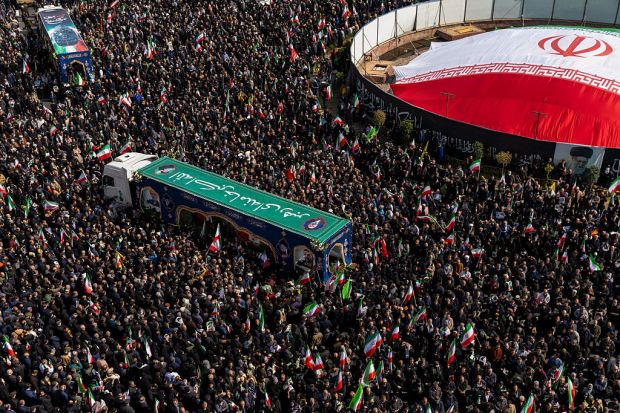
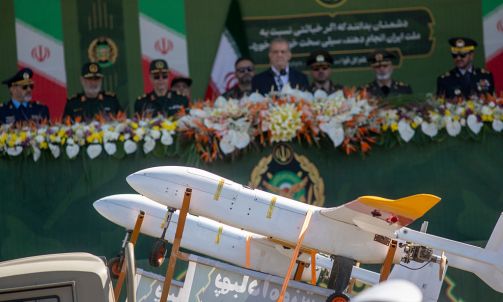
A day later, on Saturday, April 13, Iran launched 331 drones and cruise and surface-to-surface missiles at Israel. Almost all were shot down.
On April 17, Israel’s military response was measured, with Iran then announcing there would be no further retaliation or escalation of conflict.
Wong’s implication that Iran is a partner of Australia, or of any other country wanting to stabilise in the region, is absurd. Iran is the major source of regional disruption and conflict.
Further, if the Albanese government wanted stability in the region, Defence Minister Richard Marles would not have refused the request for an Australian Navy ship to help defend shipping through the Red Sea from Houthi drone and missile attacks.
Labor’s diplomatic efforts in the Hamas-Israel war focused on two impossible tasks:
- Securing the defeat of Hamas without Israeli military action.
- An immediate ceasefire which would deliver Hamas a strategic and political victory.
Wong’s suggested recognition of a Palestinian state, while Hamas remains the political force in Gaza, is deluded in the notion that this would strengthen ‘the forces for peace and undermine extremism’. As strategic analyst, Peter Jennings commented that making Gaza an independent state under Hamas control, ‘would be like handing ISIS a seat in the UN General Assembly after its attack on Mosul’. The political reality is no Sunni Arab state supports the idea.
Labor’s flip-flop statements on the recent conflicts are more akin to placating pro-Hamas supporters in Labor electorates than to a considered policy for protecting Israel and ensuring stability across the region.
Strategic realities
There are clear strategic realities that should be shaping Australia’s Middle East policy.
First, Shia Muslim Iran aims to dominate the region and destroy Israel, the ‘Little Satan’.
The major source of regional tensions is the proliferation of Iranian missiles and artillery rockets to non-state actors, proxy forces – Hamas, the Houthis, and Hezbollah. Operating from Yemen, Houthi rebels have not only attacked shipping in the Red Sea, but in recent years have launched ballistic missile strikes on Saudi Arabian cities, airports, and oil installations.
Hezbollah’s growing arsenal of an estimated 140,000 rockets continually tempts Israel to consider a military incursion into Lebanon.
Almost weekly, Iranian proxies rocket the United States’ installations in Iraq.
And Iran has augmented weapons smuggling with guidance kits to upgrade existing stockpiles of artillery rockets, and manufacturing capabilities to its proxy forces. It aims to enable the autonomous manufacture of artillery rockets and guided missiles by its proxies.
Second, Israel regards Iran and its proxies as an existential threat, and the current war as its second war of independence. The first independence war was in 1948, when invading forces from Lebanon, Syria, Iraq, and Egypt attempted to destroy the United Nations’ newly created state of Israel. Saudi forces then fought under Egyptian command.
Third, Iran’s long-term strategy is to build its forces, develop its nuclear weapons, and enhance its power with the backing of Russia and China. In the meantime, it wants to avoid full-scale war with Israel because that would ensure that the US, Europe, and other allies joined in to protect Israel.
Fourth, there is a polarisation across the Middle East as regional Sunni Muslim countries, also under the threat of Iran, have allied with their former enemy Israel. During the Iranian missile attack on Israel, Jordanian fighter jets shot down Iranian missiles flying through their airspace. Saudi Arabia and the United Arab Emirates (UAE) reportedly provided critical intelligence before the attack.
As David E. Rosenberg explained in Foreign Policy, there are several reasons for this cooperation. Limiting damage to Israel mitigated Israel’s response and reduced the subsequent risk of a regional war. The Saudis and Jordanians are also fed up with the destabilisation Iran is causing in Iraq, Syria, Yemen, and Lebanon.
Moreover, Israel has become a key economic partner with these countries. It has become an energy lifeline to Egypt. It provides energy and water to Jordan. Meanwhile, to enhance its role as a global logistics hub, the UAE is leveraging Israel’s high-tech capabilities to build its own tech industry.
Hence, six months into the Hamas-Israel war, these countries have taken no economic retribution on Israel. None followed Turkey on April 9, when it announced a ban on a wide range of exports to Israel.
These strategic realities are ignored or regarded as inconsequential to the Albanese government as it pursues fantasy peace policies in the Middle East.
Patrick J. Byrne, former President of the National Civic Council