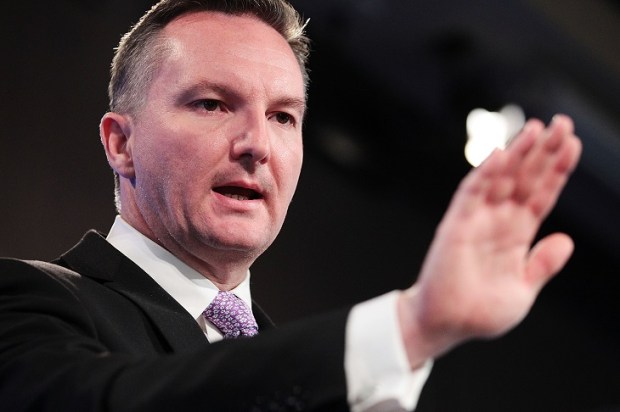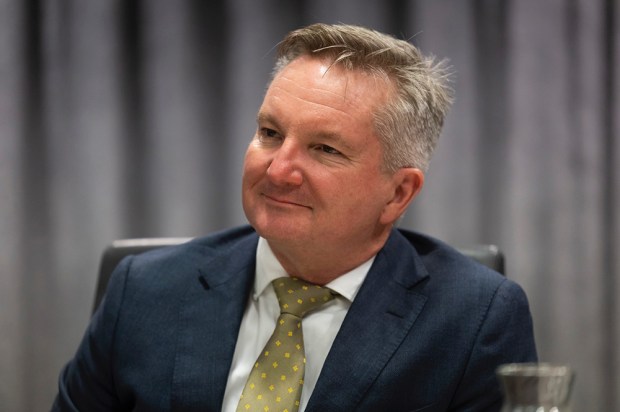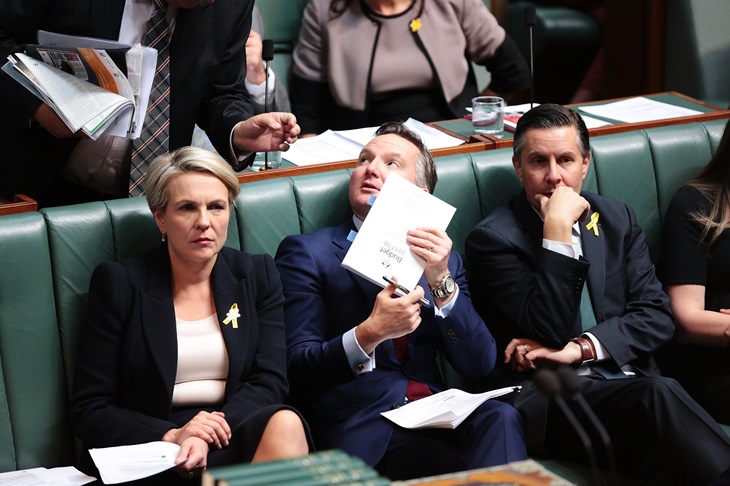
It may be somewhat fortunate for Chris Bowen that approval polls for the performance of the Climate and Energy Minister are not published nearly as regularly or reported as widely as those for the Prime Minister.
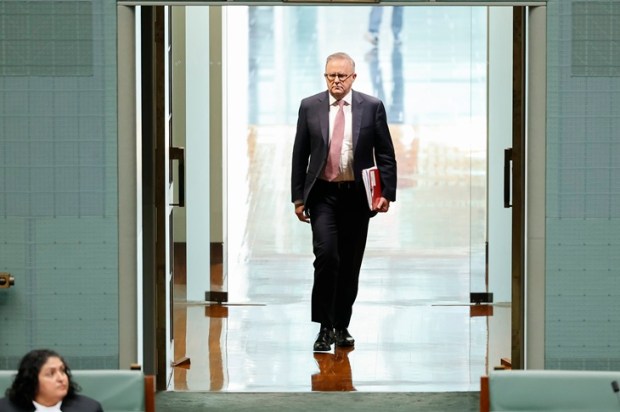
Whilst having to endure a number of recent negative events, Albo himself remains relatively popular and well ahead of Peter Dutton as preferred Prime Minister. The same cannot be said for Chris Bowen. His policy direction as well as performance in the portfolio should have Labor strategists sweating. It has certainly excited Coalition staffers who can smell a weakness in a previously relatively well-tolerated Labor leadership. So much so, that energy policy is building to be one of the main battlegrounds in the next election.
Whilst Albo’s ratings remain relatively strong, his government’s popularity is plummeting – refer to the latest Newspoll published this week – as a result of the cost of living crisis (energy being a contributing factor). This has been exacerbated by higher interest rates and the continued fallout from the failed Voice.
Albo must squarely own the outcome of the Voice. This was his passion project, under his guidance, that authorised significant expenditure. He cannot escape responsibility for that. How much of an impact it has down the track may well depend on how bad the cost of living crisis becomes and hence how much people resent having focused almost entirely on the Voice issue for a policy year instead of more actively addressing other pressing issues.
And the big issue where the Prime Minister should have been focusing is on cost of living, an unfolding crisis for Australian families. The overall macro drivers of this broad cost of living crisis are not actually of the government’s doing and are instead being driven by the global environment. It is the responsibility of the government of the day to introduce policies that respond to these pressures.
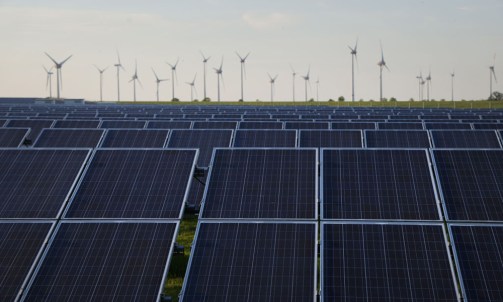
Energy costs, a highly visible and important component of added cost of living pressures, are one key area where government policy has been front and centre for the staggering increases. These pressures are as a direct result of the ‘renewables at all costs’ energy policy being followed by the government and being double downed on for our future by Chris Bowen.
Whereas Albo cannot shirk responsibility for his role in the Voice, he can, however, more credibly distance himself from the utter disaster that has become Australia’s energy policy. Prices continue to rise substantially, at the same time as system reliability tinkers on the edge, with the whole National Electricity Market (comprising approx. 10.7 million customers) being warned to prepare for forced blackouts (or ‘load shedding’ in political speak) being particularly likely on low solar and wind days. Last year, Sydneysiders were advised not to use their dishwashers in the evening in order to assist in ensuring the integrity of the grid. It was a relatively minor inconvenience but one which hides much nastier problems in the system directly as a consequence of government policy. This year, AEMO is warning of many more potential restrictions.
As Climate and Energy Minister, whilst indeed somewhat constrained by Labor party factional politics, Minister Bowen is able to steer the energy policy ship – and with this ability he has consciously decided to steer the government of the day hard left, so far left indeed that their Energy Policy would not be out of place in the Australian Greens policybook. And that leaves the remainder of the political spectrum, all the way from moderate left-learning through to the right-wing – available and receptive for potential Coalition policies.
By ignoring the Sensible Centre, Bowen has made a calculated call that preventing haemorrhaging of the Left of the Labor party to the Greens is more valuable than shoring up support from the moderates in the party.
As a result, Australia is lumped with an Energy policy driven by the most fringe ideological zealots which has put it squarely at odds with all other leading industrialised nations, our most important trading partners, and our military allies.
Those that have pressed forward in what is being termed a ‘Bowen Experiment’ have failed miserably. Sweden and Canada have dialled back their renewables aspirations to embrace nuclear. Japan – encapsulating perhaps the most difficult relationship with nuclear technology as part of its national conscience – is restarting its reactors. Germany leads as a shining beacon of what not to do – with the closure of their nuclear plants and high renewables penetration leading to high power prices – high carbon intensity and a risk to their vaunted German industrial base. There is no small amount of irony that German industry now relies on cheap and reliable nuclear power being imported from France to keep the lights on.
And this then gets us to COP 28 which is being held this week in Dubai. In the lead-up to this event, key allies have agreed a pledge to triple installed nuclear capacity by 2050, in addition to various other commitments with respect to other technologies including obviously renewables. Everywhere else, nuclear is recognised as an integral part of the multi-technology solution to combatting climate change. In the whole of the G20, only Australia is held back with a nuclear ban driven by our ideologically obsessed energy minister.
This may suit Minister Bowen and his left wing ideological brethren, but it does not sit well with the rest of us.
Without yet formalising a policy, the common sense concept being discussed by the federal Liberals of learning from what has worked overseas and what has not, resonates with the Australian people. And what has worked is having nuclear as an available option for consideration. Every poll conducted on the subject in the last 18 months – of which there have been many – has shown a positive view for nuclear in our country, and those that offer a breakdown by voting alignment show strong support across Liberal, Labor, and even decent support by Greens voters.
One with even a modicum of political strategic nous could see the opportunity here. Already at risk of showing he has been absent by focusing on his vanity project and not listening to the people over cost of living concerns, Albo could regain the initiative and help stem the loss of support by pulling Labor energy policy back towards the middle and removing Bowen as a result. This could nullify one of the Coalition’s most promising policy platforms and position the country in line with the global community for a future of plentiful and reliable green energy.
Time to act Mr Albanese, you might just save your political bacon.
Jonathan Fisher is the CEO of Cauldron Energy, an ASX listed (ASX:CXU) uranium explorer and developer. Follow him on X (@cxuasx) or on LinkedIn.