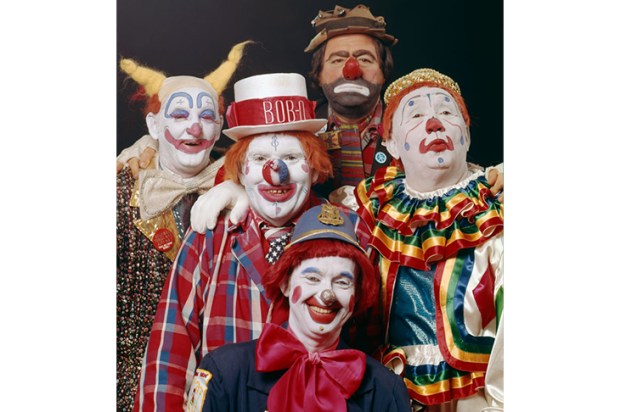
Does art imitate life or vice versa? This question has troubled some of the world’s greatest minds. Plato agreed with the former and Oscar Wilde with the latter. But these intellectual giants didn’t have to endure the humiliation of living in a progressive 21st century clown world. As the culture war evolves, it becomes increasingly difficult to distinguish between reality and fiction. At the first sign of offence, sensible, cool-headed adults will throw their toys out of the pram and, like something out of South Park, transform into pathetic, emotionally incontinent PC babies. My suspicions were confirmed when I learned that a cartoon series aimed at toddlers caused many so-called mature adults to throw a temper tantrum.
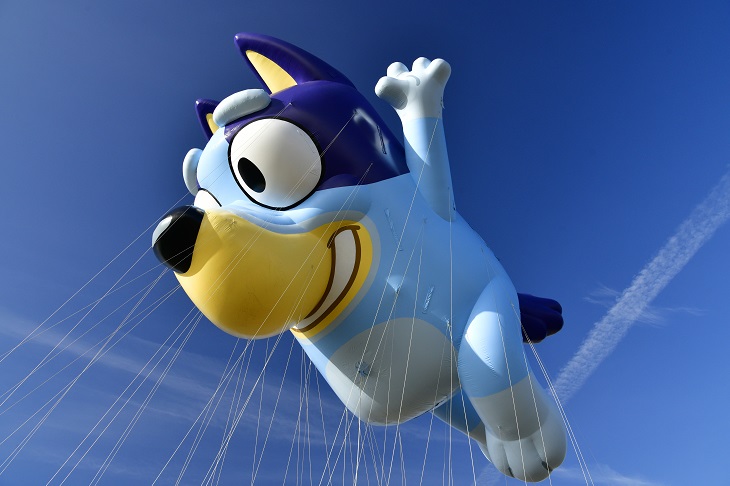
Bluey is a popular children’s television show that airs on the ABC Kids network. Based on the life of a family of anthropomorphic Blue Heeler dogs, the animated series follows the adventures of Bluey, a lively and adorable puppy who gets into all kinds of mischief with his younger sister, Bingo. The couple lives with Mum Chilli and Dad Bandit. The Emmy Award-winning show was praised by critics for its positive parenting message and strong father figure. It’s a laugh-filled, wholesome, family-friendly show, but a recent episode has left some with a completely different opinion.
At the beginning of the episode, titled Exercise, Bandit examines his stomach in the mirror while Bluey is bathing. ‘Oh man, I just need to do some exercise,’ he says anxiously. ‘Tell me about it,’ comes the reply from Chilli.
Bandit should have called Mum a b*h (that’s technically correct, after all), and that would have put an end to all this nonsense. But that’s not how things work in clown world. A small but very vocal minority decided to take offence, and ABC acquiesced to the demands.
The network decided to edit the episode, cutting the runtime by 73 seconds. Apparently, parents were concerned that it was promoting a very controversial idea. What was that? The Q-Anon conspiracy that Joe Biden – rather than just being a hair-sniffing octogenarian hurtling towards senescence – is protecting a network of Satan-worshipping cannibalistic paedophiles within his Democratic Party? Or that Taylor Swift is in fact a clone of Zeena Lavey? No. Worse. Fat-shaming.
We have been socially conditioned not to judge how people live their lives. Cultural relativism forbids it. It’s part of the progressive left’s fashionable (and therefore ridiculous) vocabulary. Conventional wisdom teaches that people should not be judged for their actions that are harmful to their health or the health of others. Like parents of a newborn who bring large and aggressive dogs into the family home, then recoil with horror when this ferocious dog subsequently mauls their child. I’m sorry, but you should be judged.
My point is that shame is not necessarily a bad thing. This is well-known in the animal kingdom. Primatologist Frans De Waal studied how primates experience this powerful emotion. Waal noted that when chimpanzees were caught violating social norms, such as stealing food, they would cover their faces, From this, he concluded, ‘The body language is strikingly similar to what we see in humans.’
Shame appeared early in our development. Collective disapproval has served as a powerful corrective since the days of hunter-gatherers, when we lived in social groups. Recognising the disapproval of others brings individuals into line and encourages healthy behaviour for the benefit of the group.
Many of us are obsessed with our weight, agonising over the thought of losing a few pounds in order to squeeze back into our favourite jeans. But is it in our collective interest to normalise obesity? The modern left’s claim that we’re all beautiful is a lie. It’s also not an identity to be proud of, as some might think. Being ‘body positive’ can make weight gain feel easier, but what effect does it have on life expectancy? Not to mention the country’s medical bills? Call me fat-phobic, but is shame really as bad as some people think it is?
Don’t get me wrong. I am not a fan of Fight Club’s Project Mayhem radicalism. I don’t stalk morbidly obese people playing the tuba or parade naked people through the streets ringing bells and screaming insults like in Game of Thrones. If we want to help people, I recommend taking Chilli’s approach. A light touch is required.
I speak from experience. When I was a teenager, I weighed nearly 20 stone. I was often mistaken for a beached whale. It wasn’t until a few close friends made a few nuanced comments – and one memorable joke about me being fat enough to have my own orbit – that I started paying attention. It took years and a lot of willpower, but in the end I lost six stone. I’m proud to say that I no longer look like an angry middle-aged feminist.
Of course, the need to eliminate shame extends beyond obesity. Progressive ideology is based on the subversion of language. Semantic sleight of hand helps justify reckless behaviour. People are no longer alcoholics; they suffer from substance use, not ‘abuse’, because that implies intent. The homeless are ‘unhoused’, victims of a callous system indifferent to the vicissitudes of life. Most of the homeless people I’ve interviewed over the years as a journalist say they’ve made a conscious choice to stay on the streets – an uncomfortable truth I learned while reporting for Quillette. The most egregious example, however, is the campaign to normalise paedophilia. No longer child abusers, Minor Attracted Persons are just the evolution of self-expression, right? What’s next? Perhaps rapists will become ‘people with consent disorders’.
What these all have in common is the deprivation of individual freedom of decision-making. It robs people of agency. When everything is the result of abstract concepts like society, free will disappears, along with the concept of personal responsibility. Lifestyle choices are personal. So it’s your responsibility to sort them out. Exercise is the best weapon we have to fight obesity, but apparently it is now cruel to point this out. It makes no sense. But in clown world, nothing makes sense.