When I think about the state of modern entertainment, I often find myself referring to an old episode of Family Guy. Titled Brian Griffin’s House of Payne, it perfectly describes the countless problems faced by original writers and creators if they want to make it in the entertainment industry. It first aired twelve years ago and now seems remarkably prescient.
In the episode, Brian discovers an old script he had written and pitches it to CBS. Initially, a heartfelt drama titled What I Learned on Jefferson Street, the executives tore it apart and rewrote it, turning it into a sitcom. As this is his shot at the big time, Brian goes along with it. The show is renamed Class Holes! His serious dramatic work has descended into farce. As the show gets more and more ridiculous – bringing in a whooping and cheering live studio audience and a pet chimpanzee – he finally snaps and quits, leaving the network no choice but to cancel the show. It lasted one episode.
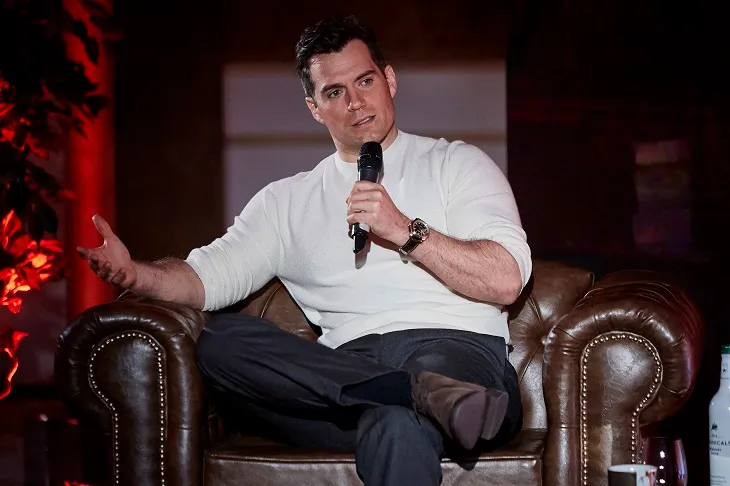
The point I am trying to make is that integrity matters. Something Henry Cavill knows all too well. A few years ago, the Hollywood A-lister signed up to star in a new Netflix fantasy series called The Witcher. In the show, Cavill plays Geralt of Rivia, a genetically enhanced monster hunter who travels the world as a hired sword, killing all manner of hideous creatures. Set to be a multi-season show (Cavill was rumoured to be on the verge of signing for five more seasons), Cavill left after the second season.
So why did he walk away? It turns out he had his own, if somewhat vicarious, Brian Griffin moment. He had grown tired of the way the writers had deviated from the source material. They had changed vast swathes of plot, themes, and characters in order to more accurately reflect the world we live in. According to one of The Witcher’s original writers Beau DeMayo, staff disliked the books, and some were actively mocking the source material.
Lauren Hissrich, the writer of the Netflix series, has become the executive producer of the spinoff series The Witcher: Blood Origin. Speaking about the need to make the show relatable to everyone, she told Yahoo Canada:
‘One of the things, from the very beginning, that I wanted with this franchise is to show that fantasy is actually for everyone. I’d read the first few books and I had fallen in love with them, even before I was asked to do the series.’
She went on to say:
‘I then read the rest of them and I realised, wow this series is actually for a lot of people. That’s why, for me, I elevated a few more female characters. We are all about diversity, inclusion, making sure that the world that we’re representing on the screen represents the real world in front of us, and showing that fantasy welcomes everyone.’
This is not what the fans want. The book series is based on Slavic folklore and written by the Polish writer Andrzej Sapkowski, The Witcher doesn’t represent the world because it is not the world.
What makes Black Panther unique is its Afrocentric themes. So it is understandable that the fans of The Witcher might get frustrated when it does not get the same respect. The Witcher is also representative of a certain part of the world. It is steeped in the mythologies and lives of eastern European people, who, whether the writers wish to admit it or not, are predominantly white people – Polish, Belarusian, Ukrainian, Serbian, Croatian, etc. That is what makes it unique. This is why I feel the whole franchise is now doomed. Writers took something unique and thought, in their exalted state of wisdom, it needed to be ‘corrected’.
A prequel, Blood Origin is a four-part miniseries, set 1,000 years before the original story. It is a world occupied by elves that seek to use magic and sorcery to bring about the first version of The Witcher. I know this because a rather plastic-looking and wooden-spoken Minnie Driver said the very same thing in the first few minutes of the show. Giving the entire story away before it begins? That’s a bad sign.
So, is it any good? No, it is not. It is terrible, shockingly amateurish, badly acted, clumsily written, a total insult to the work of Andrzej Sapkowski. Saturated with identity politics and intersectionality, you could be forgiven for thinking it was some clever satire on modern Hollywood storytelling. It is a disaster stacked upon a bigger, even more terrifying disaster.
It is a pre-human world, inhabited by elves and divided into three kingdoms that have been at war with each other for 1,000 years (I have no idea how they have managed to sustain such a protracted war, but at this point I don’t really care about the plot). There’s been a betrayal and an evil queen now rules the realm. But the twist is that she is not really in charge. The mastermind and brains behind it turns out to be … Lenny Henry! He plays an evil sorcerer named Druid Balor, who wants to use evil powers to open portals to other dimensions to bring an army through to conquer this world. The realm is saved by a strong, independent ethnically diverse woman, a dwarf, and a dumb generic white guy.
This really is an unmitigated disaster of a show. It is so bad, it makes Netflix’s version of Resident Evil look like Ben Hur. Everything about this is a joke. From the contrived story featuring the ‘just in time’ concept known as deus ex machina, the lazy performances of the actors, to the dreadful fight scenes that I swear could’ve been choreographed by Steven Seagal. Blood Origin is weak, rushed, and boring. It is hard to know who this is meant to appeal to? Oh yes, ‘modern audiences’.
As I’ve said before, there’s nothing wrong with diversity as long as it is done right and makes sense from a narrative perspective. We don’t get this with Blood Origin. Instead of each area having a distinctive ethnic and cultural makeup, what you get is this confusing blend of actors of every conveyable ethnicity all lumped together. This happened in Rings of Power, and it didn’t work then either. It could’ve been better. Each area could’ve been played by a different ethnicity, making it easier to follow. Zintreans could’ve been played by white English actors, Pryshians could be Middle Eastern, and Darwens could be black. Then you could have all the diversity you want. This was how they did it in Game of Thrones, and no one complained.
I get the distinct feeling Blood Origin is The Witcher story they always wanted to write, where they don’t have to pretend to care about the source material (as there isn’t any for this origin story) and they have complete creative control to tell the story they want to tell. A dull, lifeless story mired in intersectional feminism and ridiculous diversity and inclusion quotas, where the colour of your skin is more important than talent or personality.
The reason this is now happening in the realm of fantasy is relatively straightforward. Everyone wants to be the next Game of Thrones. Studios have been buying up the rights to every 1,000-page multi-series fantasy novel they can get their hands on. Then, a bit late in my opinion, they decide to read it, or more accurately, get the intern to read it. At some point they realise they’ve got the exclusive rights for something they think is ‘problematic’. So they go about a re-write, changing the lore to reflect ‘the modern world’. That’s destroying someone’s work. If Amazon can do this to Tolkien, It’s going to happen again.
I feel sorry for fantasy fans. It’s like turning out every weekend to watch your local football team, cheering them on, knowing they will inevitably lose. It’s the hope that kills you.
Fans have grown tired of their favourite intellectual property being shoved full of identity politics and intersectionality. They have made their feelings clear. Blood Origin has received the lowest ever score for a Netflix show on Rotten Tomatoes, hovering between six and ten percent.
Of course, the studio has pushed back, engaging in fan-baiting and lashing out at fans who dislike it. You can’t call them racist and sexist simply because they hate having their favourite shows injected with the latest fashionable social justice message. The mainstream calls them part of a ‘toxic fandom’. Henry Cavill calls them passionate fans. Maybe that’s why an online petition has received 300,000 votes calling for him to come back.
He won’t. Cavill has done the right thing. I wish some of these activists masquerading as writers would do the same.
Integrity matters.