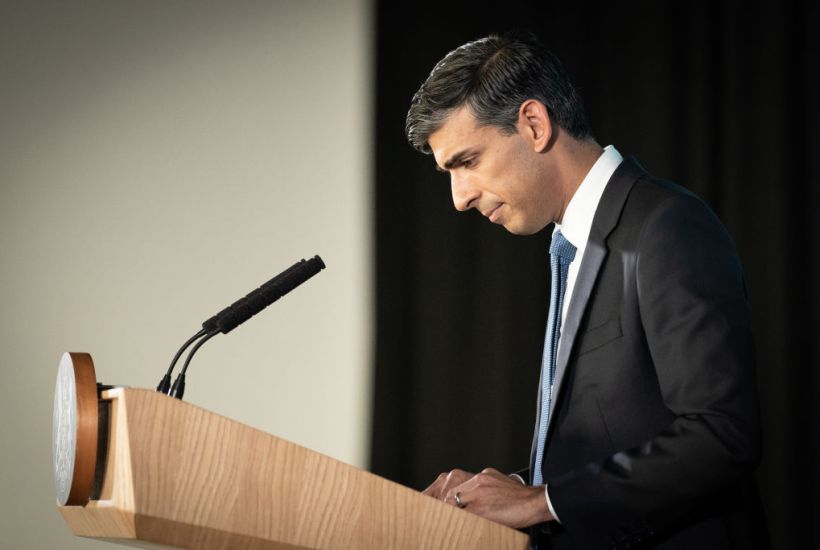
In his speech today, the Prime Minister gave five targets: ‘Halve inflation, grow the economy, reduce debt, cut [NHS] waiting lists and stop the boats.’ But are these real targets, or are they the old politician’s trick of promising what will happen anyway?
Sunak’s job is made easier by the way economics is reported: everyone says what inflation is, but no one ever prints the forecasts. No one, that is, except The Spectator’s data hub. We like to think we show you what people think is coming, as well as what just happened. A trawl through the data hub shows that all of Sunak’s pledges are, in fact, statements of what was expected to happen under Boris Johnson, let alone Liz Truss. Let’s go through them in turn.
Inflation
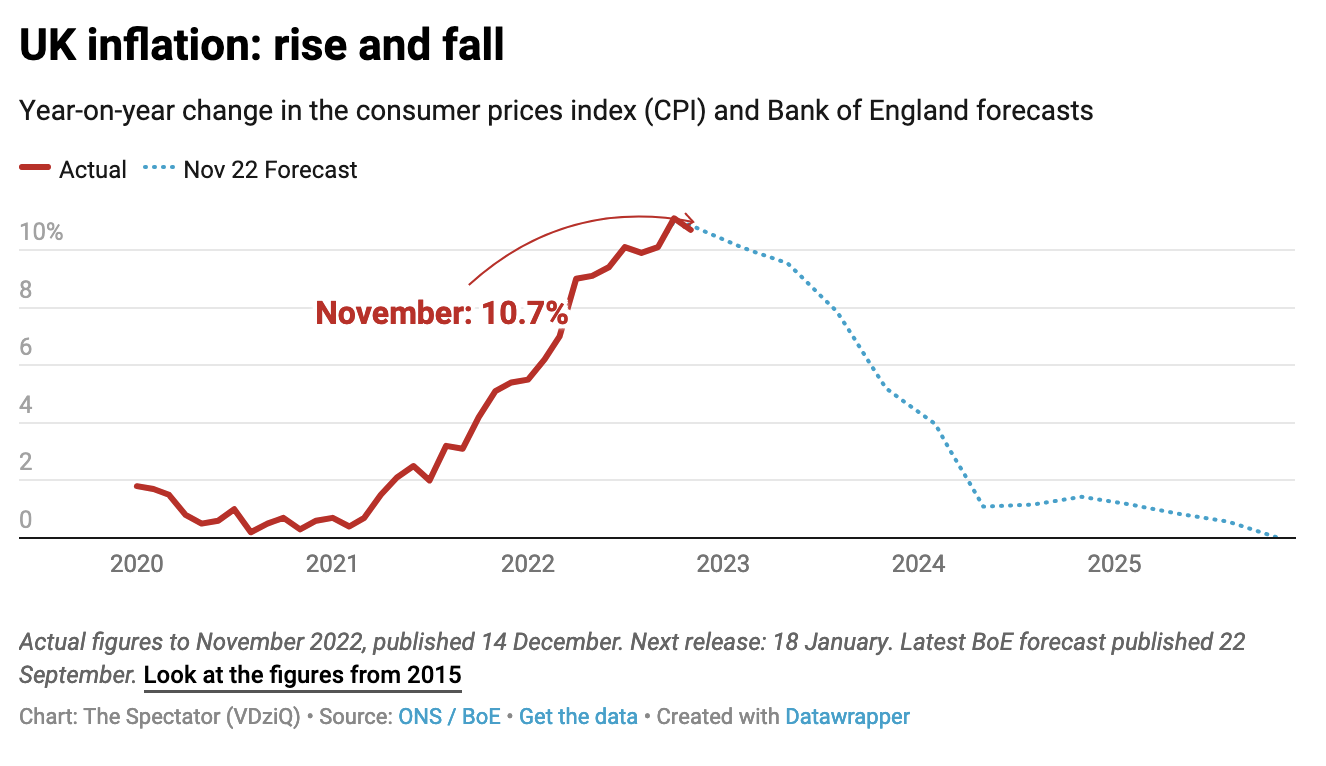
Sunak said he would ‘half inflation this year to ease the cost of living and give people financial security’. Fine words, but inflation was expected to half this year even when Liz Truss was in office. Below shows the Bank of England’s latest forecast (in blue) and the actual figure (in red).
Growth
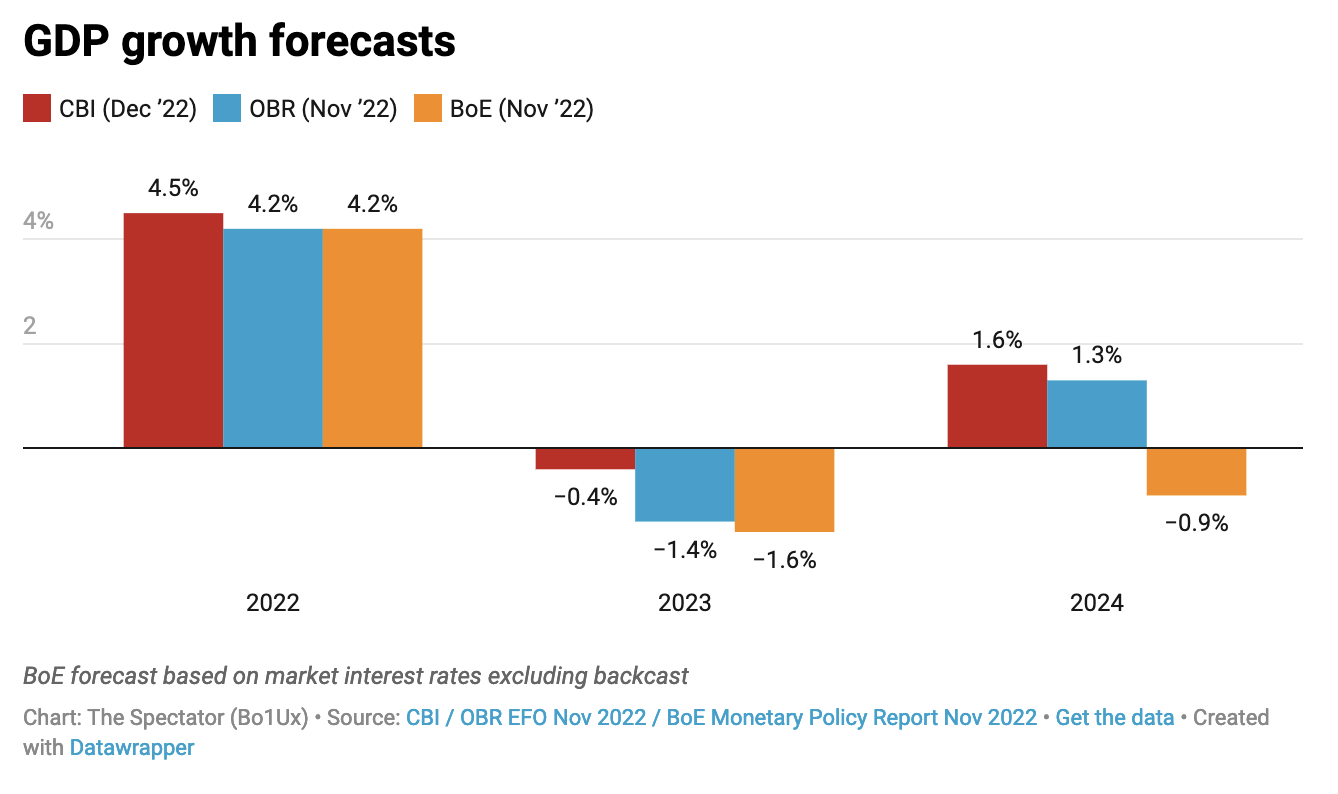
His second economic pledge was that ‘we will grow the economy, creating better-paid jobs and opportunity right across the country’. The CBI and OBR both forecast the economy returning to growth next year: only the Bank of England does not.
Debt
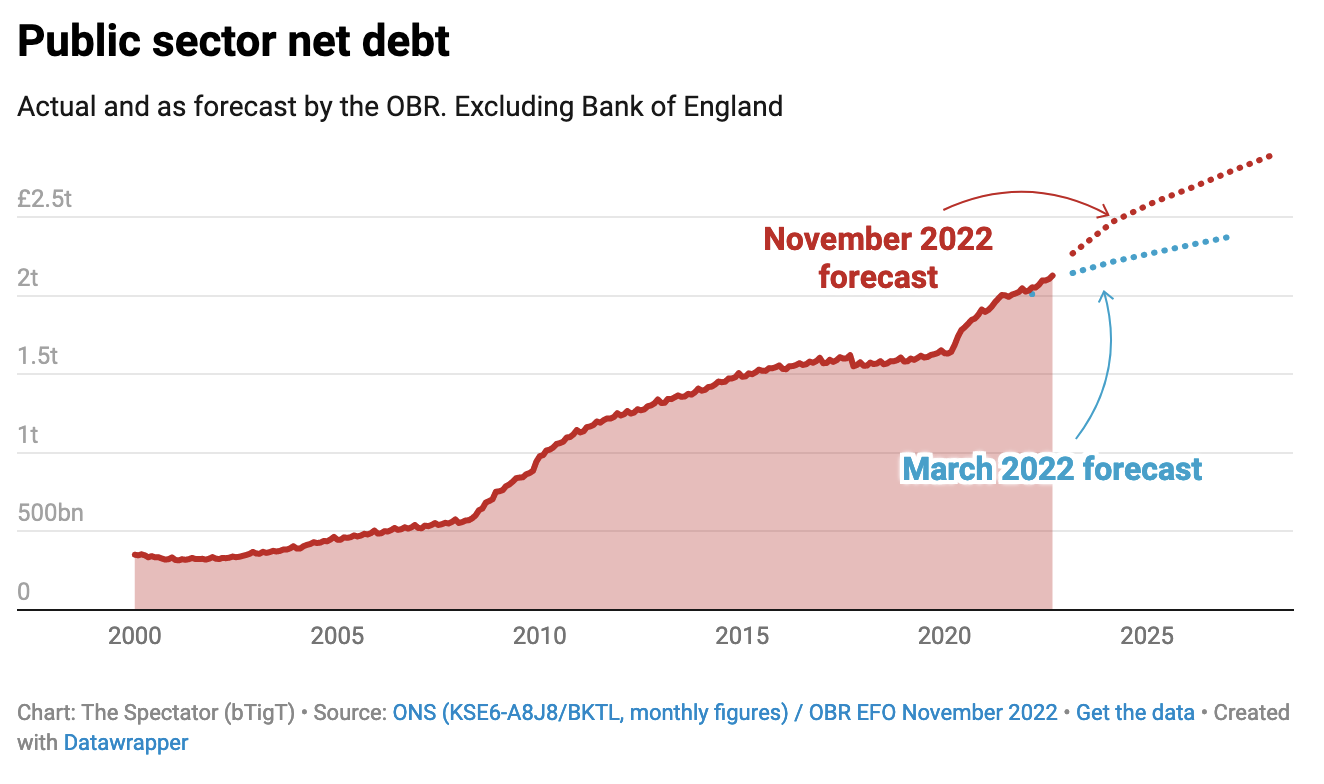
‘We will make sure our national debt is falling so that we can secure the future of public services.’ Give me fiscal restraint, oh Lord, and let me balance the books – but not yet! Sunak actually intends to keep increasing the national debt from £2.1 trillion now to £2.8 trillion in 2026/27. So this one does seem to be a bit misleading. I expect that, if challenged, he’ll say that he expects debt to keep rising but not as fast as GDP, thereby falling as a ‘share of GDP’ while still actually rising. Anyway, the debt – his official plan – is below. As you can see, it isn’t expected to fall.
So has Sunak just announced a change in his Budget? Unlikely. I expect that, when asked, he’ll say that he expects debt to keep rising but not as fast as GDP, thereby falling ‘as a share of GDP’ while still actually rising. Anyway, the debt – his official plan – is below. As you can see, it isn’t expected to fall.
NHS backlog
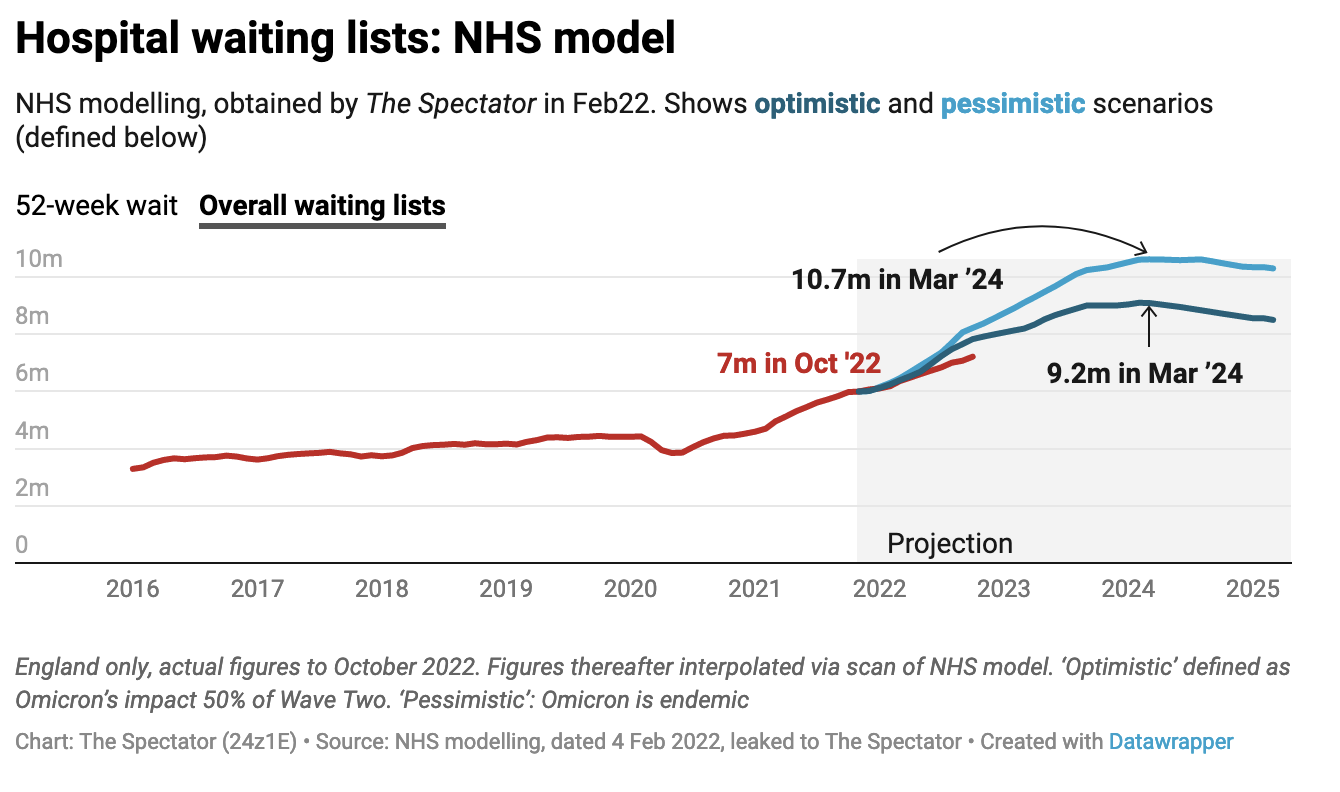
‘NHS waiting lists will fall and people will get the care they need more quickly.’ Yes, they’ll fall – next year. We know this thanks to a leak to my colleague Kate Andrews, which showed NHS waiting lists rising until next year then falling slowly. Since this leak (about a year ago), the waiting list peak forecast has come down for a grim reason: far fewer people presented themselves to the doctors than expected. Updated NHS models do exist but are kept secret, so the public is unaware of the latest figures. But thanks to Kate’s work, we are aware of the 2022 model (below).
Stopping the boats
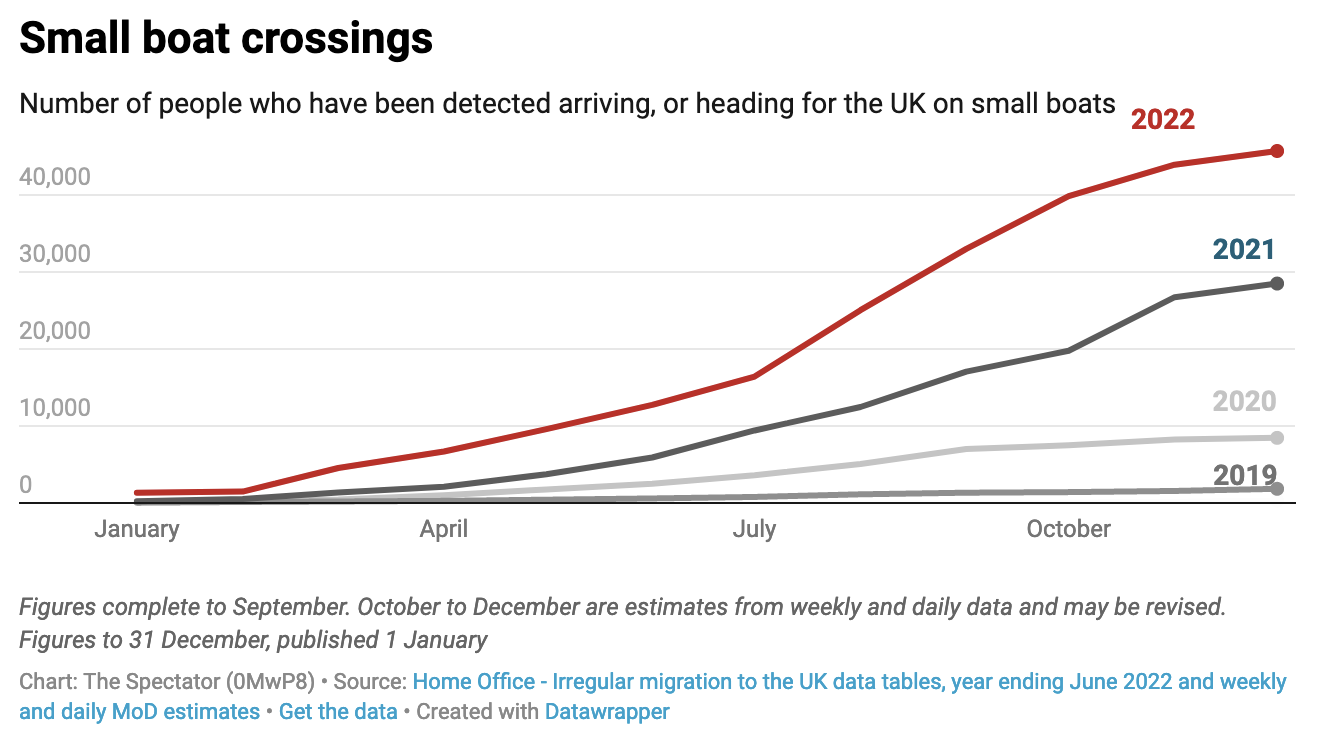
Fifth: ‘we will will pass new laws to stop small boats, making sure that if you come to this country illegally, you are detained and swiftly removed.’ This is a pledge to pass a law, which any government with a majority can do. In fact, they did last year, and little fruit has been borne. But if he wants to ‘stop small boats’ – well, that would be something. To be honest, I’d have found it more credible if he said he’d half the small boat landings. But he says he’ll stop them. We’ll be updating the below graph to track progress.

I wish Rishi Sunak well, but let’s not pretend that – small boats aside – he has set himself any tough targets today. He has pledged himself to do what was looking likely under his last two predecessors. The Prime Minister says he likes to under-promise and over-deliver. On the first part of this equation, he is off to a fine start.