Bros is a gay romcom written by and starring Billy Eichner. The critics, we are told, love it. If you believe the reviews, it is a masterpiece. The problem is that the film had a very disappointing opening weekend, taking just $4.8 million in box-office receipts. For Eichner, the low turnout has nothing to do with whether the film is any good or not. The problem lies elsewhere…
The Bros star quickly jumped onto social media to vent his frustration with the public’s seeming indifference to this important cultural work. During a series of passive-aggressive tweets, Eichner gave his reasons. He said that, ‘Even with glowing reviews … straight people, especially in certain parts of the country, just didn’t show up for Bros.’ In one fired-up message, the actor encouraged ‘everyone who isn’t a homophobic weirdo’ to ‘go and see Bros tonight’.
Eichner’s outburst is not unusual. There is a growing trend among major movie studios of intentionally provoking and antagonising fan bases in order to gain attention and deflect criticism for what they have created. This is a phenomenon known as ‘fan-baiting’. It is a marketing strategy used by actors, producers, and film studios to stir up controversy to rationalise and justify negative reviews of a new and often highly anticipated product.
This is something film fans have long suspected. It offers a plausible explanation for some of the more surreal decisions motivating modern movie production. It might explain why studios and actors make such an elaborate display of hyping up the diversity of the film’s cast rather than the film itself. Or why it has become standard practice to race and gender swap famous legacy characters instead of creating new and interesting ones. It helps explain why dissenting voices are frequently dismissed as the ramblings of basement-dwelling, bigoted 4chan trolls.
It can all be boiled down to fan-baiting. And since it’s all been thrown into the spotlight by the backlash surrounding the fallout from Bros, I want to explain it in more detail.
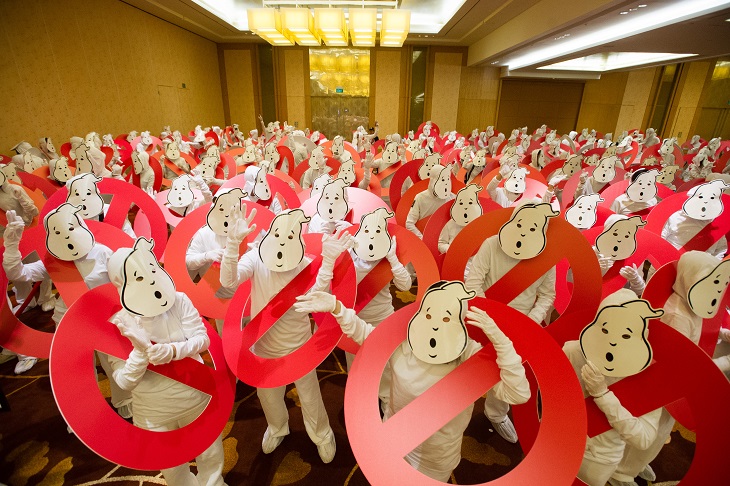
A relatively recent phenomenon, it stems from the 2016 all-female remake of Ghostbusters. The film was a disaster. Everything about it was a failure, from the lazy, lacklustre plot, to the cringe-inducing jokes, and the forgetful and utterly incompetent performances of the cast. Yet all the media seemed to care about was the gender of the actors involved. They didn’t seem to care that the movie was poorly written, horribly acted, and produced by a creative team that lacked both the motivation and intellectual capacity to pay attention to what made the original so entertaining in the first place. All that mattered to them was showering praise on a film that proved women can be as tough and resourceful as men. They were blissfully unaware that more than forty years have passed since Sigourney Weaver played possibly the strongest female lead in cinematic history.
To make matters worse, the Ghostbusters reboot even managed to get dragged into the 2016 US presidential election. Director Paul Feig blamed the ‘anti-Hilary Clinton movement’ for the film’s poor box-office performance. The answer for Feig was obvious: if you disliked the film, you are clearly a Donald Trump supporter.
A major source of concern was attributed to the performance of Leslie Jones, an African-American woman who played Patty. Obnoxious, annoying, and arrogant, the character didn’t exactly endear herself to fans. Her ear-shredding vocal histrionics did little to help. There were myriad reasons to criticise both the character and the actor, none of which had anything to do with her skin colour. Yet this didn’t stop the media from honing in on the small minority of bigoted fans who did just that. So, the narrative driving the film’s promotion became one of victimhood, rendering any and all legitimate criticism of her or her character null and void. The tactic worked. All people saw was an emotionally manipulative headline. Conveniently forgetting that nobody seemed to have a problem with Ernie Hudson’s portrayal of Winston in the original Ghostbusters.
None of this saved the film. It was a car crash. What it did, however, was set a precedent. Fan-baiting soon became common practice. More than just the uncomfortable reality of a hyper-politicised and polarised Hollywood, fan-baiting has become an effective tactic within the entertainment industry.
The worst offenders have to be Disney. Captain Marvel is a particularly egregious example. The 2019 film stars Brie Larson as a superhero endowed with special powers that make her invincible. As any creative writing student will tell you, this is not how you craft a compelling story. The hero’s journey is a common narrative within the structure of storytelling. It charts how a character overcomes adversity, deals with loss, and emerges transformed at the end. With no meaningful conflict or struggle from which our protagonist can learn and grow, there is no character development. If you dare to point this out, Hollywood doesn’t want you or your chauvinist friends to watch.
Perhaps you had the audacity to suggest the remake of Mulan undermined the original version’s inspirational message about the value of hard work, tempered with courage and resilience, in favour of the more progressive view that somehow being female automatically makes you great at everything? If you did, congratulations, you’re sexist.
It’s as if these excuses and thinly-veiled attacks come preloaded before a film’s even released. A few months before the opening of Terminator: Dark Fate, director Tim Miller declared that the show’s masculine-looking female lead, played by Mackenzie Davis, would ‘scare the f– out of sexist trolls’. If fans hated the character and, by extension, the film, they are the problem.
That brings me to The Rings of Power. In an era of remakes and modern – meaning progressive – reinterpretations of classic franchises, few were optimistic when Amazon bought the rights to one of the most endearing fantasy stories of all time. So the burning question became whether it would stay true and honour the spirit of Tolkien’s legacy, or reshape it to reflect the modern world in which we live?
It didn’t take long to get the answer. The first series of promotional images featured race-swapped dwarves and elves, which were never a focal point of Tolkien’s world. They also introduced a new, seemingly indestructible version of Galadriel. One who’s faster, stronger, and more capable than any of her white male counterparts.
With this provocative act of fan warfare, Amazon threw down the gauntlet. They were practically inviting fans to comment. As soon as they did, lengthy media articles began to appear defending the hiring practices of the show’s creators and attacking the fans’ supposed blatant bigotry. This quickly became an important part of the show’s marketing as actors, directors, and writers spent more time defending the cast than discussing the plot.
It all has a knock-on effect, both on public perception and professional critics. The role of the critic is to be impartial, to assess the relative strengths and weaknesses of a new cultural product without bias or influence. However, they don’t want to be vilified by their colleagues or categorised as bigots for speaking out about a show’s diverse cast. They would never be able to recover from this accusation for the rest of their careers. When exclusive access brings interviews with A-list celebrities and glamorous Hollywood premieres, who would want to be cast out of this elite club?
All of this helps explain why there seems to be a chasm between critic and audience scores on sites like Rotten Tomatoes. To the untrained eye, it looks as if they are reviewing totally different films. For critics with families to feed, it’s wise to take the safe option. Why risk sacrificing a lucrative magazine column when you can simply praise what you’re told to? Why risk career suicide by voicing your own opinion?
Diverse casting is not, in and of itself, a bad thing. People of all races and genders should have the opportunity to be represented on screen. But it doesn’t mean it has to be crowbarred into every single feature film regardless of the context. If I’m watching a film about the Vikings, I would be surprised to see African-American or Latino people wandering around the frozen tundra of northern Scandinavia. The same goes for a film about pre-colonial Africa. If I saw a bunch of white female actors in the movie with no explanation, I would have some legitimate questions. But it wouldn’t make me or anyone else racist or sexist to ask. You cannot simply change reality to suit your progressive worldview – no matter how hard you try to socially engineer the outcome.
Yet I fear things will only get worse. The ideological capture of Hollywood is complete. From 2024, the Academy Awards will implement new diversity and inclusion rules for best picture nominees. If you wish to win an Oscar, you will need to adhere to a strict diversity quota – with both a main and supporting actor and at least 30 additional cast members coming from ‘underrepresented groups’. This will severely impact the artistic freedom and creative decisions taken by writers and directors.
Hollywood has one job. That is to entertain an audience, not to lecture and antagonise them. For fans and critics alike, the message from Hollywood is clear. If you don’t like the film, you are the problem.