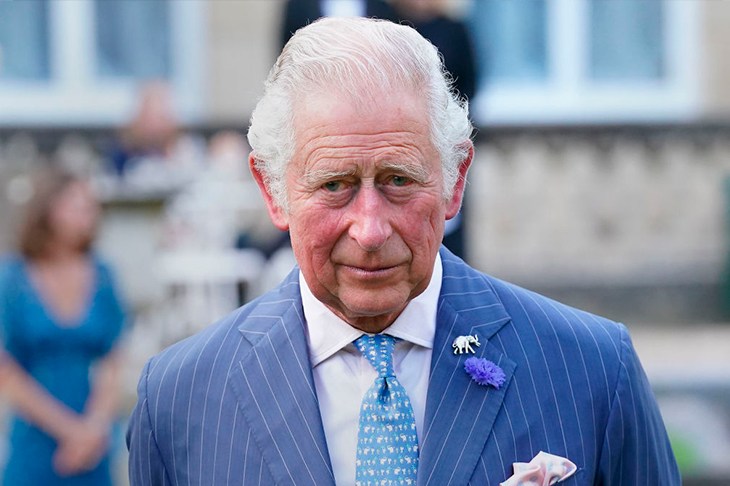
As the product of centuries of in-breeding, Prince Charles surprised nobody at his Scottish boarding school by topping no classes. So modest were his academic achievements, indeed, that when it was decided that he should be the first heir to the British throne to attend a university, and that the university he attended should be a great one, Cambridge was obliged to tailor a new course to his abilities. But while the 2.2 degree he left with may owe as much to the knighthood hopes of his tutors as to late-flowering erudition, at least the disciplines his degree combined – archaeology, anthropology and history – were real subjects.
Sixty years later, English universities had stopped rolling out red carpets for the intellectually challenged scions of the white aristocracy, and Cambridge – keen to update the lefty creds it accrued recruiting spies for the Soviet Union – wanted to be the first British uni to award a chair to a disadvantaged person of colour with waist-length dreadlocks. Jason Arday, the only candidate who ticked all these boxes was, like his king, no Mensa candidate. So Cambridge made him Professor of Sociology of Education; sociology being what is studied by people whose brain isn’t big enough to get a proper degree (but who can’t draw well enough to go to art school), and ‘the Sociology of Education’ being such a non-subject that nobody would ever be likely, as his employers thought, to question Arday’s performance. At least, not without labelling themselves racist.
The rest, as even King Charles is qualified to observe, is history, and you would hope that the embarrassment which the Arday tragedy has caused Cambridge has prompted other reputable universities to audit the role of DEI in their hiring protocols – and also to take a long hard look at some of the courses they offer and ask whether continuing to offer them is not injurious to their reputations.
But the decision to give Jacinda Ardern a chair in their School of Public Health suggests that the people running Sydney University want to not just show solidarity with those responsible for Ardaygate, but to compound their blunders. At time of writing, taxpayers funding Ms Ardern’s appointment haven’t been told what her salary will be, but since the ANU is paying Bill Shorten $800k we can assume that a lefty leader who won a national election will be paid even more. One thing we have been told is that being ‘Professor of Practice’ will not require Ms Ardern to practise anything as old-school as teaching. So what exactly will she do? According to the School of Public Health’s website, ‘her work will focus on empathetic leadership, social cohesion and civic trust; further developing new approaches to global and values-based leadership; as well as exploring new ways to address global health challenges centred on equity, inclusion and wellbeing’. From which we may deduce (with the help of AI) that the time she will not spend preparing lectures or marking essays will be devoted to promoting the priorities and values she evinced at the defining moments of her premiership; that is, by sympathising very publicly with people who are injured and bereaved by mass shootings and volcanic eruptions, and by supporting very vocally legislation which marginalises and punishes people who choose not to be given vaccinations of doubtful efficacy. But if Professor Ardern won’t be teaching or publishing research – the bare minimum requirement of most professorships – what will be her KPIs? Perhaps the plan is to ask Sydney Uni undergraduates at the end of her first year of tenure if they have noticed an increase in their capacity for empathy and trust, and in their appetite for values-based leadership? Or perhaps those students could at least be asked to put a name to the face of the woman they might have seen hugging people around the campus from time to time or heard laughing as she walks to the nearest bank every month. Or perhaps they could simply be shown a picture of Professor Ardern and asked what they think she does. Other than resemble a horse.
Meanwhile, we must assume, from statements made on his most recent Commonwealth tour, that King Charles has forgotten most of the history he was obliged to learn at Cambridge. Otherwise he might have told his Caribbean hosts that while Britain’s participation in the slave trade of the 18th and 19th centuries was certainly a matter of shame, the leading role which Britain took in the ending and outlawing of that trade around the world – despite the enormous economic cost of that policy – continues to be a matter of pride.
Got something to add? Join the discussion and comment below.
You might disagree with half of it, but you’ll enjoy reading all of it. Try your first month for free, then just $2 a week for the remainder of your first year.